
Cappuccino vs Latte vs Flat White vs Macchiato What is Actually Different
Two ingredients
Four distinct drinks
Here is how they actually compare
Every milky espresso drink on the menu starts from the same two ingredients: espresso and steamed milk. What separates a latte from a flat white, a cappuccino from a macchiato, is how much of each you use and what you do to the milk. That is the whole story and once you see it in one table you cannot unsee it.
I make these drinks at home and I order them around town whenever I want to judge a new cafe. Here is the honest breakdown of the whole espresso milk family with no barista snobbery.
For the comparisons below, I use a double espresso shot made with an 18.8 gram dose as my baseline. It gives us a consistent way to compare the drinks. My Breville Dual Boiler includes a "standard" size 58mm portafilter and filter basket setup. Real coffee shops typically use this same 58mm size but may use different doses, yields and recipes so your cup may differ. I have seen shops that pull shots with as low as 17 grams and some as high as 20 grams! But at the 18.8g baseline, each drink below carries roughly 120 to 130 milligrams of caffeine and the only difference is how concentrated that espresso tastes against the milk volume. Going with a single shot instead of a double drops the caffeine figure to about 60 to 65 milligrams.)
The Whole Espresso Milk Menu in One Table
| Drink | Espresso | Milk ratio | Foam type | Typical size | Caffeine |
|---|---|---|---|---|---|
| Latte | Double shot | About 1/6 espresso, 4/6 steamed milk, 1/6 foam (a rough visual model) | Thin microfoam cap, a few millimeters | 10 to 12 oz (common US reference, sizes vary) | 120 to 130 mg (at this baseline) |
| Flat white | Double shot | Commonly 1:2 to 1:3 espresso to steamed milk (a common range, not an official formula), microfoam folded fully through | Typically an ultra-thin 1/4 inch microfoam head over a uniform velvety texture | 5 to 6 oz traditional, modern cafes vary | 120 to 130 mg (at this baseline) |
| Cappuccino | Double shot | Traditional rule of thirds: espresso, steamed milk, airy foam | Thick, airy foam, about one third of the drink | Traditionally 5 to 6 oz, often 12 oz in the US | 120 to 130 mg (at this baseline) |
| Macchiato (traditional) | Espresso, shot count varies | A small mark of steamed or foamed milk | A small dollop of foam on top | 2 to 3 oz | 120 to 130 mg (at this baseline) |
| Cortado | Double shot | Traditionally around 1:1 espresso to warm steamed milk, recipes vary | Minimal: milk steamed with reduced stretch, smooth flat texture, little to no foam head | About 4 oz; US specialty versions often in a Gibraltar glass | 120 to 130 mg (at this baseline) |
| Mocha | Double shot | Espresso + chocolate (syrup or ganache) + steamed milk | Thin microfoam or whipped cream, often cocoa-dusted | Cafe and chain sizes vary; 8 to 12 oz common in specialty cafes, 16 oz+ in chains | 120 to 130 mg (at this baseline) plus a small amount from the chocolate |
If you remember one thing from this page, remember the milk. Caffeine comes from the espresso, and the caffeine column above assumes my 18.8 gram double shot baseline. The milk is where the drinks actually differ.
Cappuccino vs Latte
This is the matchup people search for most so here it is straight. A cappuccino follows the traditional rule of thirds: one third espresso, one third steamed milk, one third airy foam, though plenty of modern cafes bend that model. A latte is mostly steamed milk with a thin foam cap that barely qualifies as foam. Same double shot, wildly different cup.
Taste. A cappuccino tastes stronger because there is less milk to dilute the espresso, and its foam is thick and airy rather than the latte's thin microfoam. A latte wraps the same espresso in more steamed milk, so it tastes milder, smoother and a little sweeter from the extra milk.
Caffeine. Identical at my baseline. Both sit at roughly 120 to 130 milligrams on an 18.8 gram double shot. The cappuccino only tastes bolder.
Calories. The latte has more because milk is where the calories live. A 12 ounce latte with whole milk will generally have more calories than a cappuccino of the same size, roughly 180 to 210 against 110 to 130, because it contains more milk. The gap is mostly milk.
Which to order. Latte for comfort and slow sipping. Cappuccino when you want to taste the bean with textural interest. The full profiles are below.
What is a Latte?
A latte is espresso with a large pour of steamed milk and a thin foam cap on top, usually in a 10 to 12 ounce cup.
It is the creamiest drink on the espresso menu. A typical latte has a relatively small amount of espresso, plenty of steamed milk and a thin layer of microfoam, so thin it barely qualifies as foam. People often sketch that as roughly 1/6 espresso, 4/6 steamed milk, 1/6 foam, but treat it as a rough visual model rather than a recipe card. 10 to 12 ounces is the common US reference size, though cups vary and many shops serve it up to 16 ounces.
This is the gentle one. The high milk volume softens the espresso so the coffee tastes smooth and mellow. You still taste the coffee but it is comforting and mild. If that is your morning, the latte is your drink.
Why latte art matters
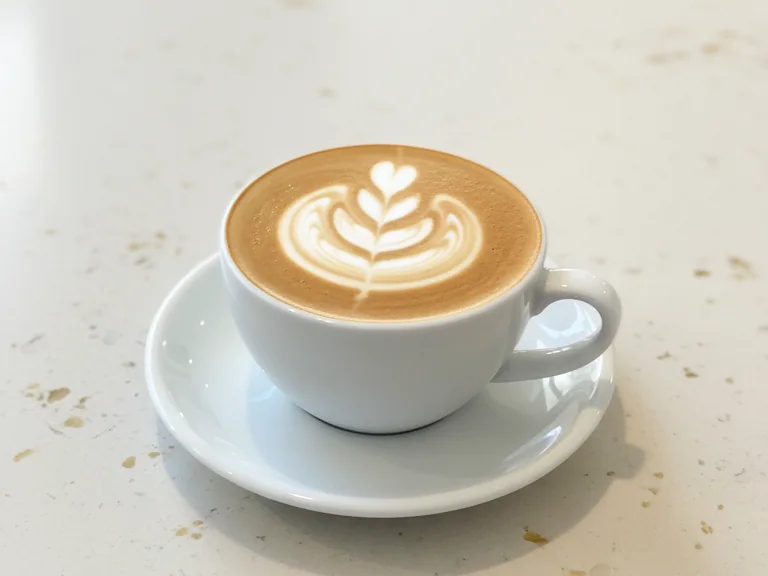
That thin layer of microfoam on a latte is the canvas for latte art. Hearts, rosettas, swans. The foam has just enough body to hold a shape without being too thick or bubbly. It is not just decoration. If your barista can pour a clean rosetta, the milk was steamed correctly and the microfoam is glossy and integrated through the drink, not sitting on top like a sad cloud.
What is a Cappuccino?
A cappuccino is espresso with equal parts steamed milk and thick airy foam. Its the traditional rule of thirds but not a rule every modern cafe follows.
That ratio changes everything. A cappuccino feels lighter in your hand because there is significantly less liquid. The foam takes up space without adding weight, and it is not the thin microfoam of a latte. This is thick, airy, substantial foam. The kind that leaves a mustache.
With less milk to dilute the espresso, a cappuccino tastes stronger and lets the bean's flavor profile come through. I can taste whether a shop used a bright Ethiopian or a chocolatey Brazilian in a cappuccino. In a latte, that detail gets a bit muted under the milk. Traditionally a cappuccino is a 5 to 6 ounce drink but the 12 ounce versions are common in the US.
What is a Flat White?
A flat white is a small drink that is traditionally 5 to 6 ounces of espresso and steamed milk in which microfoam is folded completely through the drink for a uniform velvety texture and usually leaving only an ultra-thin 1/4 inch microfoam head on top.
That folding is the whole technique. The milk is textured into glossy microfoam and poured through the espresso so coffee and milk feel like one substance from the first sip to the last rather than layers you have to stir. A common working range is roughly 1:2 to 1:3 espresso to steamed milk, though there is no official formula.
The flat white is generally associated with Australia and New Zealand, built for people who want to taste the coffee. Less milk than a latte so the espresso character stays loud. That is the whole idea. If your flat white shows up in a 12 ounce mug, something went wrong. That is a latte wearing a costume.
What is a Macchiato?
A macchiato is espresso "marked" with a small spot of milk and served in a tiny 2 to 3 ounce cup. The word macchiato means "stained" or "marked" in Italian. That is the whole idea. Over the years the name got stretched to cover three very different drinks.
The espresso macchiato (the original)
Espresso (often a double shot though shot counts can vary) with a small dollop of steamed or foamed milk on top. It lives in a tiny cup, around 2 to 3 ounces, and the size varies by shop. The milk is there to soften the sharp edge of the espresso not to make a milky drink. It tastes bold and short. If you like espresso but want to take the hardest bite off, this is your cup.
The latte macchiato
This one flips the order. Instead of espresso marked with milk, it is milk marked with espresso: steamed milk first, then a shot poured through the top so it leaves a dark mark. It is milky, mild and layered, much closer to a latte than to a true macchiato. The shared name confuses people for good reason.
The caramel macchiato (the Starbucks version)
This is the one most Americans picture. A large milky drink with vanilla, steamed milk, espresso and caramel on top. It is tasty, but it is not a traditional macchiato at all. Starbucks borrowed the "marked" idea and built a dessert around it. If you order "a macchiato" at a classic cafe expecting this, you will be surprised. Order the caramel one by its full name and the barista knows exactly which of the three drinks you mean.
What is a Cortado?
A cortado is espresso "cut" with warm steamed milk traditionally around a 1:1 ratio, although recipes vary. A 4 ounce cup is the common example. The drink is strongly associated with the Gibraltar glass in US specialty coffee (in Spain, cortados are typically served in small glasses). The name comes from the Spanish verb cortar "to cut". The milk cuts the espresso's acidity without turning it into a milky drink.
The cortado comes from Spanish coffee culture. In US specialty shops, the cortado is commonly built on a double shot pulled to about 2 ounces of liquid plus about 2 ounces of steamed milk. At my baseline that puts its caffeine in the same 120 to 130 milligram band as the other drinks here.
The milk technique is what defines it against its cousins. For a cortado the milk is steamed with reduced stretch, so it stays smooth and flat with little to no foam head. That is the difference from a flat white: both run on double shots and close ratios, but the flat white's milk is textured into velvety microfoam with a thin head designed for latte art, in a larger 5 to 6 ounce cup while the cortado is a shorter, denser roughly equal parts drink in a small glass. Against a macchiato the contrast is even sharper: a macchiato gets a spoon of foam, a cortado gets a real pour of milk.
What is a Mocha?
A mocha is a latte's structure with chocolate added: espresso, chocolate (syrup or ganache) and steamed milk. This makes it the richest and sweetest drink in the family.
The name traces to the port city of Mocha in Yemen, historically famous for beans with natural chocolate notes, and "mocha" became shorthand for coffee and chocolate together.
In specialty cafes it usually lands at 8 to 12 ounces. Commercial chains routinely serve 16 ounces and up. The top is either a thin layer of microfoam or a crown of whipped cream and often dusted with cocoa.
Because of the chocolate, a mocha carries a small amount of extra caffeine beyond the shots, varying with the type and amount of chocolate used. The sugar and cocoa butter change its calorie profile compared to the plain milk drinks (see Calories below).
The Real Differences
Milk and foam
This is where the drinks split. A flat white folds microfoam completely through the drink for a uniform, velvety texture with only an ultra thin head on top. A latte carries more milk and a slightly thicker foam layer so you feel the milk more and taste the coffee less. A cappuccino swaps the thin microfoam for thick airy foam in equal measure with the liquid. A traditional macchiato has almost no milk at all, just a small mark of foam on top of the shot. A cortado takes roughly equal parts espresso and steamed milk with barely any foam at all. Same steaming skill, five different targets.
Strength and flavor
The flat white and the cappuccino taste stronger than a latte for the same reason of less milk getting in the way of the espresso. The bean shows up in both. A latte buries most of that under milk which is the point when you want comfort rather than analysis. A traditional macchiato is the most intense of the group because the espresso runs the show and you taste the roast, the body and any sweetness or bitterness in the shot. It shows you more about a cafe's beans in two sips than a latte does in a whole cup.
Size
Size tells you which drink you are really getting. Macchiato, 2 to 3 ounces. Cortado, around 4. Flat white and traditional cappuccino, 5 to 6. Mocha, 8 to 12 in specialty cafes. Latte, 10 to 12 and often more. So if a "macchiato" arrives in a big cup, you are holding a latte macchiato or a flavored cafe creation and not the classic. And if a flat white arrives in a mug, it is a latte in costume.
Caffeine: cappuccino vs latte vs flat white vs macchiato vs cortado vs mocha
Here is the part that surprises people. Caffeine does not come from the milk, it comes from the espresso. At the baseline I set at the top of this page, a double espresso from an 18.8 gram dose, each of these drinks delivers roughly 120 to 130 milligrams. Shops dose differently, so treat that as a comparison point rather than a guarantee. Latte, cappuccino, flat white, macchiato and cortado all land in that same band. The only difference is how concentrated the espresso tastes against the milk volume. The mocha adds a little more from the chocolate, a small amount that varies with the type and amount of chocolate used.
Order a single shot of any of these drinks and the figure drops to about 63 to 65 milligrams. If you want more caffeine, add a shot. Do not rely on the cup size. You can run your exact order through the caffeine calculator.
Calories: cappuccino vs latte and the rest
If you are watching calories, milk volume is the number to watch. With whole milk in a 12 ounce serving, a latte lands around 180 to 210 calories. A cappuccino of the same size sits closer to 110 to 130, because it uses less milk. The espresso itself adds almost nothing, about 5 calories for a double shot.
You can shrink both numbers by changing the milk. Nonfat milk pulls a 12 ounce latte down toward 120 calories. Oat milk lands in the middle, though oat brands vary significantly in calories. Whole milk sits at the top. Any flavored syrup adds roughly 20 calories per pump on top of that.
The mocha adds chocolate on top of all of this and the sugar and cocoa butter change the calorie profile versus the plain milk drinks. Chocolate syrup adds roughly 80 to 120 calories per 2 tablespoons (1 ounce) which puts a whole milk mocha in a 12 ounce cup somewhere in the 250 to 350 calorie range and higher if it arrives under a dome of whipped cream. The smaller drinks follow the milk logic: a flat white or a cortado uses less milk than a latte, so its calories depend on the milk you choose and the cup you order.
Iced Versions: What Works and What Does Not
An iced latte is easy and excellent: espresso poured over cold milk and ice. It is smooth and built for our Arizona summer. The flat white and latte logic carries over once the ice goes in, it is all cold milky espresso.
An iced cappuccino is a stranger thing, which is why the iced cappuccino vs iced latte question has a simple answer. Traditional cappuccino foam does not translate especially well to an iced drink: it thins out and fades over ice so many shops either skip it or hand you something close to an iced latte with a little foam on top. You can find cold foam versions, but an iced latte is the more straightforward choice. If you love the foam of a cappuccino, hot is where it shines. The texture is the whole experience and ice takes it away.
How to Make These Drinks at Home
The espresso is the same for all of them. Pull your double shot. The milk is where you choose the drink.
- Latte: Steam a large amount of milk with a gentle hand aiming for wet foam. Keep the steam wand just under the surface and listen for a gentle hiss, not aggressive gulping. Pour more of it into a bigger cup and finish with a thin foam cap.
- Flat white: Steam with less air so you build glossy microfoam and not big bubbles. Fold it completely through the espresso in a small cup so the texture is uniform and velvety with only a thin head left on top.
- Cappuccino: Introduce more air early in steaming for dry foam. Position the wand closer to the surface and let it slurp and gurgle a bit. You are building volume and not just heating milk. Tap the pitcher on the counter: latte microfoam settles quickly, cappuccino foam holds its shape.
- Espresso macchiato: Steam a small amount of milk and spoon a little foam right on top of the shot. You want just a mark, not a pour.
- Latte macchiato: Fill the cup with steamed milk first then slowly pour the espresso through the top so it leaves a dark layer. Same parts as a latte, stacked in reverse for the look.
- Cortado: Pull a double shot into a small Gibraltar glass if you have one. Steam an equal amount of milk with reduced stretch, barely any air, just enough to warm it through, and pour. Aim for equal parts, almost no foam.
- Mocha: Warm your chocolate (syrup or a ganache of chocolate and a splash of milk) in the cup and pull the double shot straight through it. Then pour the steamed milk. Top that with a thin microfoam cap or whipped cream and a dusting of cocoa.
One tip that fixed my milk at home: I usually aim for roughly 140 to 150°F when steaming milk. Going much hotter can make the milk taste less sweet and can hurt the texture. Stop around 140°F in the pitcher and the coasting heat settles the drink at around 150°F. If you steam all the way to 160°F, the cup tastes cooked. That is just my technique not a rule every barista needs.
Which Should You Order?
Order a flat white when you want to taste the coffee. It is my go to when I am trying a new roaster or a single origin I have not had before. The drink gets out of the way and lets the bean talk.
Order a latte when you want comfort. A big mug, mild and milky, easy to sip slow. The high milk content makes it gentle on an empty stomach. Some mornings that is exactly right.
Order a cappuccino when you want to taste the espresso bean profile with textural interest. The foam adds body without drowning the espresso's voice. This is what I sometimes order when I am visiting a new shop and want to evaluate their skills (although it depends how early it is)
Order a macchiato when you want espresso with just enough milk to round it off. It is my pick when I want something short and strong but not quite a straight shot. Great after dinner.
Order a cortado when you want espresso cut, not buried: roughly equal parts milk, no foam theater and the bean still talking.
Order a mocha when you want dessert that pulls double duty as coffee. The richest cup in the family, and the only one where the chocolate gets a vote.
Order a caramel macchiato by its full name when you want the dessert drink, so you actually get what you want. The barista is not judging. They just need to know which drink you mean.
Anyone who tells you one of these is better than the others is missing the point. They do different jobs. A good cafe makes all of them well, and now you know what to look for in each.
Want to put that to the test? Browse the Arizona directory and go order one of each. If you want the numbers behind your order, run them through the caffeine calculator.
Good to Know
Espresso Milk Drinks, Answered
Quick answers from the person who makes all of these at home. Every drink below sits on the same double-shot baseline I set at the top of this page.
Flat White vs Latte
A latte is a big cup (about 10 to 12 ounces) of espresso with a large pour of steamed milk and a thin foam cap. A flat white is a small cup (about 5 to 6 ounces) where the microfoam is folded completely through the drink for a uniform, velvety texture, usually leaving only an ultra thin 1/4 inch head on top. The flat white tastes stronger because there is less milk in the way not because it has more espresso.
Not quite. A flat white is smaller but the bigger difference is the milk. A flat white folds textured microfoam completely through the drink. A latte carries more milk and a thicker foam cap. Same family, different balance.
A flat white tastes stronger. It uses the same double shot in a smaller cup with less milk so the coffee comes through louder. The latte has more milk to soften it.
Cappuccino Comparisons
A cappuccino has a thick airy layer of foam and feels light in the cup. A flat white skips that and folds silky microfoam completely through the espresso. The flat white drinks smoother and tastes more like coffee than air.
Yes, in taste. A cappuccino uses less milk, so the espresso comes through bolder. A latte wraps the same espresso in more steamed milk which makes it taste milder and smoother.
It comes down to milk and foam. A cappuccino follows the traditional equal thirds model of espresso, steamed milk and thick foam. A latte is mostly steamed milk with a thin foam cap. A flat white folds thin microfoam completely through the drink for a velvety, uniform texture with an ultra thin head and a stronger coffee to milk balance than a latte.
A little, even with no added sugar. The extra steamed milk brings more natural milk sweetness. A cappuccino tastes more balanced and coffee forward because there is less milk to round it off.
Caffeine and Calories
No. Caffeine comes from the espresso, not the milk. At the double shot baseline I use on this page, a cappuccino, a flat white, and a latte from the same shop carry about the same 120 to 130 milligrams. Shops dose differently so treat that as a comparison point. The smaller drinks only taste stronger. You can run your exact order through the caffeine calculator.
The latte has more. It holds more milk and milk is where most of the calories live. A 12 ounce latte with whole milk lands around 180 to 210 calories. A cappuccino of the same size sits closer to 110 to 130. Milk type and cup size move both numbers a lot.
Macchiato, Up Close
Yes. A traditional macchiato is mostly espresso with just a mark of milk so it tastes much stronger than a milk heavy latte. The espresso leads from the first sip.
No. Shot counts vary by shop, but at the double shot baseline I use on this page, both carry about the same 120 to 130 milligrams. The macchiato only feels stronger because there is far less milk to soften it.
They are close cousins. A latte macchiato is steamed milk with a shot of espresso poured through the top, so it ends up milky and layered like a latte. The main difference is the order it is built and the look.
Starbucks built a sweet milky drink around the idea of espresso marking the milk, then added vanilla and caramel. It is closer to a flavored latte than to a classic espresso macchiato. Order it by name and you will get what you expect.
Cortado Questions
No. While both use double shots and microfoam, they differ in size and ratio. A cortado is a small 4 ounce drink with roughly a 1:1 milk ratio and minimal foam. A flat white is larger (5 to 6 ounces with a common 1:2 or 1:3 ratio) featuring a velvety microfoam head designed for latte art.
Size and milk volume. An espresso macchiato is a tiny 2 to 3 ounce drink consisting of a double shot marked with only a small spoon of foam (very strong coffee focus). A cortado is 4 ounces and traditionally uses equal parts liquid espresso and liquid steamed milk to reduce acidity while maintaining balance.