The Best Commercial Espresso Machine Brands for Coffee Shops
For most people, a coffee shop is just a place to get a caffeine fix. But for those of us who listen for the click of a solenoid and peer over the counter to check the PID temperature, the machine is the heartbeat of the shop.
Whether it is the iconic roar of a La Marzocco espresso machine or the surgical precision of a Slayer, the gear behind the bar defines the drink in your cup. If you are opening a cafe, upgrading your gear or just a coffee nerd like me, this guide covers the top commercial espresso machine brands dominating the industry today. We are going behind the counter of Arizona’s top shops to look at these heavy-hitters and see why discerning baristas swear by them.
Finally, because we all want cafe quality coffee in our kitchens, I will also suggest the best home espresso machine alternative for every commercial brand on this list.
Compare Commercial Espresso Machines
Filter by budget and fit, sort the list, then pick up to three to compare side by side.
Prices are approximate for a typical two group setup. Marked prices reflect current market ranges. Grinders, water treatment and install are extra.
Side By Side Comparison
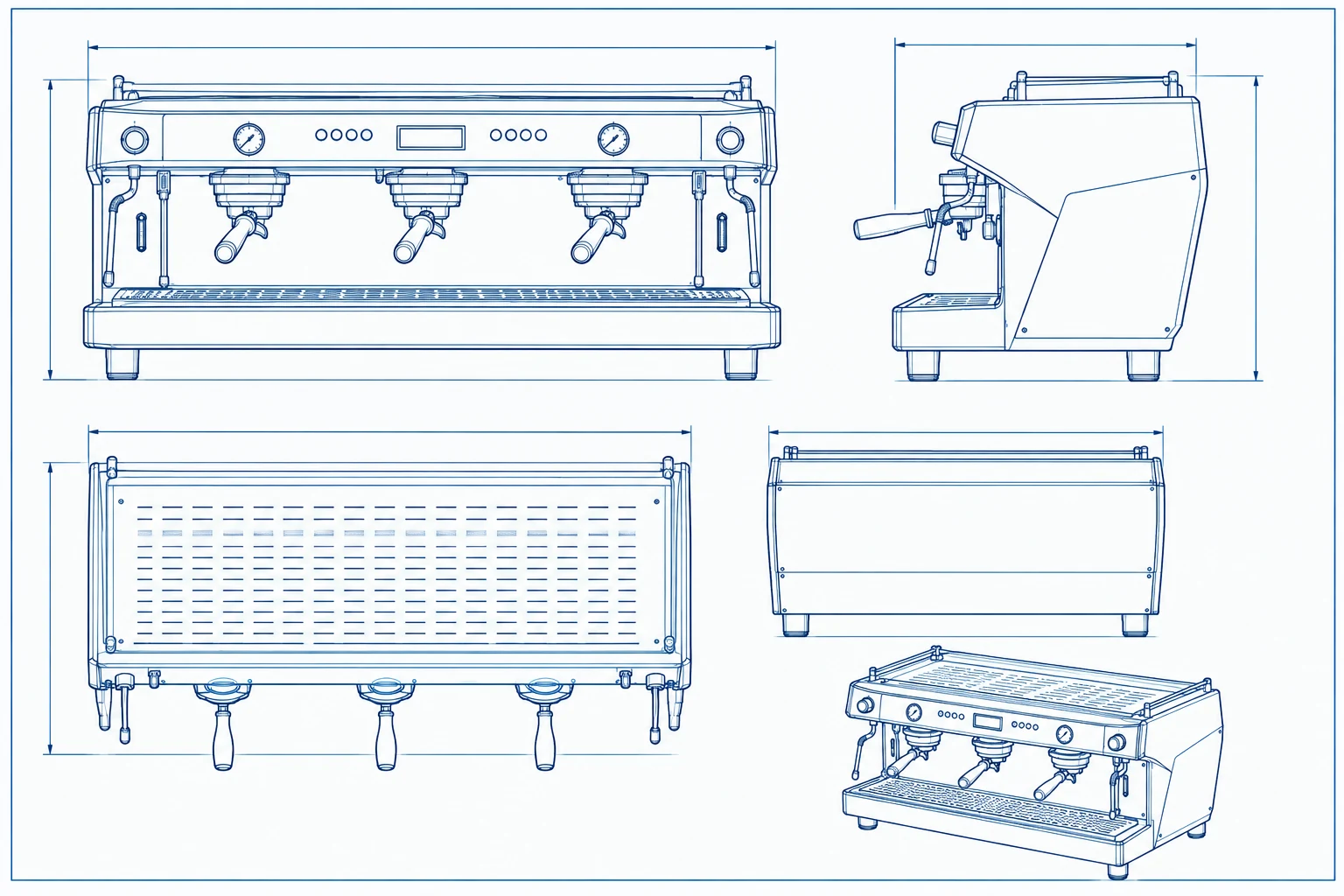
La Marzocco Linea Series
The Industry Workhorse
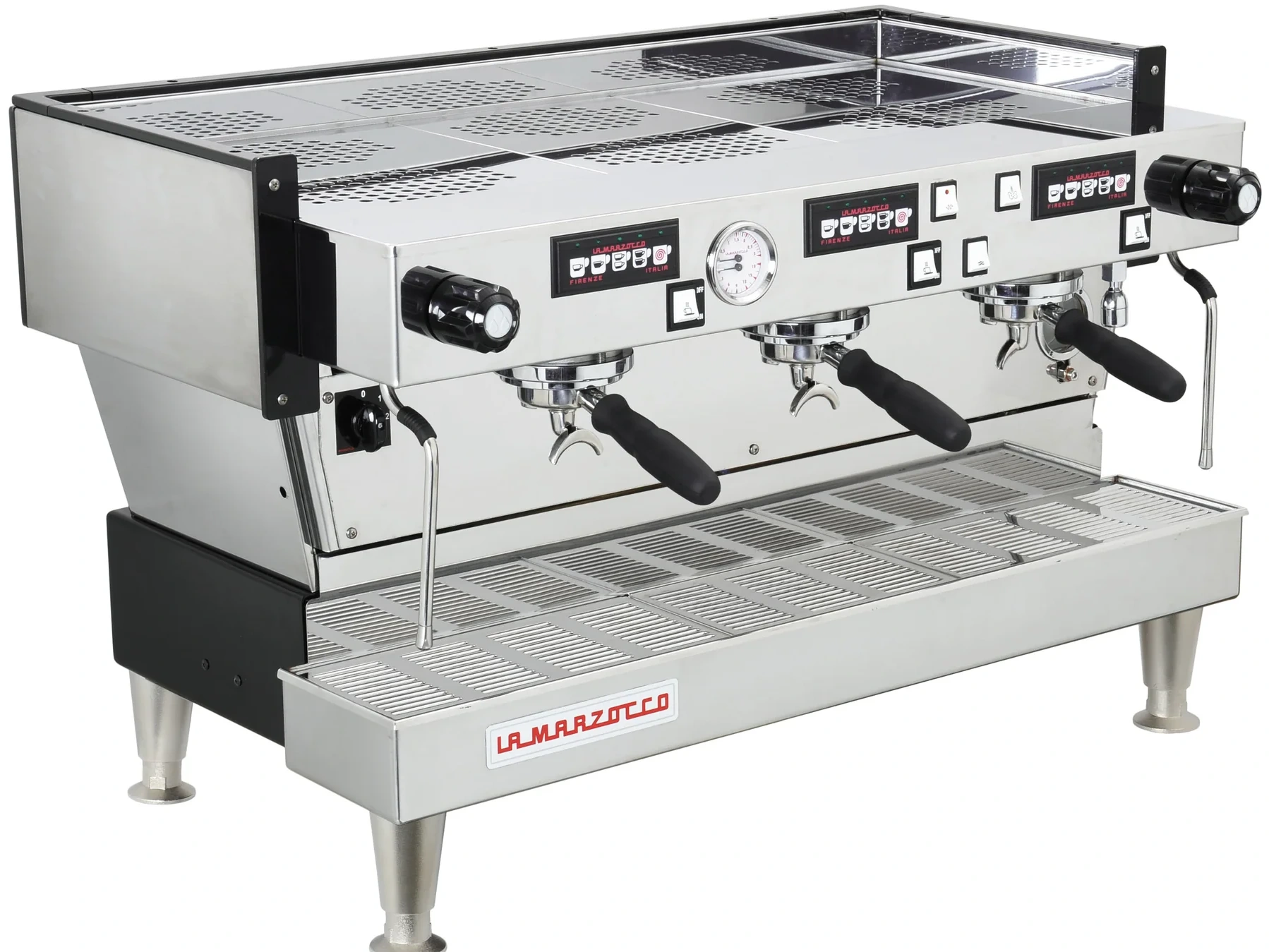
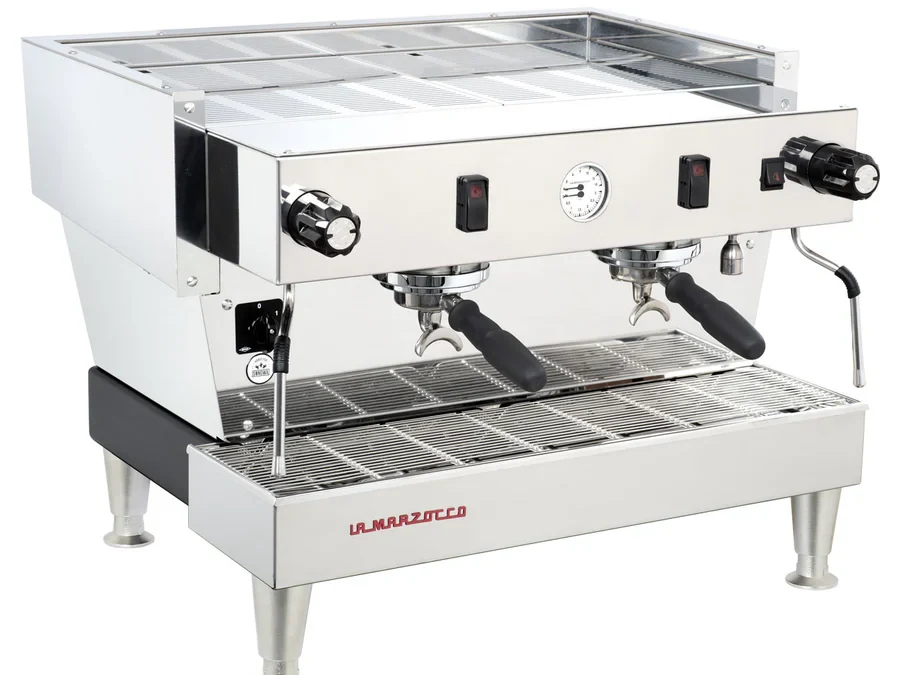
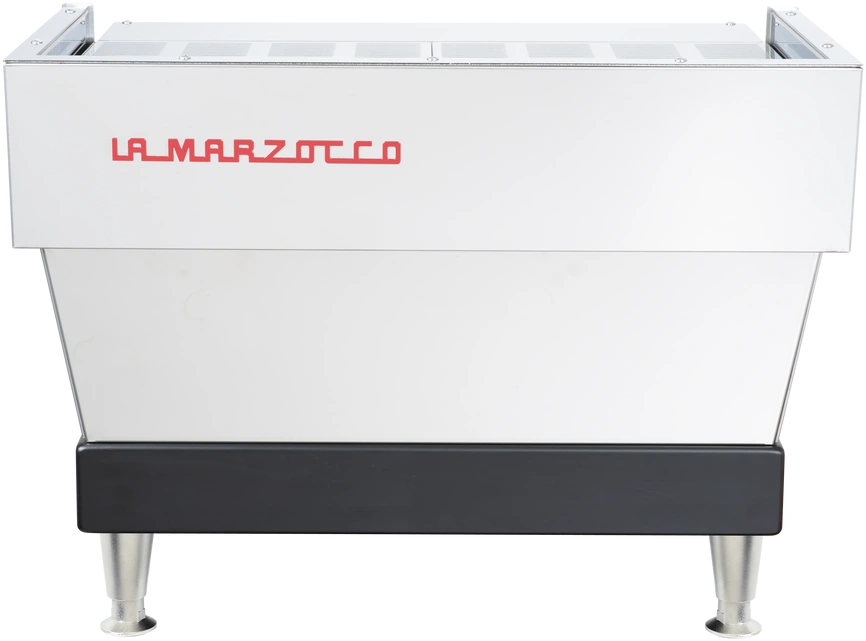
The Linea is one of the most popular commercial espresso machines in the world. Walk into serious coffee shops across Arizona and there is a good chance you will see one of these behind the bar.
Why Shops Love It
The “Workhorse”. It is incredibly easy to service and parts are available everywhere. It offers unmatched uptime and a benchmark for consistency that allows baristas to handle a Phoenix morning rush without stress.
La Marzocco Linea Price
New units run $10,750-$22,000 depending on configuration. See current Prima pricing.
What makes it special
- Temperature stability. Saturated group heads and dual-PID controllers ensure that the temp never drifts, shot after shot.
- Easy to service and parts are everywhere.
- Proven workhorse and high volume day after day with no fuss.
- Global parts network and super easy to source parts.
Where it Falls Short
- The interface is basic. It looks dated next to modern touchscreen machines.
- The standard Linea offers no pressure profiling. Flow stays fixed.
- It is heavy with a large footprint. It needs solid counter space.
- You pay a premium for a fairly traditional feature set.
Best Home Espresso Machine Alternative: La Marzocco Linea mini
The Linea Mini ($6,600) offers this exact same commercial internal architecture for your kitchen counter. It delivers cafe level performance in a smaller footprint.
The La Marzocco Linea Micra ($4,500) brings similar design philosophy to home setups. It uses saturated group technology and excellent temperature stability.
Spotted at these Arizona Coffee Shops
La Marzocco Strada
The Master Extractor
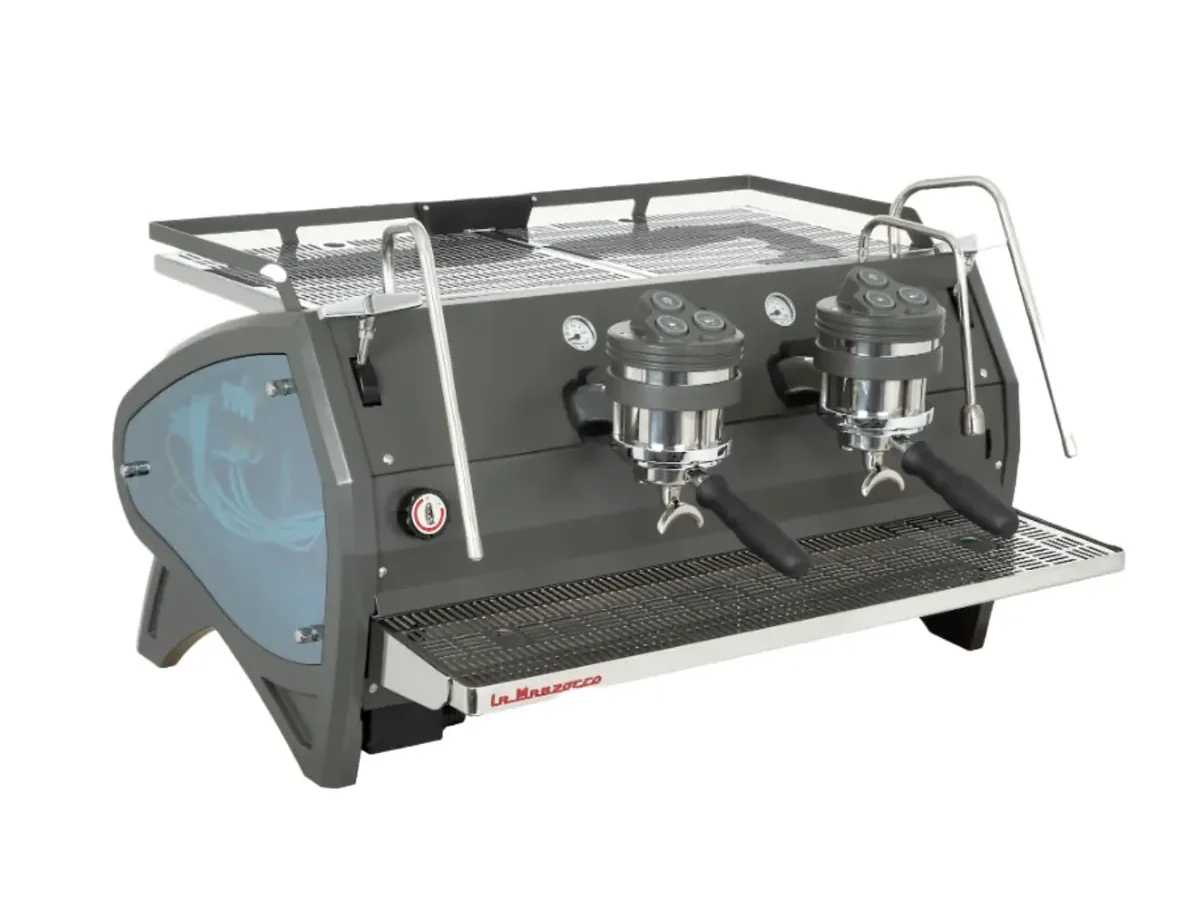
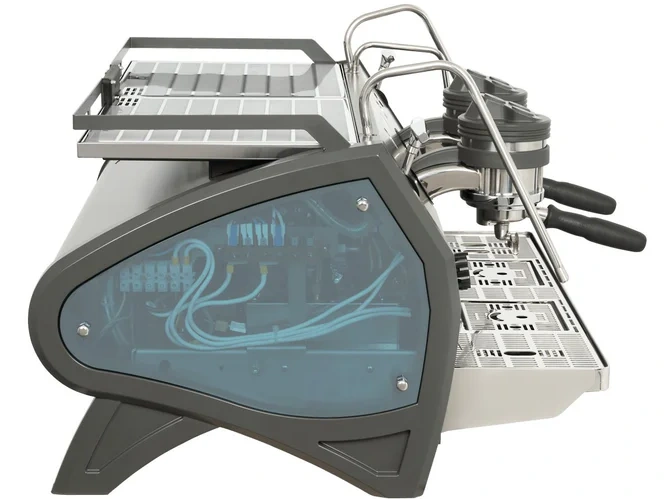
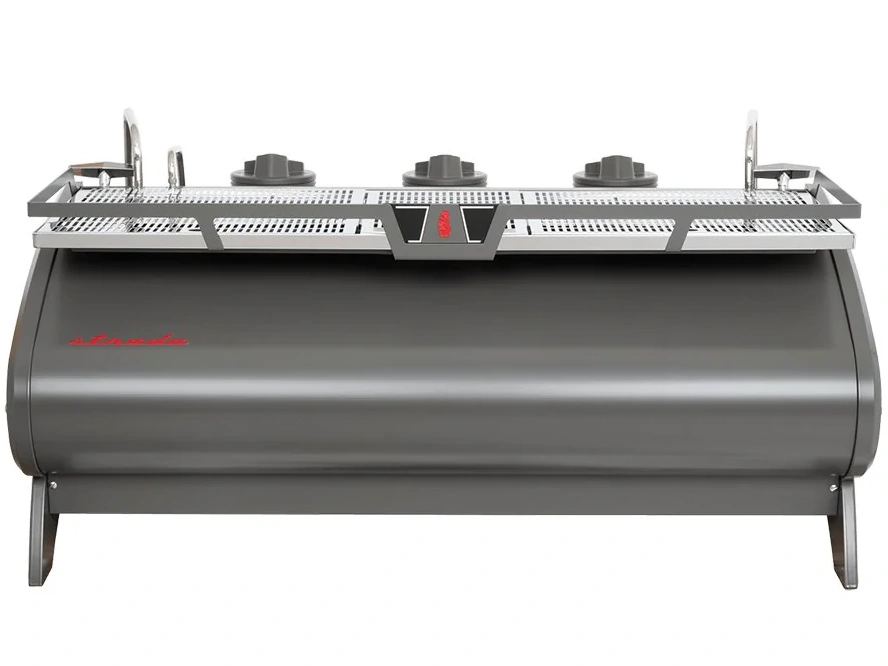
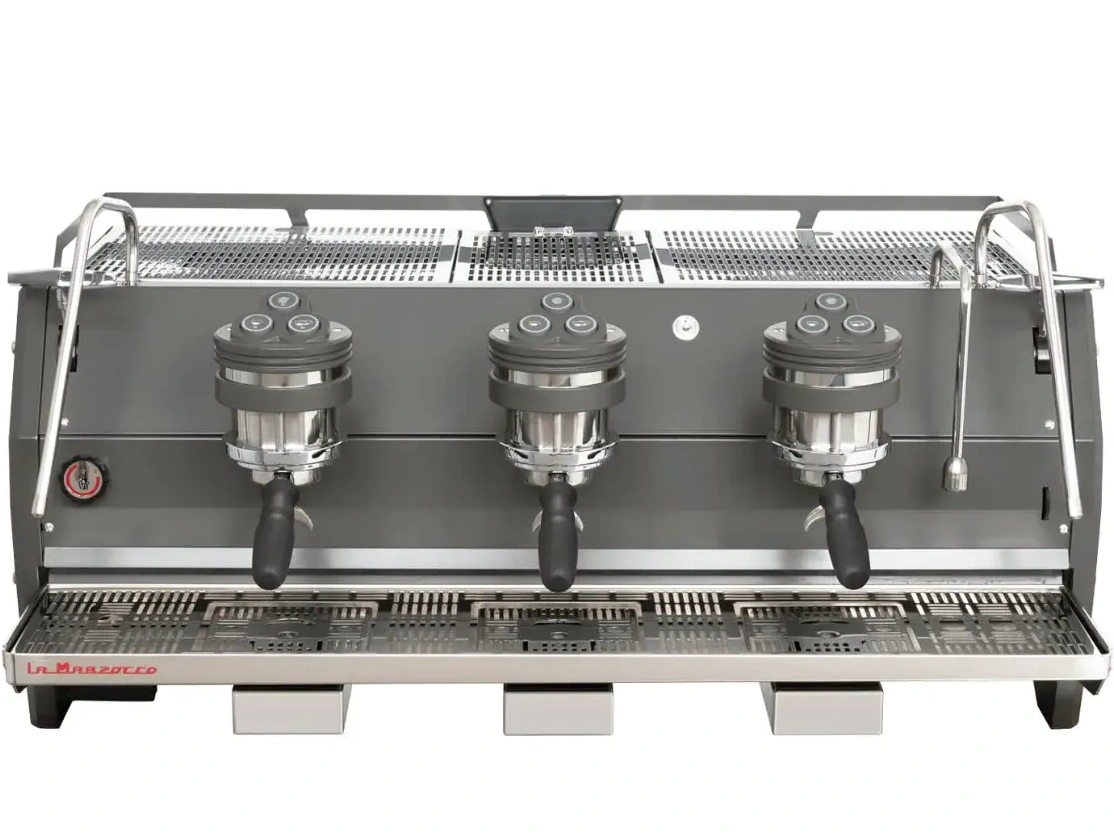
If the Linea is the reliable heartbeat of a cafe, the Strada is its high-performance brain. Designed for shops that treat espresso as an evolving science, it allows baristas to physically “play” with pressure to unlock hidden flavors in complex single-origin beans.
Why Shops Love It
The Strada is the ultimate statement piece for a “Third Wave” coffee shop. It signals to every customer that enters the door that your cafe isn’t just serving caffeine, it’s engineering a specific sensory experience through precision flow control.
La Marzocco Strada Price
The typical La Marzocco espresso machine price for this advanced model ranges from $29,230 to $36,800. See current price on Prima.
What makes it special
- True Pressure Profiling. The paddle lets the barista shape pressure across the shot.
- Independent Group Boilers. Each group can hold its own temperature for different coffees.
- Competition pedigree. it is a proven choice on the world barista stage.
- Global parts network and super easy to source parts.
Where it Falls Short
- It is expensive. This sits among the priciest options on the page.
- The paddle model rewards skill. The learning curve is steep.
- Manual pressure profiling adds shot variability when staff are inconsistent.
- Complex internals raise both service cost and maintenance time.
Best Home Espresso Machine Alternative: La Marzocco GS3
The La Marzocco GS3 ($8,820) features similar technology that gives you pressure control on a kitchen-friendly scale.
Slayer Steam
The Low Profile Precision Duo
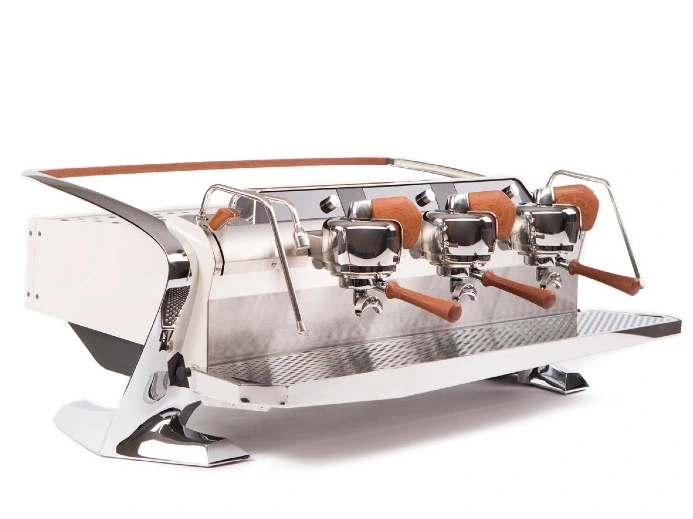
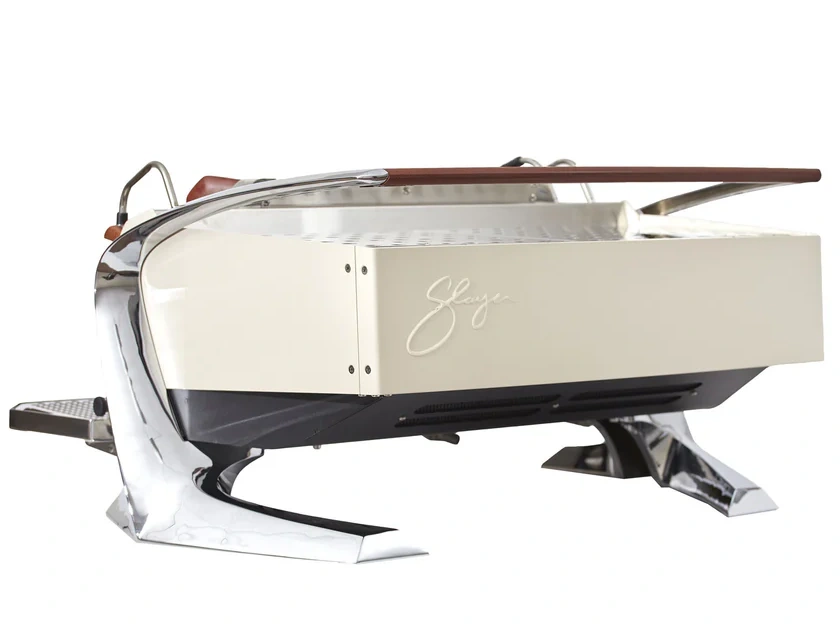
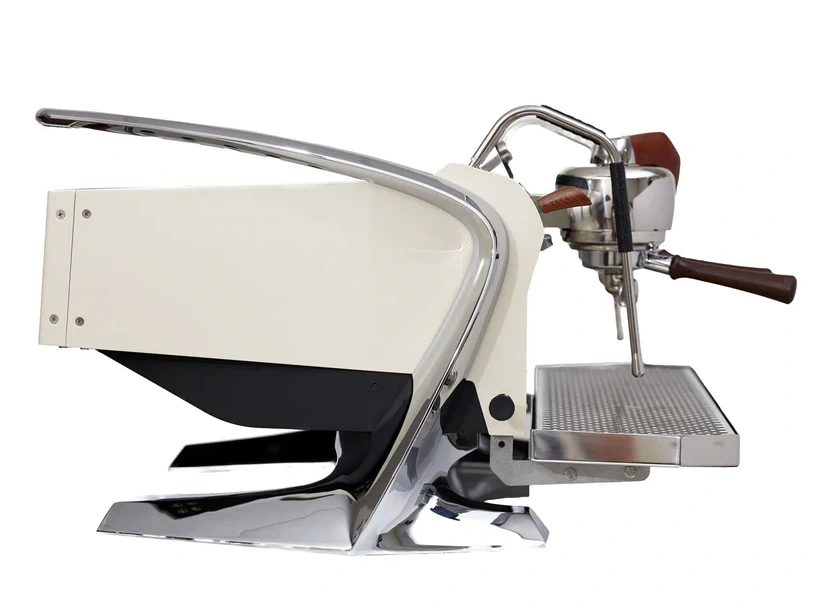
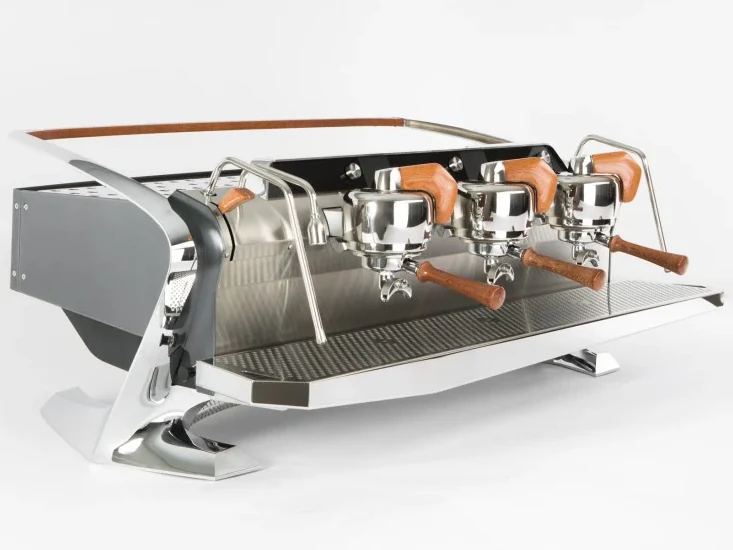
The Steam series is Slayer’s answer to the modern high-volume cafe. Both models (LP & EP) sit low on the counter to remove the “wall” between the barista and the customer. Under the hood, they offer two very different workflows.
Why Shops Love It
The EP (Volumetric Workhorse): Shops that need absolute speed love the EP. It uses a push-button interface for precise, repeatable volumetric dosing, making it easy for any barista to pull a perfect shot during a rush.
The LP (The Record-Player): Shops that want “manual” craft with “automatic” consistency choose the LP. It features manual paddles that allow a barista to “record” a manual shot and then “play it back” automatically for the rest of the day.
Slayer Espresso Machine Price
When budgeting for a commercial Slayer espresso machine price, expect to pay between $18,000 and $32,000 depending on the specific model. See current price for the Steam LP2 at Prima.
What makes it special
- Weight-Based Tech (LP Only): The LP often features "volumetrics by weight," using integrated scales to stop the shot exactly when the liquid hits the target weight.
- Needle Valve Control: Both leverage Slayer’s patented technology to control "Pre-Infusion," but the LP gives the barista more tactile control over this flow rate via the actuator handles.
- Dry Steam: The series is famous for its "dry" steam, which produces incredibly silky micro-foam that stays stable for latte art.
Where it falls short
- The price is high and lead times can be long.
- Certified service and parts are harder to source than La Marzocco.
- The manual workflow slows down during a heavy rush.
Best Home Espresso Machine Alternative: Slayer Steam Single
The Slayer Steam Single ($13,600) is the ultimate “cheat code” for your kitchen, allowing you to record a manual masterpiece and hit “play” for perfect volumetric shots every morning. It packs dual-tanks and pre-infusion control into a plug-and-play design that doesn’t require a plumber to make you the neighborhood’s best barista.
Spotted at these Arizona Coffee Shops
Sanremo Opera & Cafe Racer
The Italian Speedster
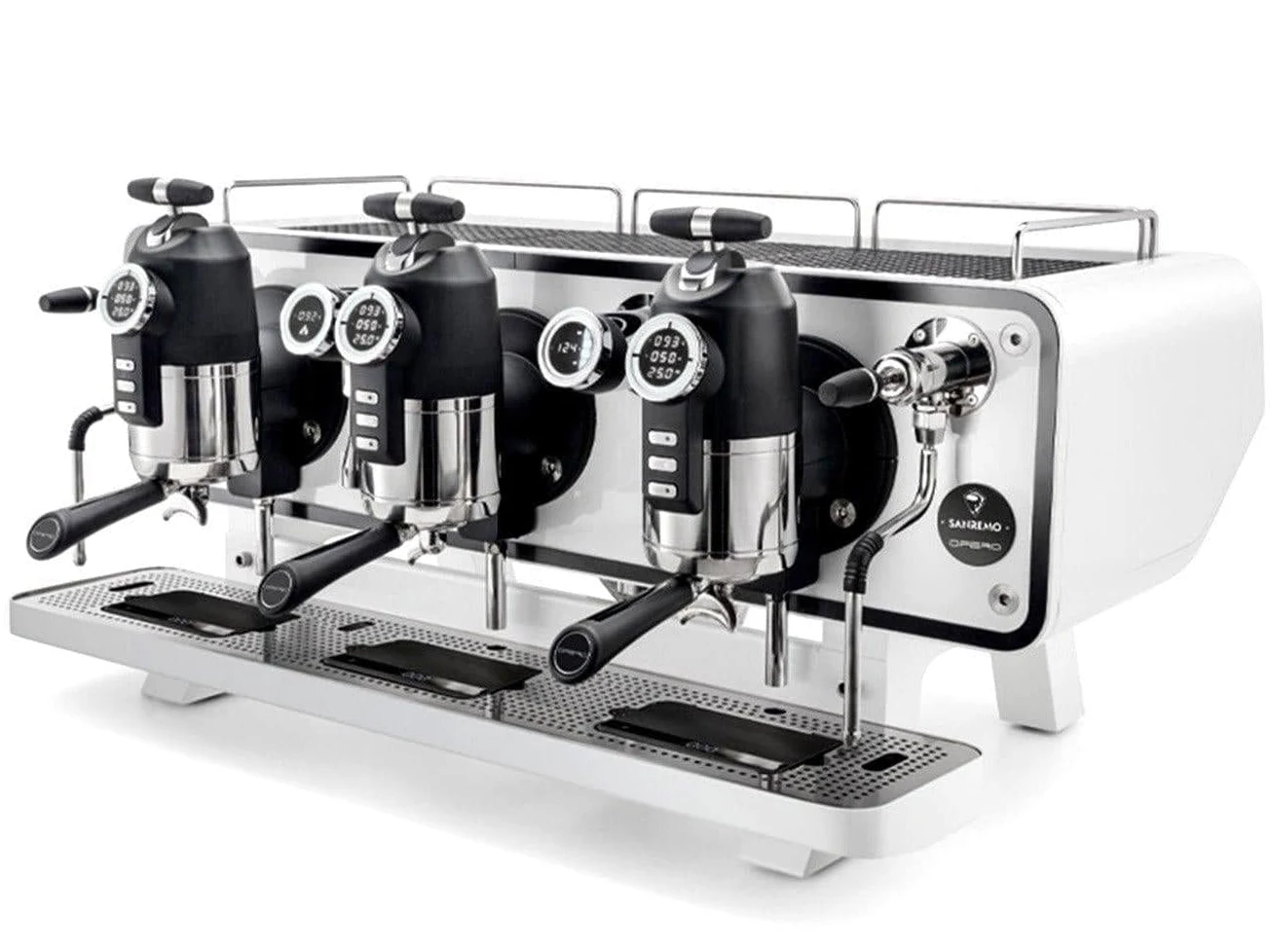
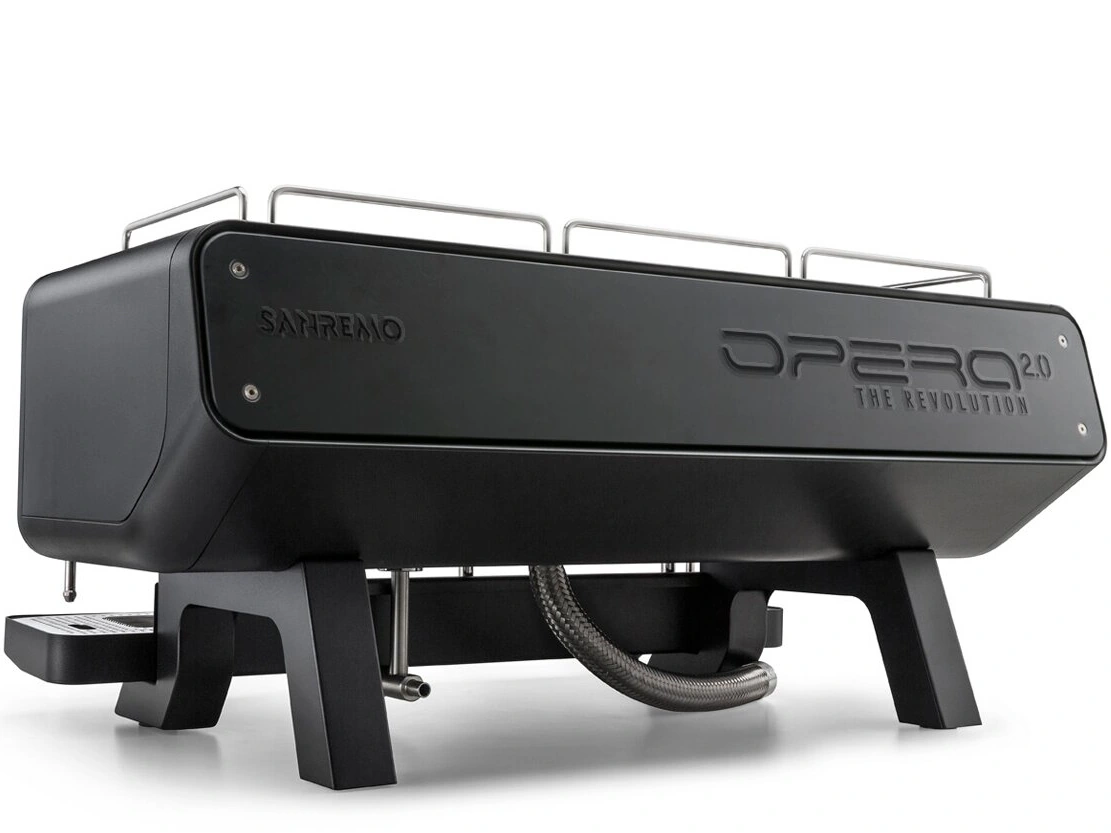
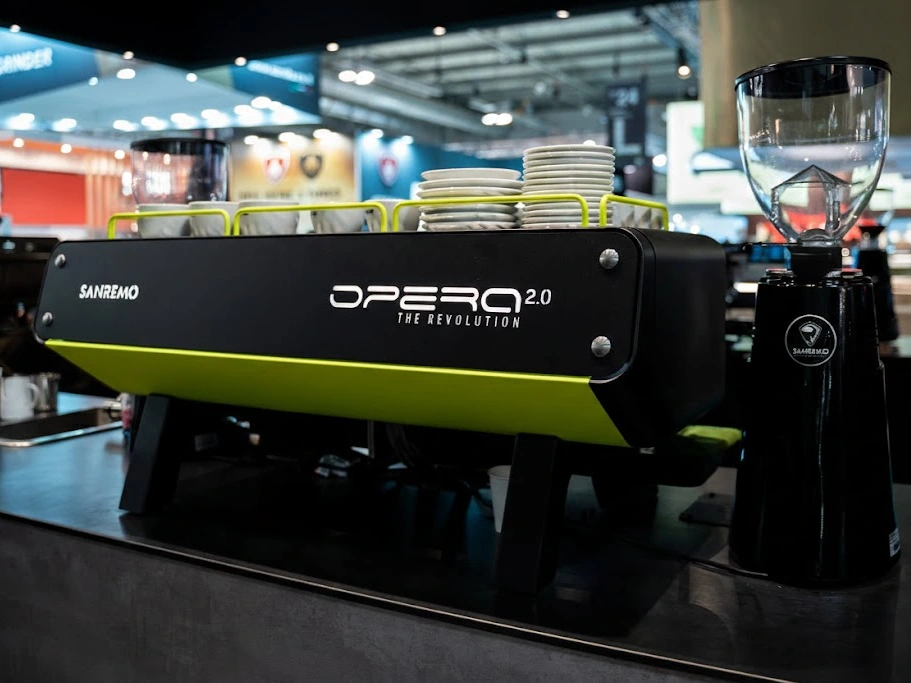
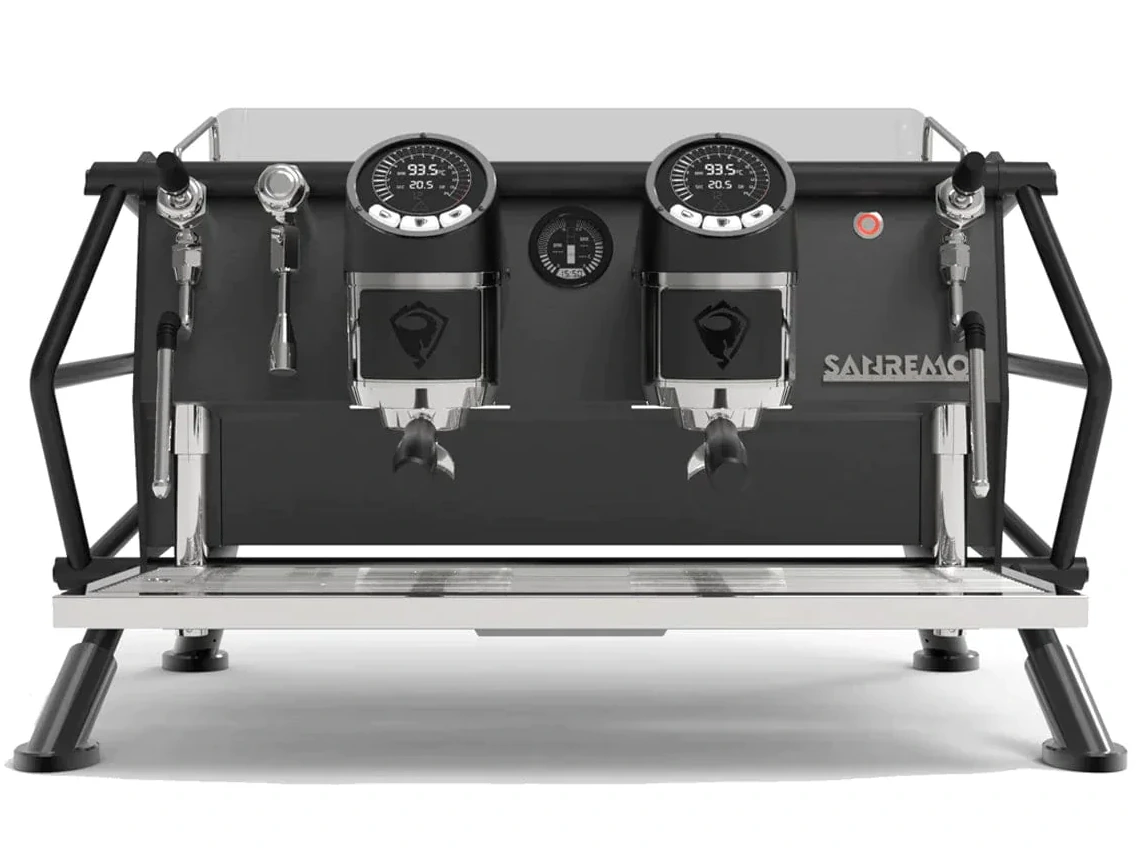
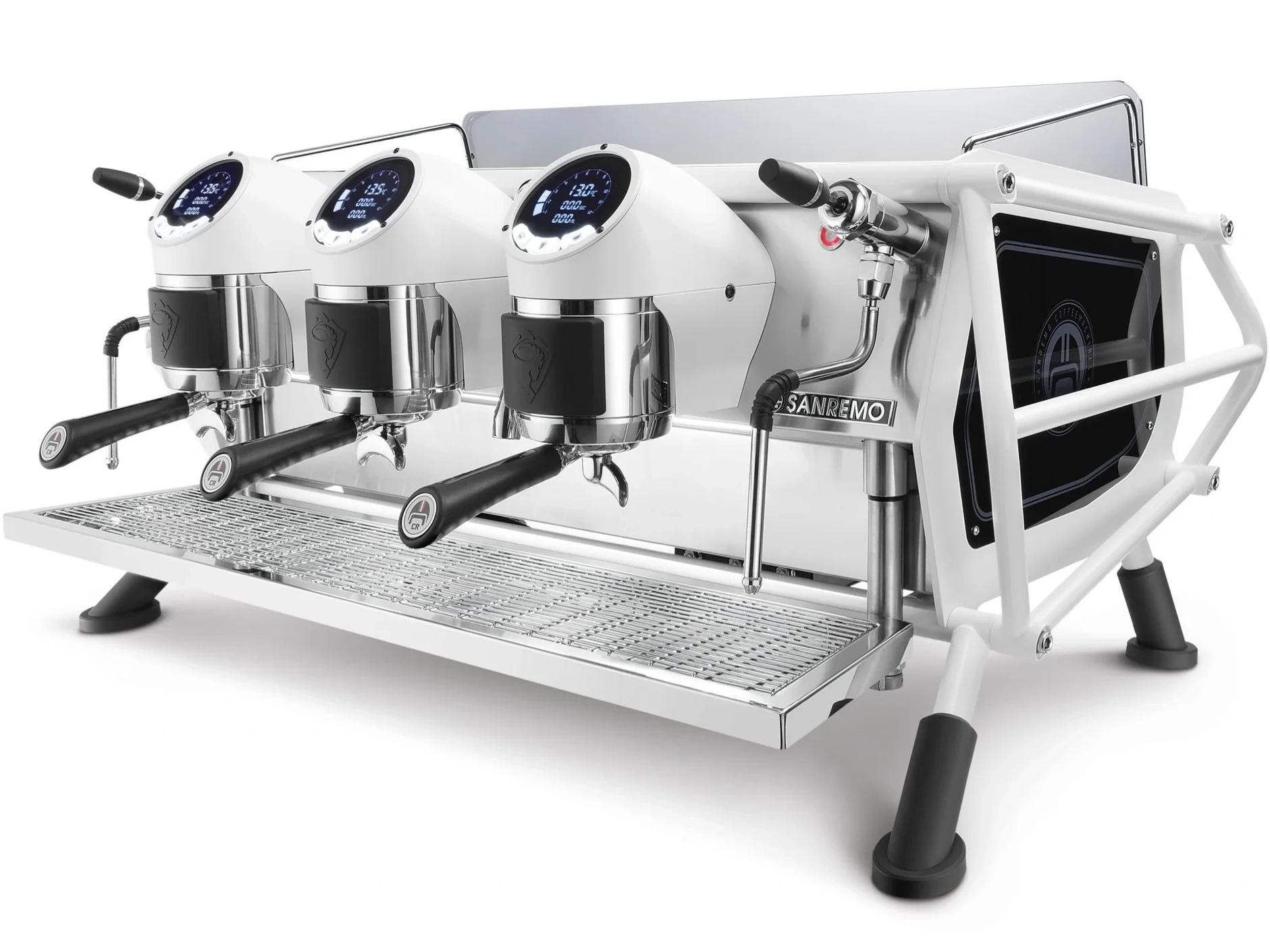
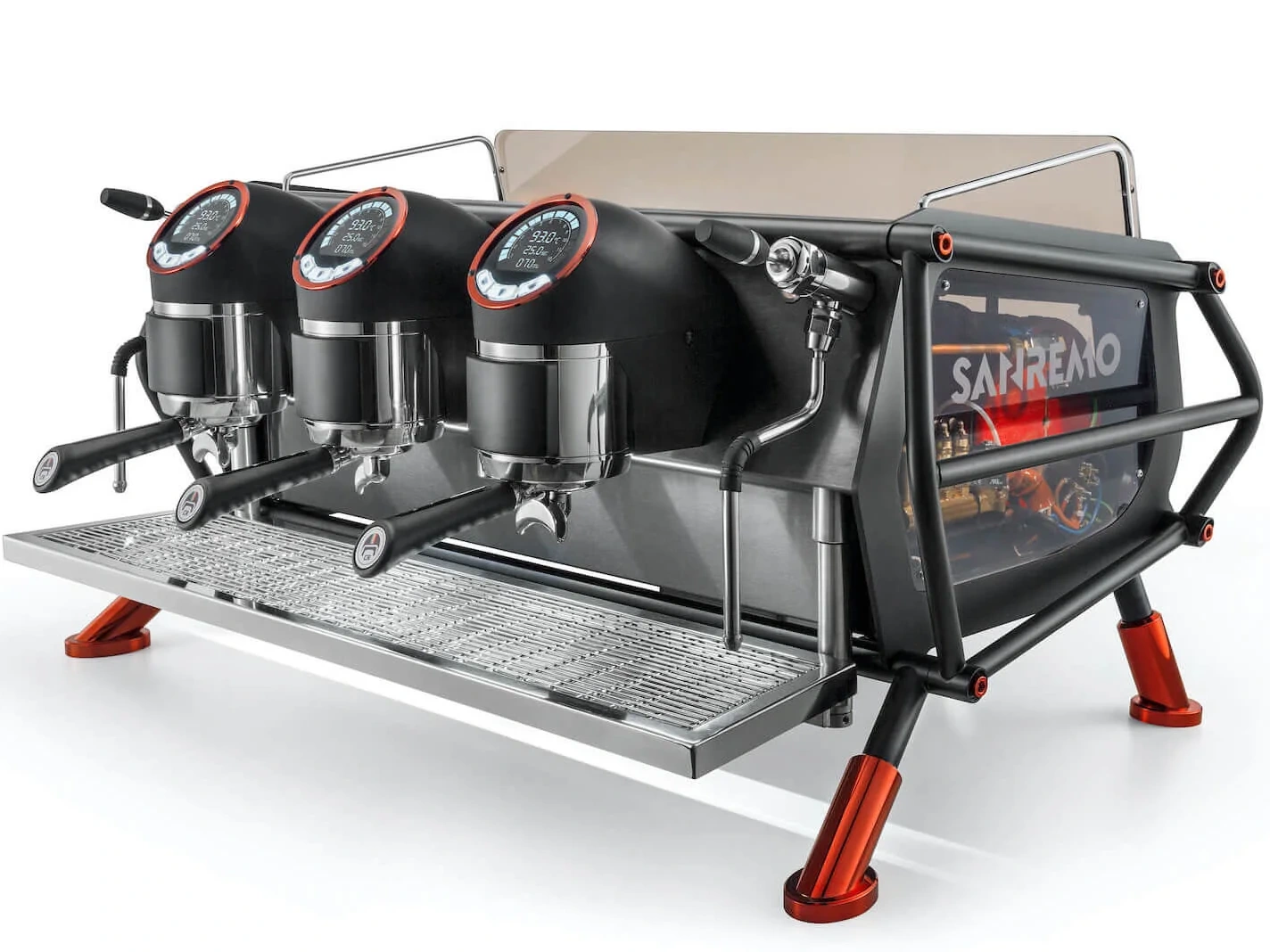
I often feel like I am stepping into a high-end garage rather than a coffee shop when I see these machines. The Sanremo Cafe Racer looks exactly like a vintage motorcycle with its exposed frame and sleek metallic finishes (it is honestly a bit intimidating). Then you have the Opera which feels like a piece of laboratory equipment designed by a mad scientist who just really loves espresso.
Why Shops Love It
High volume shops choose the Cafe Racer because it is built for pure speed and consistent temperature. Baristas love the Opera because it allows them to adjust every tiny detail of a recipe using a dedicated tablet app (it is a dream for true coffee nerds)
Sanremo Espresso Machine Price
For these high-end models, a commercial Sanremo espresso machine price ranges from $27,000 to $39,000. See current price at Prima Coffee Equipment.
What makes it special
- Sanremo is known as the "innovator underdog" that often releases technology years before other brands catch up.
- The Cafe Racer was the official machine for the World Latte Art Championship because its steam power is incredibly steady.
- You can get the "Naked" version of these machines with transparent sides to see the "engine" inside while it works.
Where it falls short
- The US service network is smaller. Finding a tech can be tough.
- The Opera carries a premium price for its advanced tech.
- Few Arizona shops run them. Peer support is thin.
- Parts availability lags the larger Italian brands.
Best Home Espresso Machine Alternative: Sanremo You
The Sanremo You ($7,750) is a single group powerhouse that fits on your kitchen counter.
Synesso MVP
The Precision Control
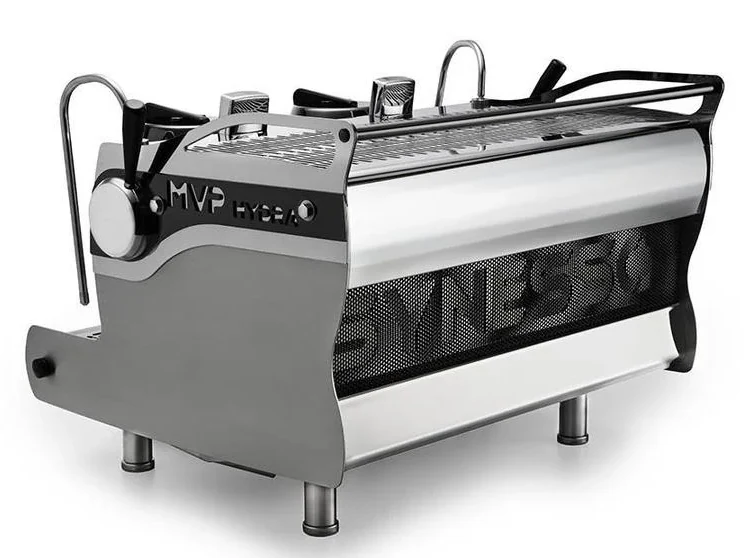
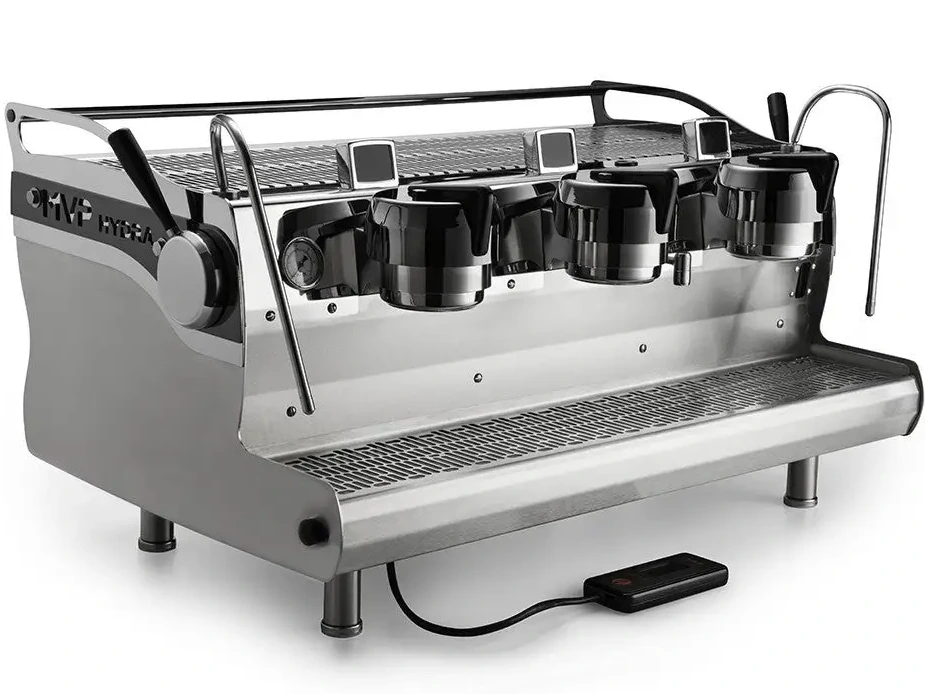
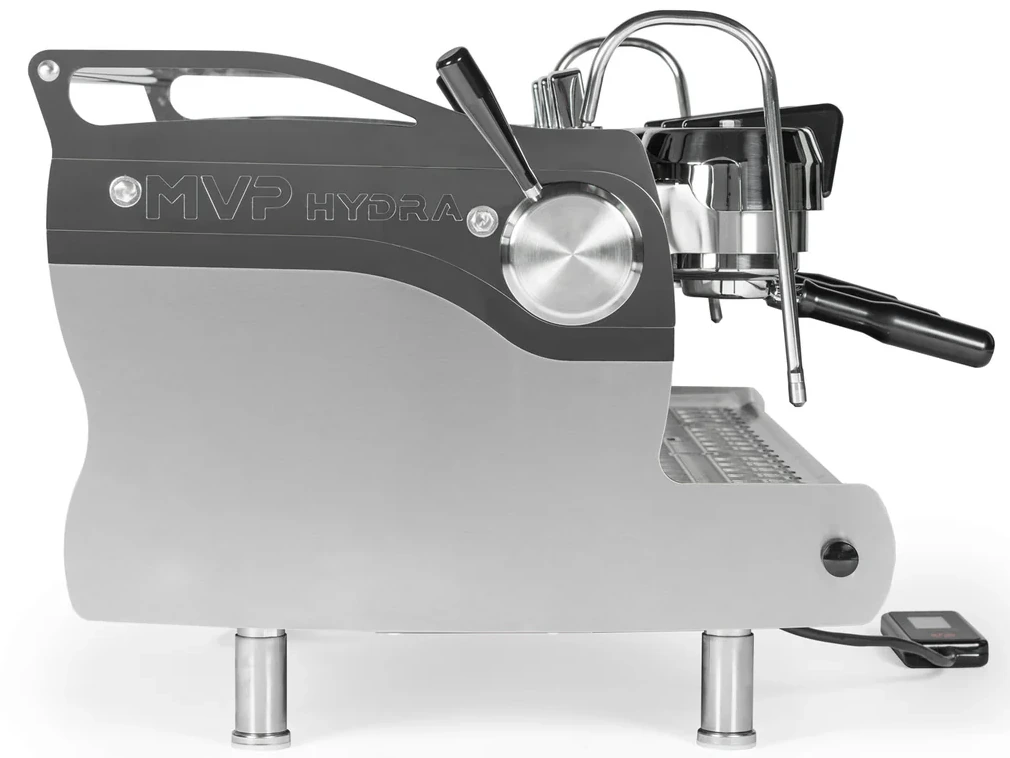
I remember the first time I saw a Synesso MVP at a shop in Scottsdale and I thought it looked like it belonged on a high-end kitchen counter in a modern mansion. While some brands focus on being as short as possible to hide the equipment, the MVP Hydra stands tall and proud like a classic stainless steel sculpture. It has a presence that says “I am here to work”. It is a heavy hitter designed to handle a massive volume of orders without breaking a sweat.
Why Shops Love It
The Hydra has a bypass system that reduces pressure at the start and end of each shot. This ensures that the water does not channel through the coffee bed (even if the barista is having a rough morning and did not tamp perfectly). It is essentially a safety net for quality control in a very busy environment.
Synesso Espresso Machine Price
Depending on the group head configuration, a commercial Synesso espresso machine price usually falls between $23,400 and $26,775. See current pricing at Prima.
What makes it special
- Each group head has its own individual pump and motor so you get uninterrupted pressure even when both groups are running at once.
- Features a unique 4 stage pressure profiling system that allows adjustments for pre-infusion, ramp up, full pressure and ramp down.
- The luminous LED shot timers are huge and positioned right above the group heads so they are impossible for a busy barista to miss.
Where it falls short
- The looks are utilitarian. It lacks the visual wow of some rivals.
- It is heavy and built like a tank. It needs sturdy counter support.
- You pay a premium for an understated machine.
- The smaller brand footprint means fewer local service options.
Best Home Espresso Machine Alternative: Synesso ES1
The Synesso ES1 ($12,600) is a single group head version that brings that same Seattle engineering to your house.
Spotted at these Arizona Coffee Shops
- Presta Coffee Roasters in Tucson
- Sagebrush Coffee Shop & Roastery in Chandler (White Color)
- Mythical Coffee Roasters Gilbert (Green Color)
- Press Coffee - The Roastery in Phoenix
- Press Coffee Raintree in Scottsdale (Black Color)
- Press Coffee in Chandler (White Color)
- Press Coffee in Gilbert (Black Color)
Victoria Arduino Eagle Series
The Future Architect
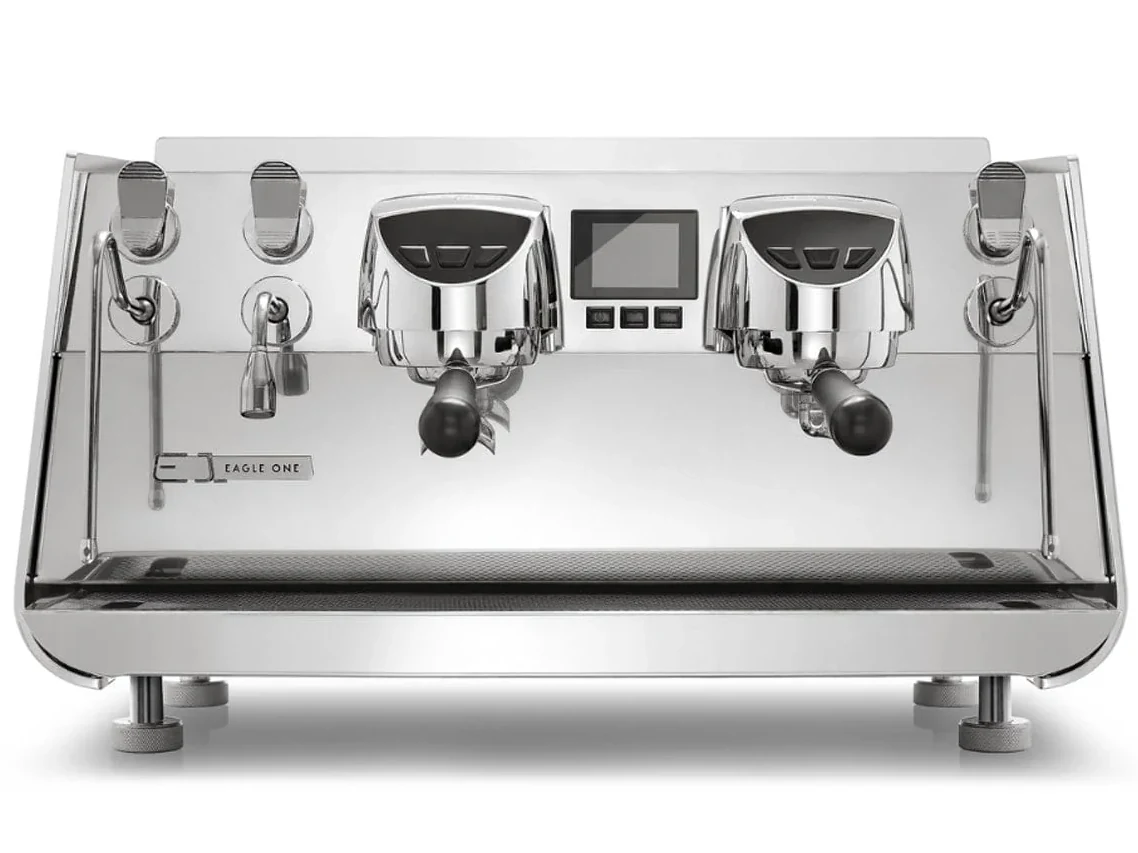
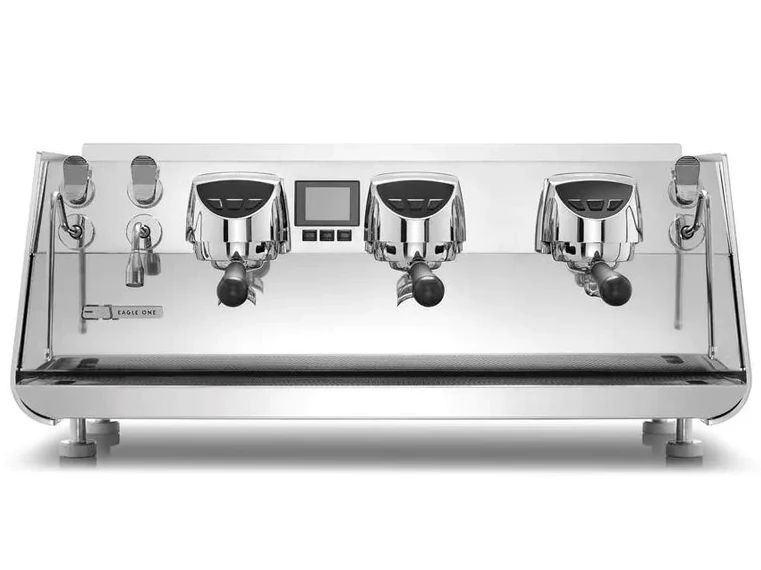
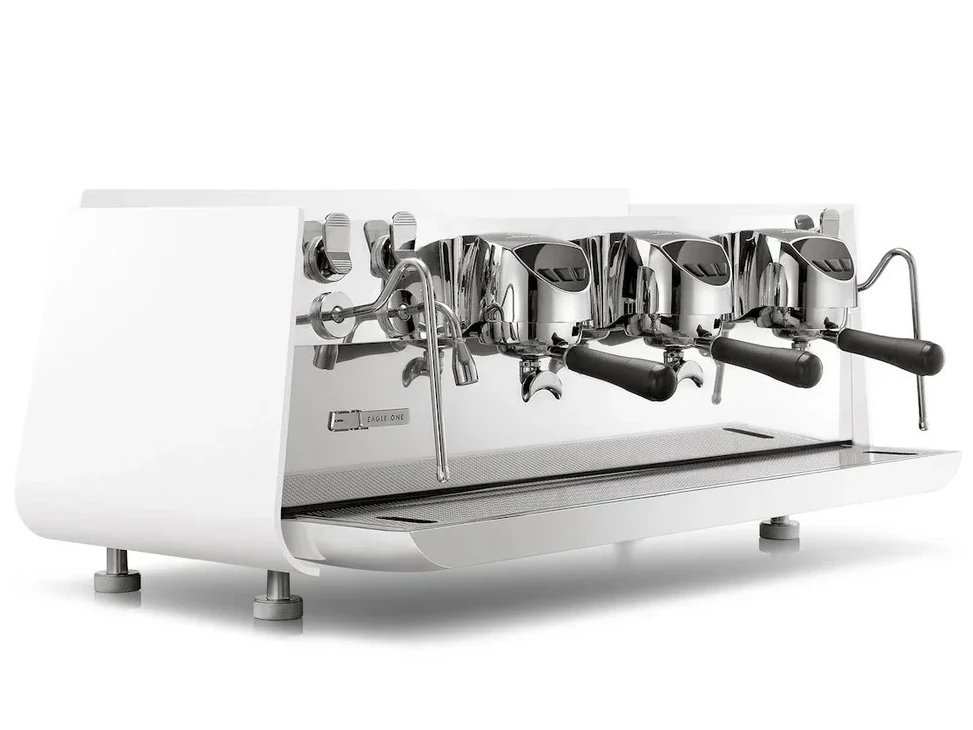
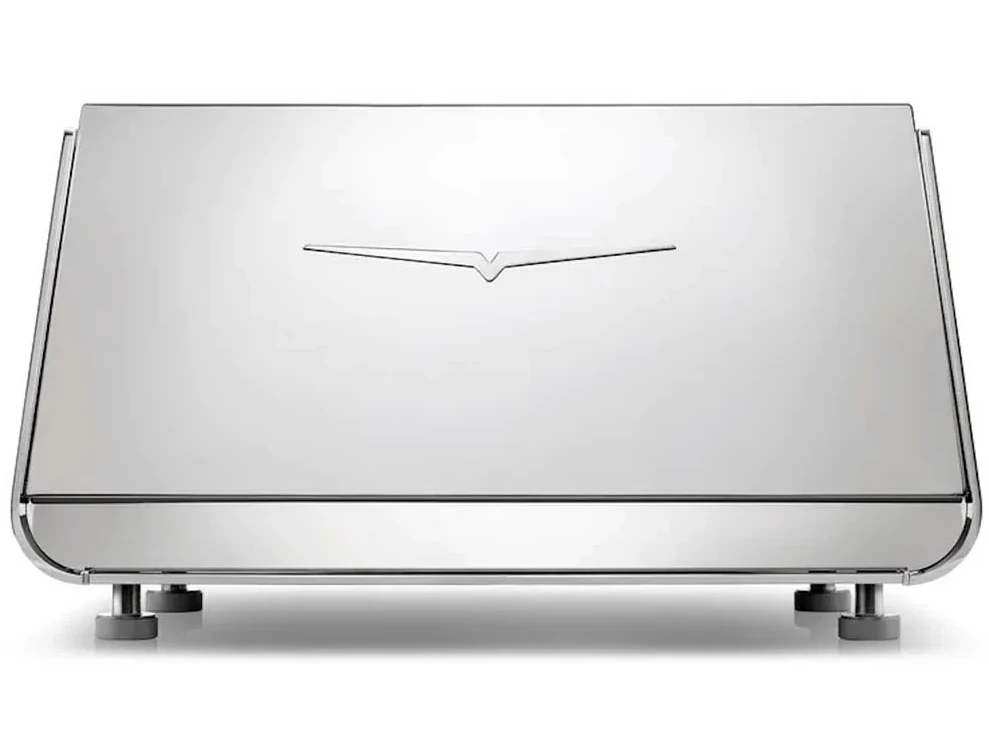
I love seeing an Eagle One on a bar because it looks like a piece of high-end Italian furniture that accidentally learned how to brew coffee. It has these incredibly clean and minimal lines that make it feel much less bulky than the traditional “box” machines you see everywhere. Victoria Arduino designed this for the new generation of shops that care just as much about their carbon footprint as they do about their latte art.
Why Shops Love It
One shop owner told me that the Eagle One is a total dream for his monthly utility bills. It uses a “New Engine Optimization” system that only heats the exact amount of water needed for each shot rather than keeping a massive boiler at a boil all day long (it is basically the Tesla of the coffee world). The “Ghost Display” keeps the screen interface hidden and sleek until you actually need to use the buttons.
Typical Price Range
$18,000-$26,000
What makes it special
- It uses a patented system that actually recycles heat from waste water to warm up the fresh water coming into the machine.
- It features "Cool Touch" steam wands which means you can grab the wand without needing a rubber clip or a trip to the emergency room.
- The automatic purging system rinses the group head for you the moment you remove the portafilter (it is like a tiny robot assistant).
Where it falls short
- Replacement parts for the sleek design cost more.
- Advanced electronics can mean pricier repairs after the warranty ends.
- The service presence is lighter in some regions.
- The feature depth can overwhelm a first time shop owner.
Best Home Espresso Machine Alternative: Victoria Arduino E1 Prima
The Victoria Arduino Eagle One Prima ($6,990) is a single group version that looks identical to the commercial giant.
Spotted at these Arizona Coffee Shops
- FreeForm Coffee Roasters in Sedona (Eagle One in White)
- Savaya Coffee Market in Tucson - Synergy Plaza (Rare Black Eagle WBC Champion Edition!)
- Light Heart Coffee in Gilbert - Eagle One (White Color)
- Light Heart Coffee in Central Scottsdale - Eagle One (White Color)
- Light Heart Coffee in North Scottsdale - Eagle One (White Color)
- Stellar Coffee Co in Old Town Scottsdale
Kees Van der westen spirit
The High End Super Model
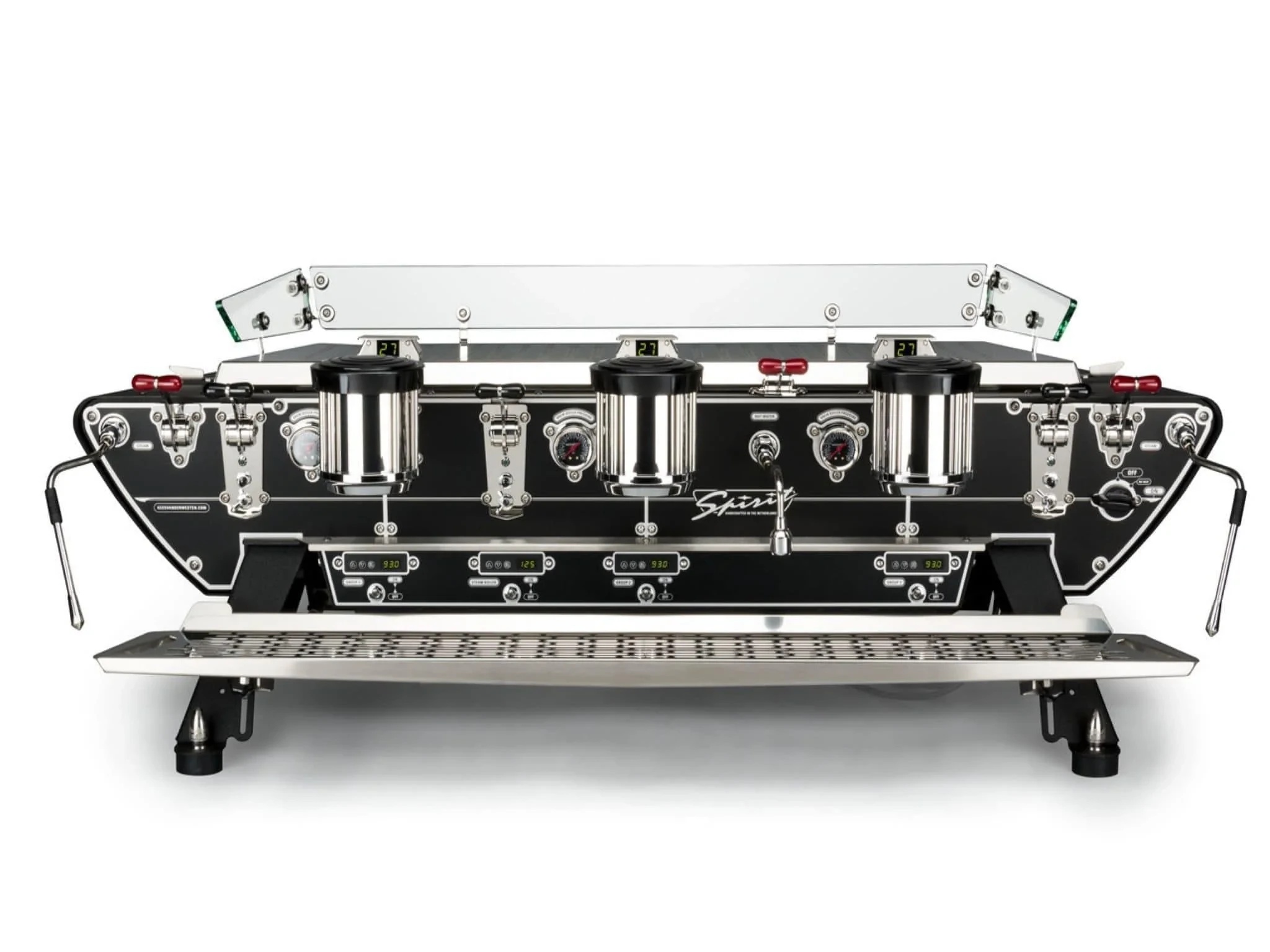
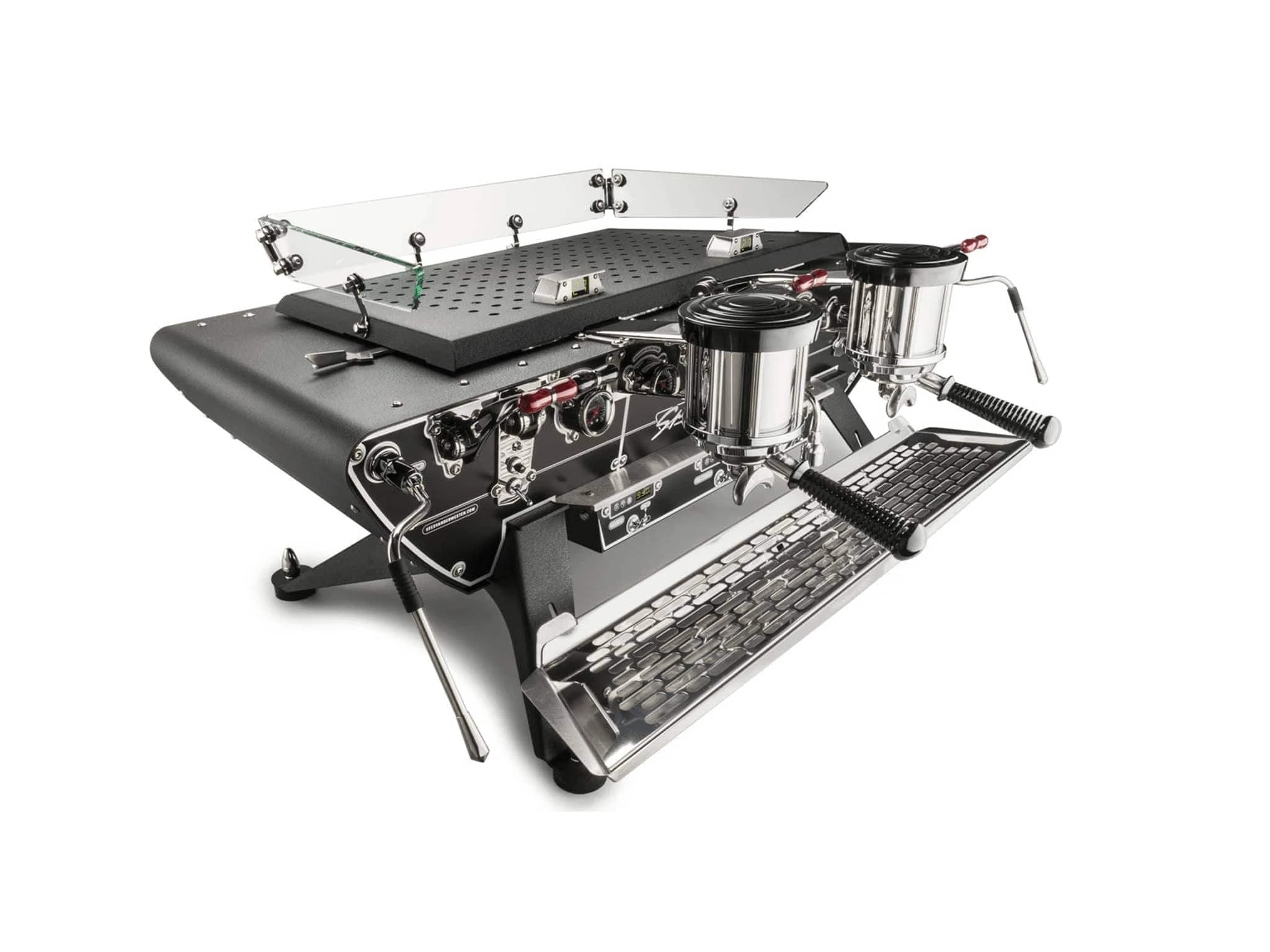
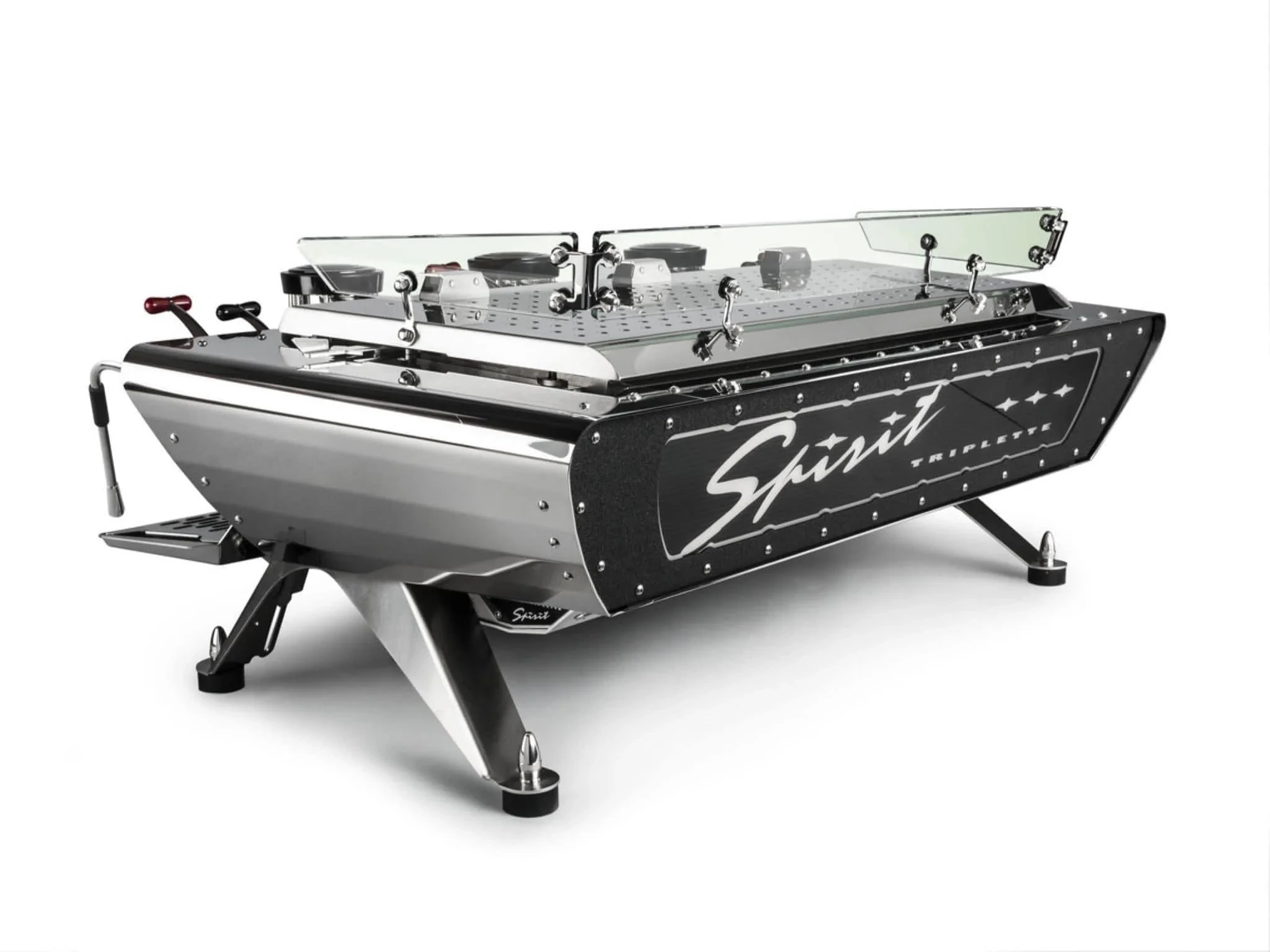
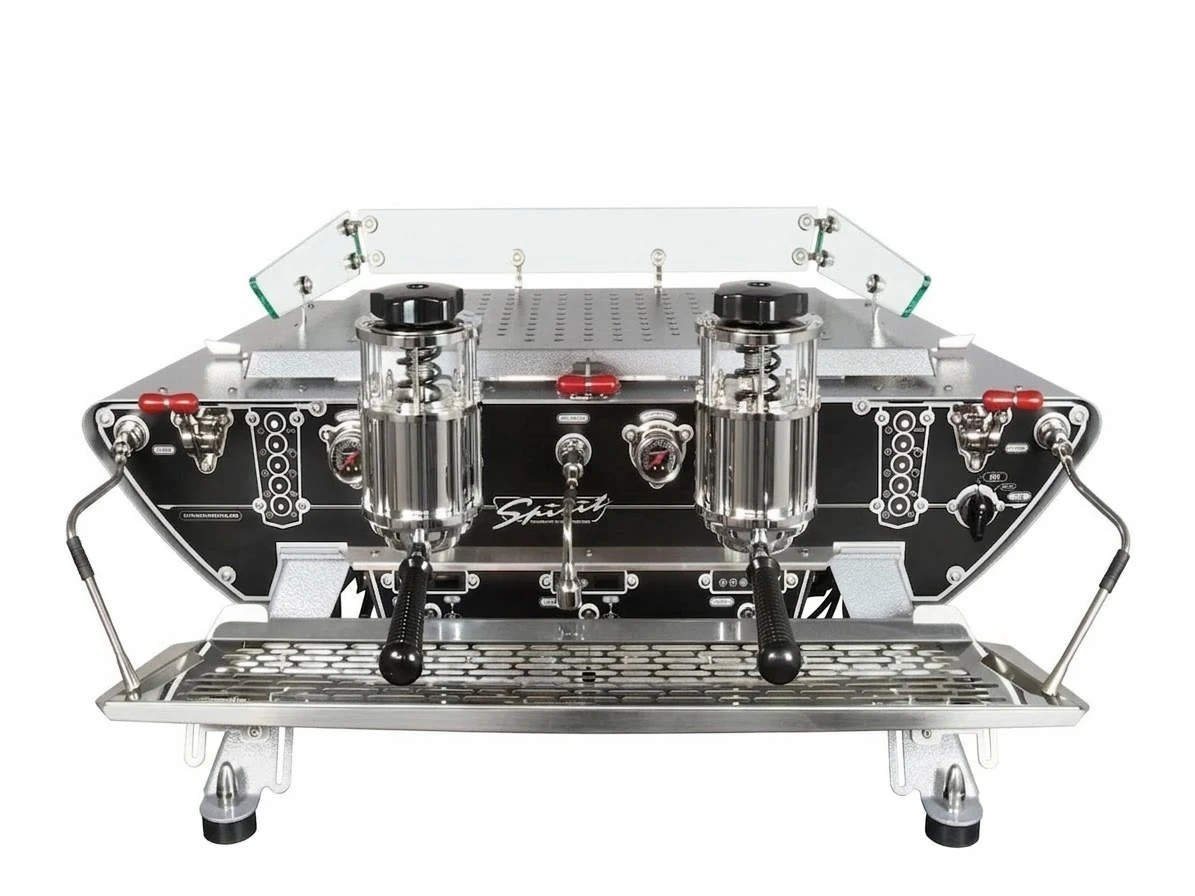
I only know of one single shop in all of Arizona that has the Spirit (linked below) and I honestly suspect it might be the only one in the entire state. It looks like a retro-futuristic laboratory machine that was hand built in a small workshop in the Netherlands. It has a low and wide body that makes it look incredibly fast even when it is just sitting on the counter. Every time I see the glowing glass logo on the back panel I know the espresso is going to be a serious experience.
Why Shops Love It
Highend coffee shop owners choose the Spirit because it is designed for extreme output without ever losing its cool. Baristas love that it uses two separate external pumps so refilling the steam boiler never steals pressure from the coffee extraction (it is basically like having a dedicated engine for every task).
Typical Price Range
$26,000-$62,000
What makes it special
- Kees van der Westen is a "cult" status designer who builds these machines in small series with a team of only about 25 people.
- It uses massive 2.1 liter brew boilers for each group head. This is almost three times the size of a standard commercial machine!
- The pre-infusion system slowly ramps up the water pressure to 9 bars to prevent the coffee puck from cracking under stress.
Where it falls short
- Expensive and often built to order with long waits.
- This is a boutique brand. Service and parts are specialist only.
- The bold retro styling is polarizing.
- Resale value and the support network are limited.
Best Home Espresso Machine Alternative: Kees Van Der Westen Speedster
The Kees van der Westen Speedster priced at $23,900 is a serious investment in precision. This single group version evokes the sleek and chrome aesthetic of a 1950s fighter jet.
Spotted at these Arizona Coffee Shops
Note: The owner of Aristocrat informed me that his Kees Spirit is no longer on the counter while awaiting parts. So depending when you go, you may or may not see it there.
Modbar Espresso AV
The Transparent Artist
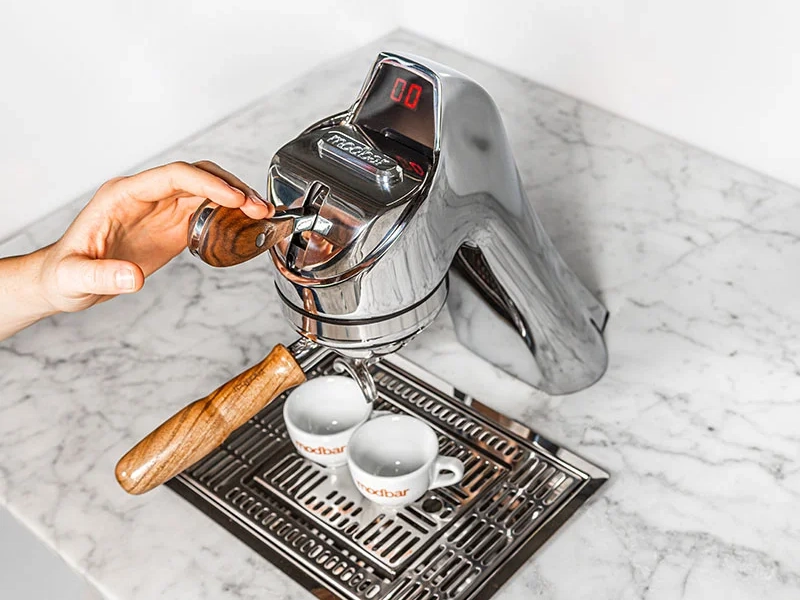
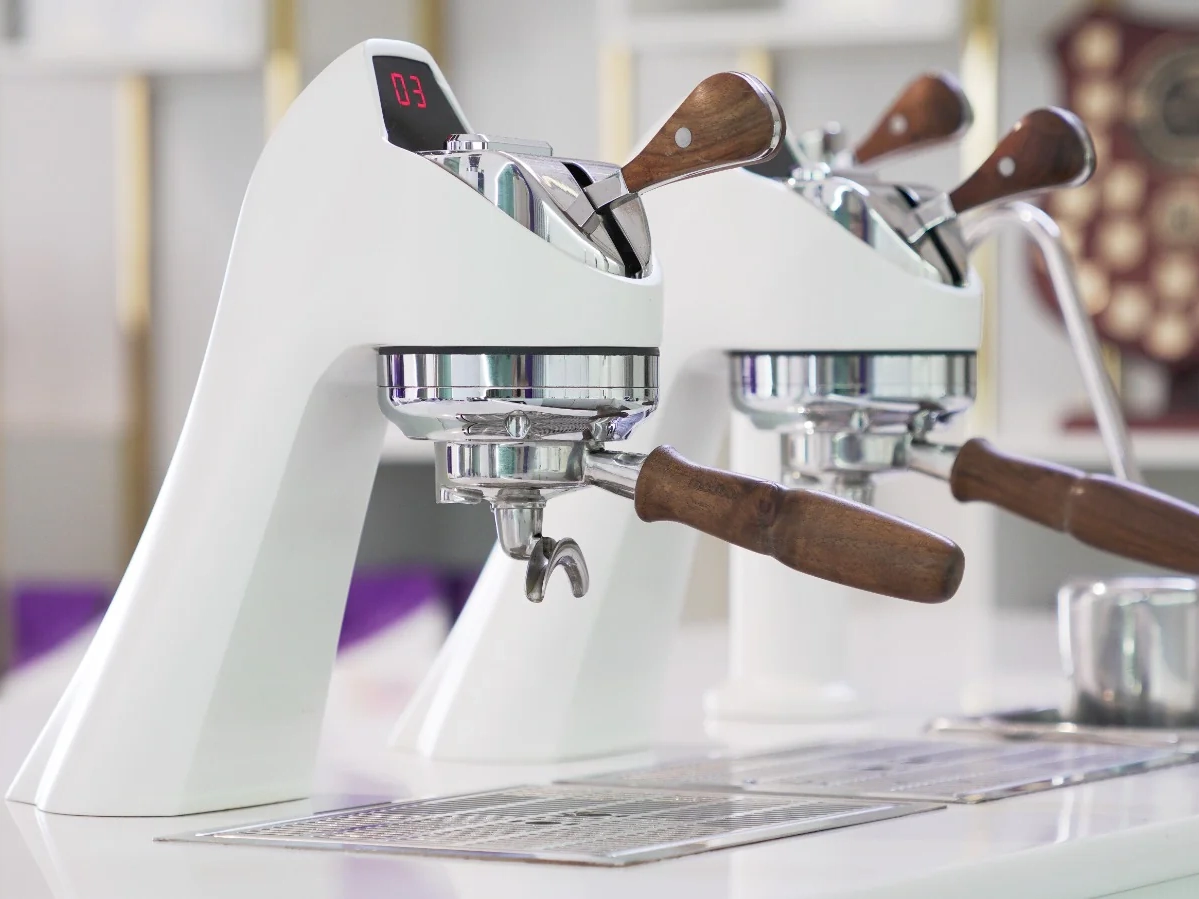
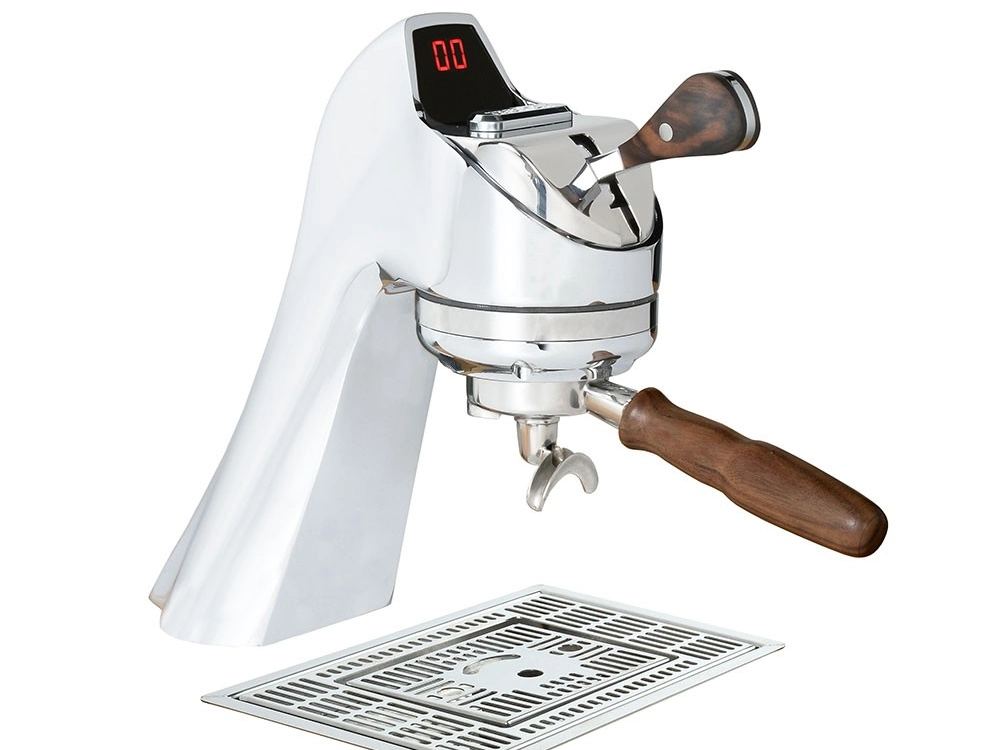
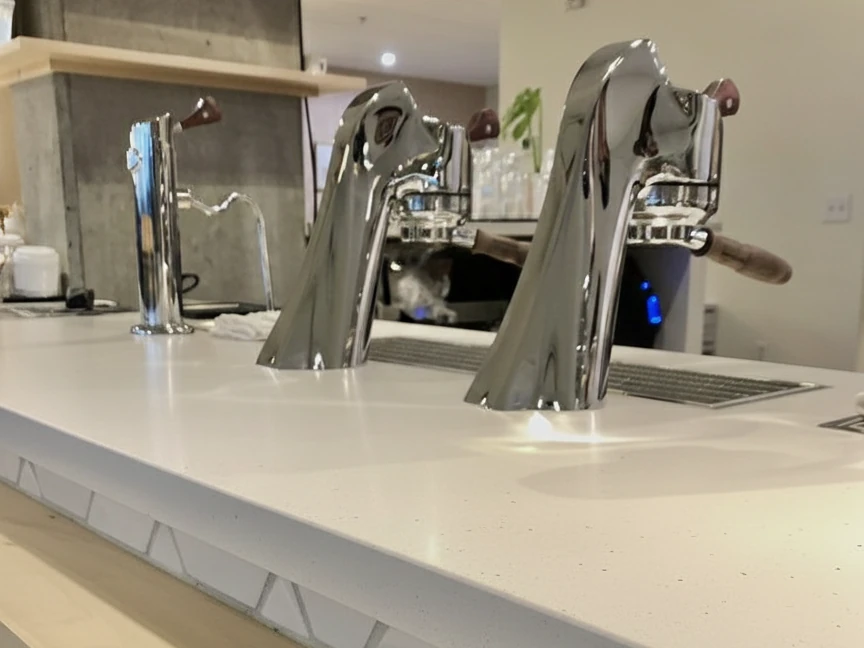
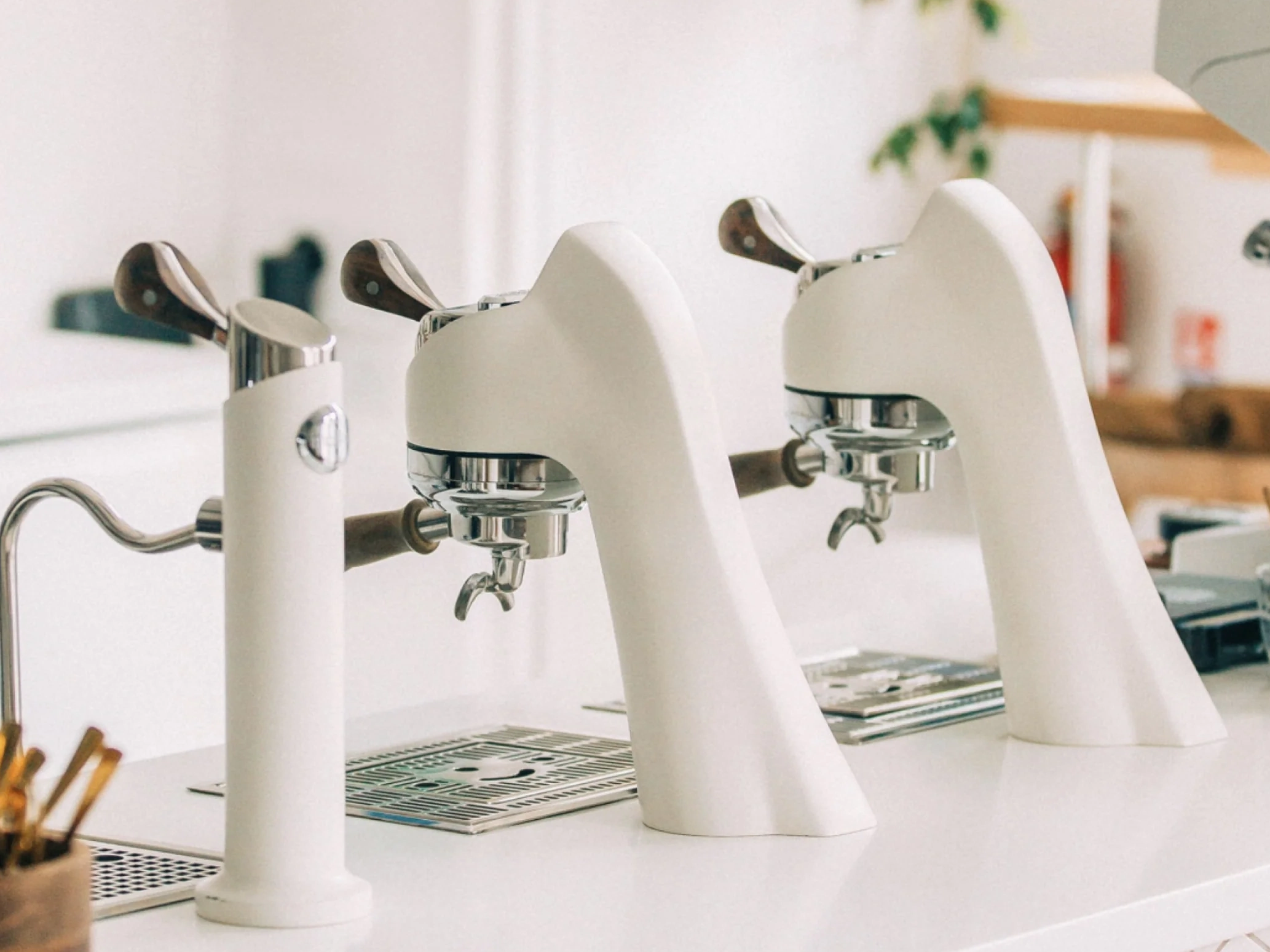
I always feel like the counter is a stage when I see the Modbar Espresso AV in action. It is the ultimate collaboration between Modbar and La Marzocco which basically means they took the legendary “guts” of a Linea PB and hid them under the counter (out of sight and out of mind). You just see these gorgeous chrome taps that let the barista look you in the eye while they pull your shot.
Why Shops Love It
Owners pick the Modbar AV because it is a dream for high-volume shops that want to keep a clean and minimal look. Baristas love that they can add a second tap to a single module later on if the shop gets busier (it is a very smart way to grow a business without buying a whole new machine).
Typical Price Range
$12,000-$22,000
What makes it special
- It uses the exact same reliable internal parts as the famous La Marzocco Linea PB but keeps them tucked away under your counter.
- You can choose a version with integrated scales in the drip tray that weigh your espresso as it pours for perfect consistency.
- It features a simple heads-up display and shot timer right on the tap so the barista does not have to look down or away.
- The heated brew group ensures that water stays at the perfect temperature from the boiler all the way to the cup.
Where it falls short
- The install is complex. The core tech sits below the counter.
- Custom millwork and plumbing raise the true total cost.
- Service access is harder because the components are hidden.
- It is not portable once installed. Reconfiguring the bar is difficult.
Best Home Espresso Machine Alternative: Modbar Espresso AV Single Tap
Honestly, there is no “consumer friendly” version of the Modbar Espresso AV that I know of. You just have to pull the trigger on a single tap for $12k and drop it into your kitchen island. Sure, it is a massive investment but you will never have to stare at a bulky machine again! The beautiful tap sits elegantly on the counter while the guts stay hidden below. It is the ultimate show off piece!
Spotted at these Arizona Coffee Shops
Mavam Under Counter
The Barista Liberator
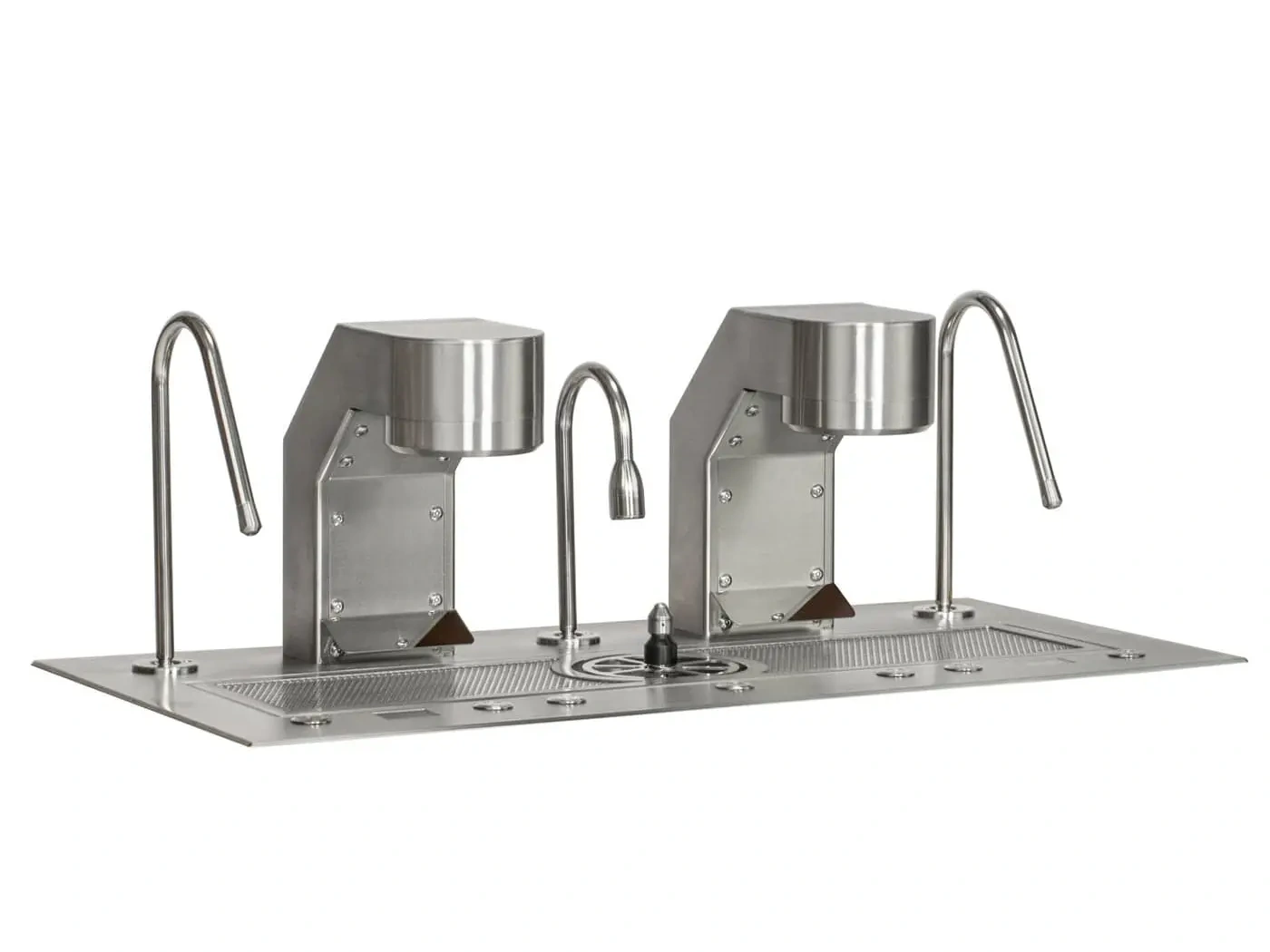
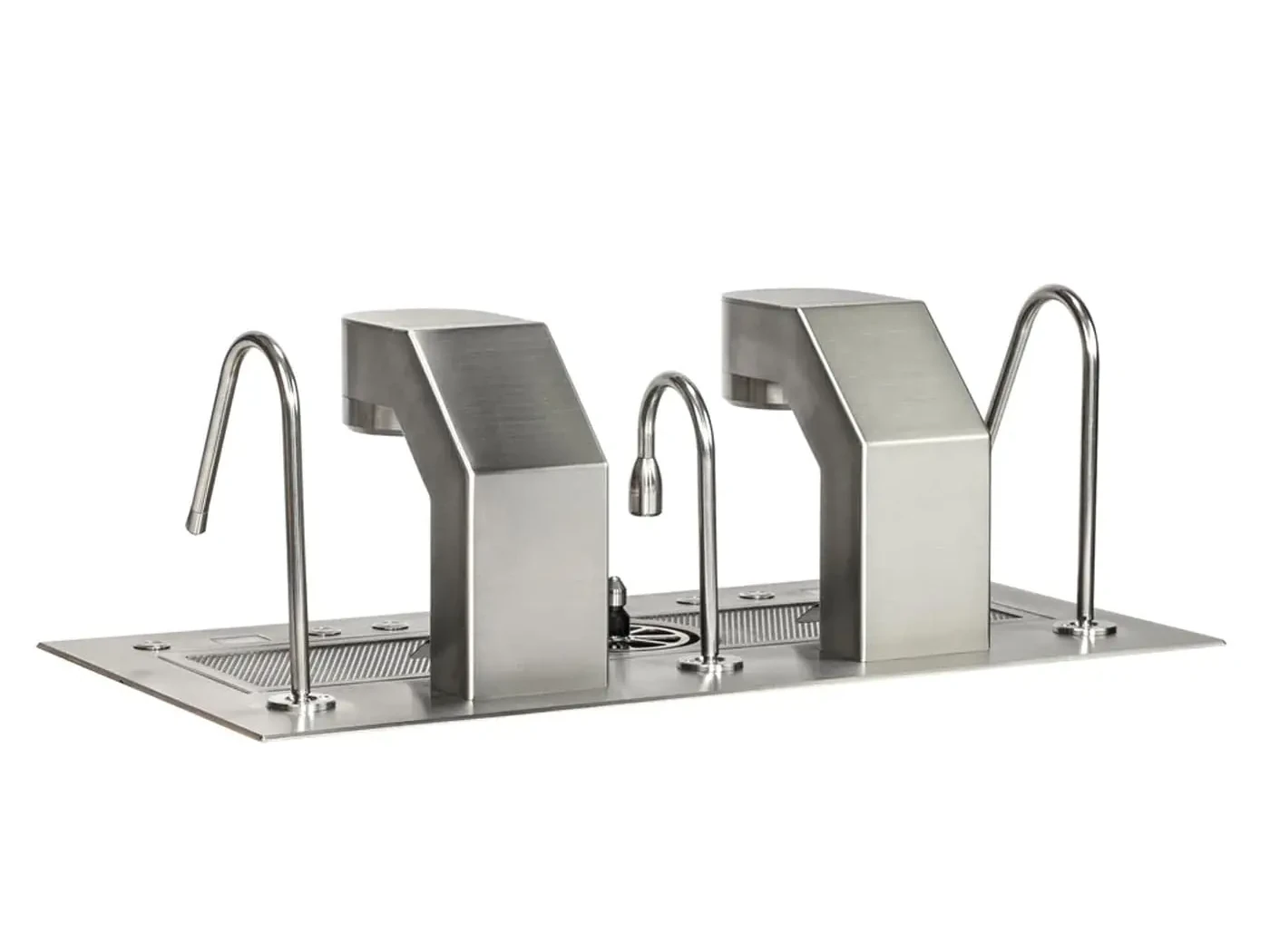
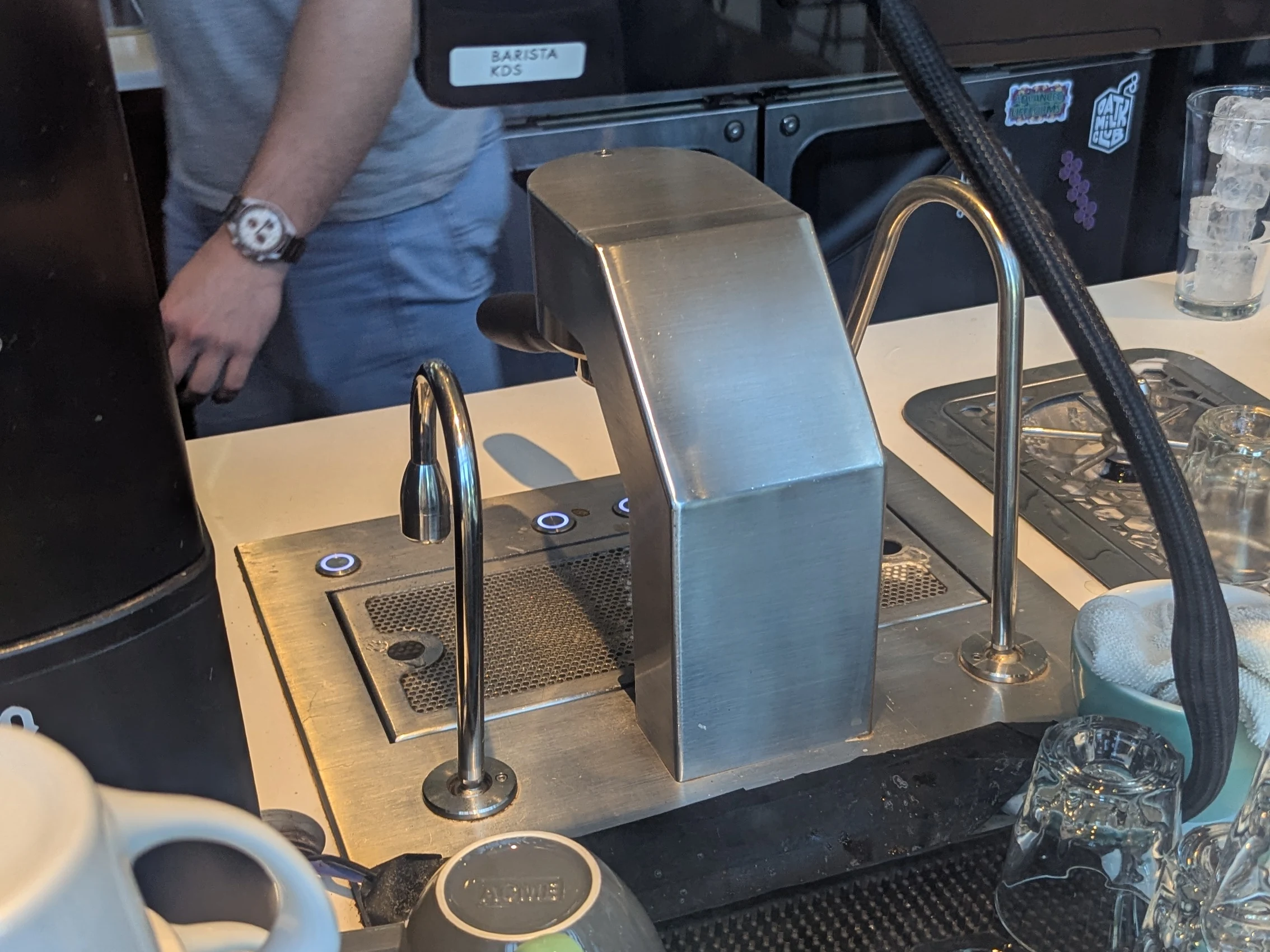
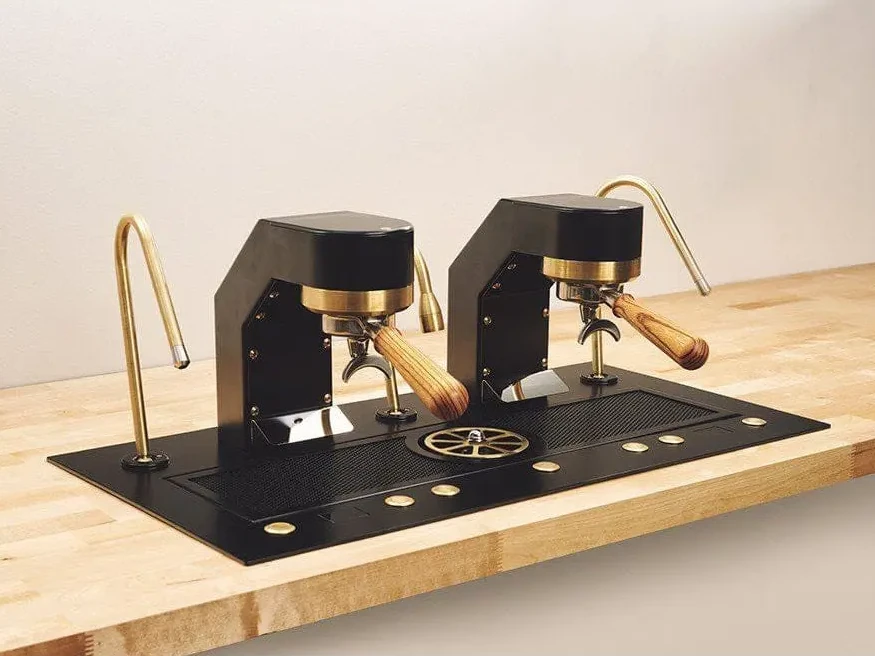
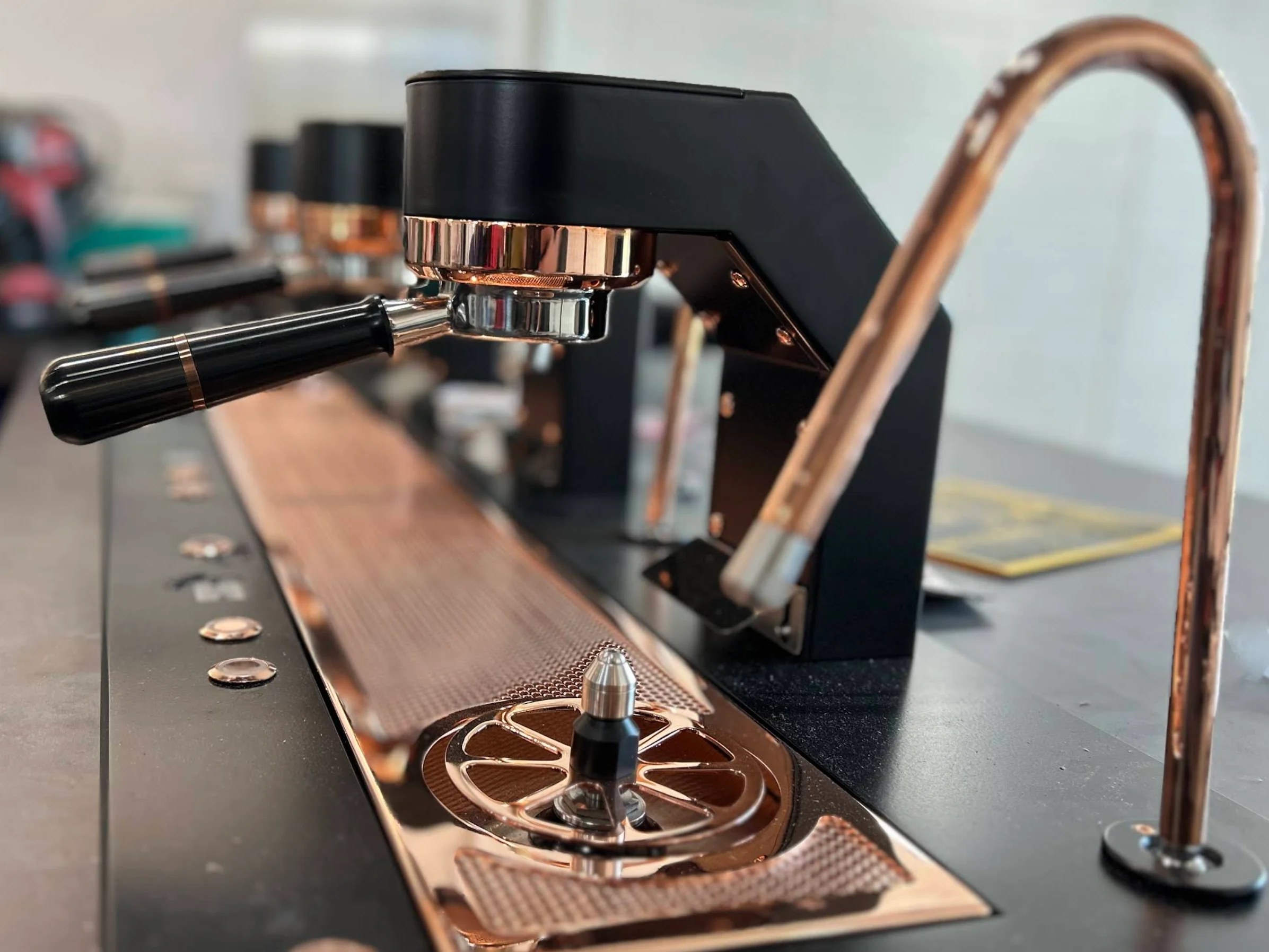
I love walk up bars where the machine is hidden because it feels like the barista is actually a host rather than someone hiding behind a giant metal wall. The Mavam Under Counter is the peak of this brutalist aesthetic. It has these heavy stainless steel group heads that sit directly on the counter while the real heavy lifting happens in the cabinet below. It is a bold look that usually means the shop is very serious about their design and their customer service.
Why Shops Love It
Owners pick the Mavam because it gives their staff true workflow freedom and lets them talk to customers without shouting over a boiler. Baristas are obsessed with the Automated Pre-Infusion (API) which detects exactly when the coffee puck is saturated and then kicks in the full flow automatically (it is basically like having an extra pair of hands during a rush).
Typical Price Range
$14,500-$32,000
What makes it special
- It won the Best New Product award at Coffee Fest for its unique modular design and "brutalist" look.
- The patented Heated Hose Transfer System ensures the water does not lose even a single degree of heat on its way from the boiler to the cup.
- It features a built in Spin Jet pitcher rinser and a hot water tap right in the drip tray to keep the counter clean.
- The one-touch Piezo steam activation gives you instant and endless steam without needing to turn a heavy knob.
- Mavam is proudly designed and built in the Pacific Northwest by coffee technicians who wanted to make machines easier to fix.
Where it falls short
- It shares the same under counter install challenges and cost.
- This is a newer and smaller brand with a limited service network.
- Repairs can mean longer downtime while you wait on the maker.
- Few Arizona shops run it. Local reference points are rare.
- May need custom cabinetry work.
Best Home Espresso Machine Alternative: Mavam undercounter Single Tap
The Mavam undercounter is another gorgeous masterpiece (similar to the Modbar I coverd earlier). At $15K for a single tap, only the dedicated and well off home users install this in a kitchen island.
Spotted at these Arizona Coffee Shops
Nuova Simonelli Aurelia Wave
The Ergonomic Icon
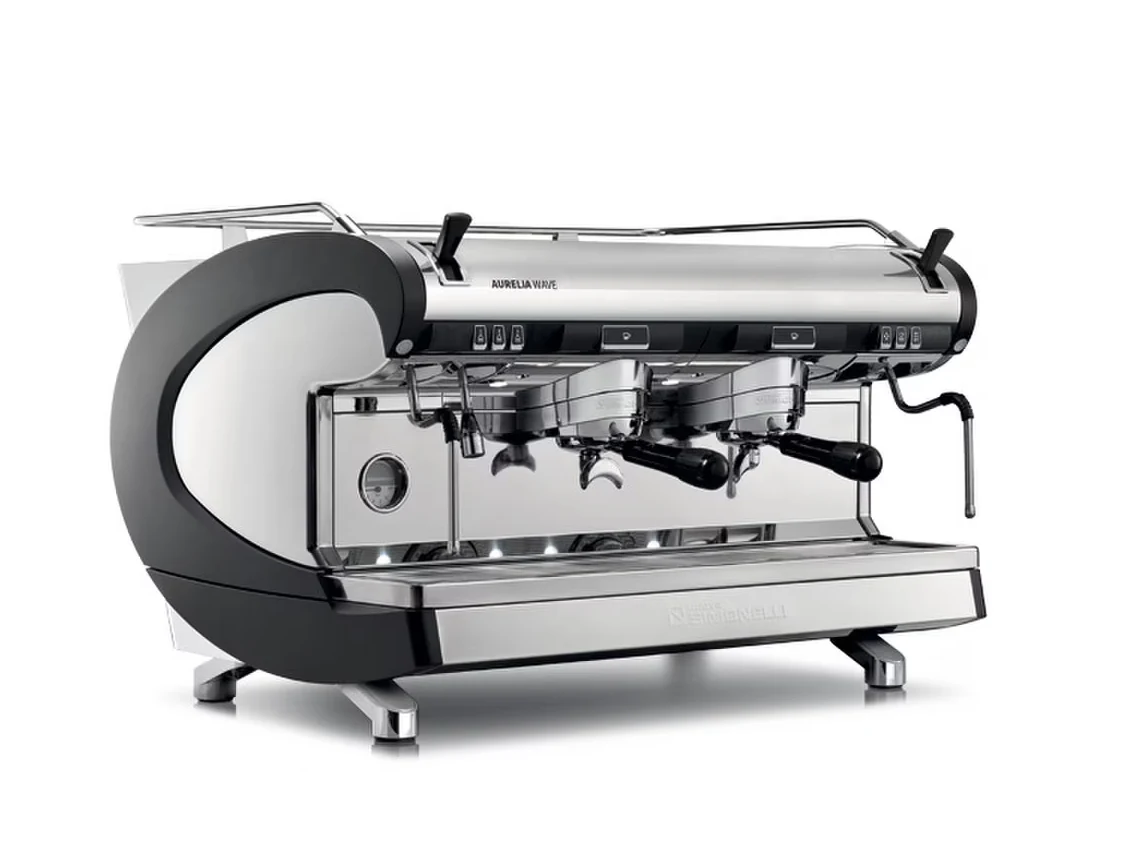
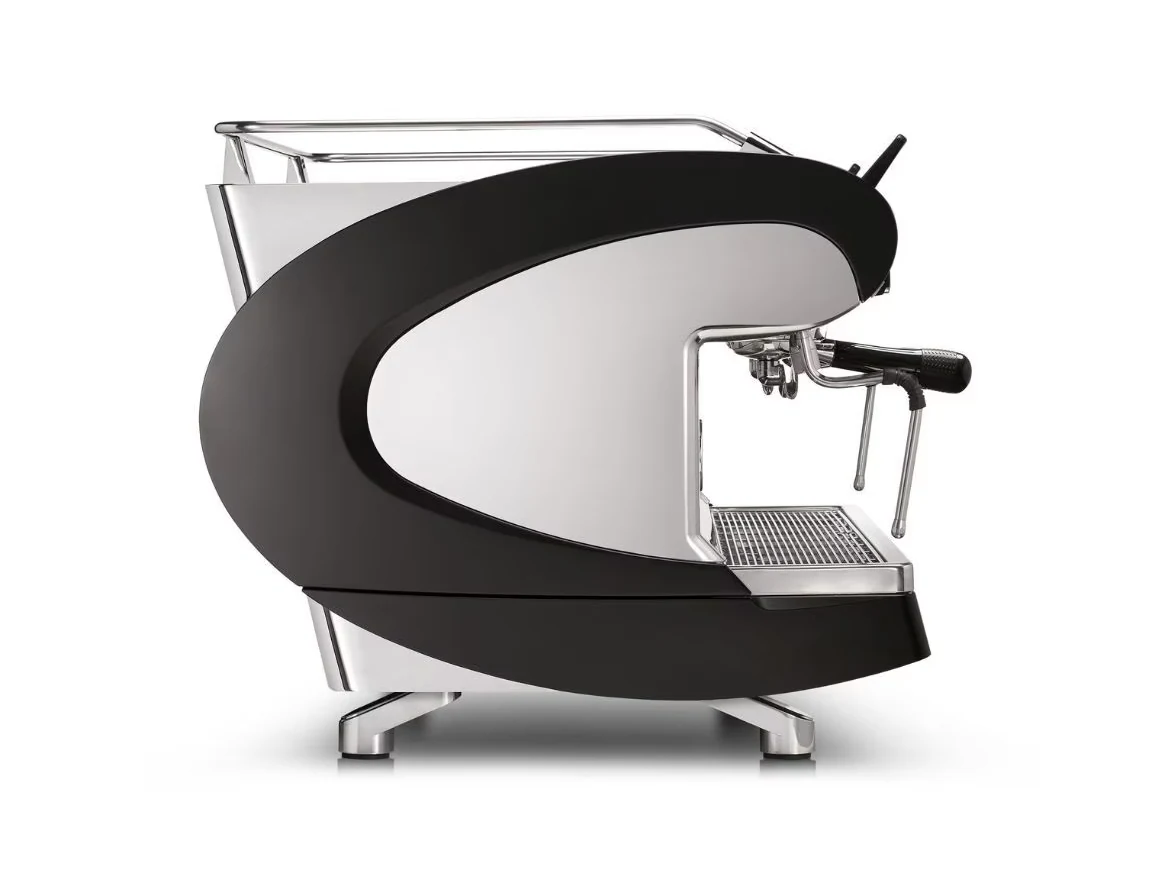
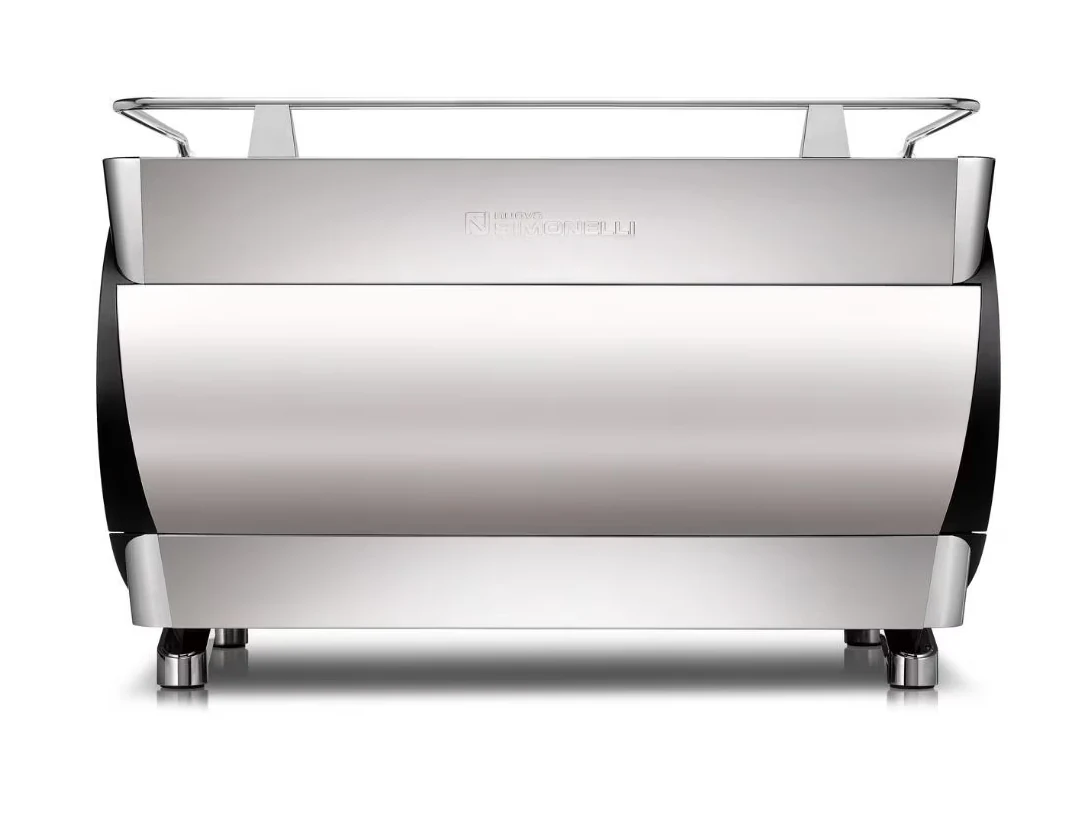
The Nuova Simonelli Aurelia Wave Semiautomatic is a high performance commercial machine built for cafes and restaurants that prioritize manual precision and barista comfort. It evolves the legendary Aurelia II platform by integrating “Soft Infusion” technology and a redesigned ergonomic interface, allowing for high volume output without sacrificing the nuanced control required for specialty coffee.
Why Shops Love It
Shop owners value the Aurelia Wave for its affordability and extreme user friendliness and reliability. The Soft Infusion System (SIS) is a standout feature as it counteracts inconsistent tamping and prevents channeling, ensuring a high quality extraction even during the busiest rushes. Additionally, the Automated Cleaning programs allow the machine to handle its own maintenance at the end of the day, freeing up staff for other tasks.
Typical Price Range
$11,500-$21,500
What makes it special
- Manual Dosing Controls for ultimate extraction flexibility
- Reverse Mirror that lets baristas monitor the pour from a comfortable upright position.
- The Cool Touch Wands and Push-Pull Steam levers significantly reduce physical strain and the risk of burns.
- Italian engineering at an affordable price.
Where it falls short
- The interface feels dated next to newer touchscreens.
- The footprint is large for a smaller bar.
- The brand is common. It offers less of a unique identity for a shop.
- The steam power is strong and can intimidate new staff.
Best Home Espresso Machine Alternative: Nuova Simonelli Musica
The Nuova Simonelli Musica ($2,950) serves as the compact sibling for home use. The Musica utilizes a heat exchange boiler and professional grade volumetric dosing bringing the core stability and “Soft Infusion” philosophy of the Aurelia line to a footprint that fits a standard kitchen counter.
Spotted at these Arizona Coffee Shops
The Phoenix Coffee Scene
Phoenix is the heart of it all. Start with my pick of the best cafes in the city.
Best Coffee Shops in Phoenix
Discover the rich heritage and unique flavors of Arizona’s Mexican and Latin owned coffee shops
Commercial Espresso Machine FAQ
Straight answers from the machines I see behind the bar across Arizona.
There is no single winner. The right brand depends on your volume, your budget and your workflow. La Marzocco is the safe default because it is reliable and easy to service. Slayer and Kees Van der Westen suit shops chasing flavor and craft. Victoria Arduino and Nuova Simonelli are strong high volume choices. I break down the trade offs for each brand above.
Most quality commercial machines run between 12,000 and 36,000 dollars. A La Marzocco Linea setup starts around 12,000 to 22,000 dollars. A La Marzocco Strada can reach 33,000 to 36,000 dollars. Under counter systems like Modbar add install cost on top. Remember that grinders, water treatment and installation are separate line items.
They are built to pull hundreds of shots a day for years. You pay for multiple boilers, heavy stainless steel and precise temperature control. Dual and multi boiler designs hold heat steady under constant pressure. Certified parts and trained service also raise the price. A cheap machine simply cannot survive a real cafe rush.
La Marzocco is the most common sight behind the bar. The Linea in particular is a proven workhorse in shops worldwide. Nuova Simonelli and Victoria Arduino are also widespread in higher volume cafes. Across Arizona I see La Marzocco most often, which is why I list where each machine is spotted locally.
A commercial machine is built for constant use and speed. It usually has multiple boilers, a plumbed water line and a larger footprint. A home machine is smaller and plugs into a standard outlet. It handles a few drinks at a time but cannot match cafe output. I list a home alternative for each brand above so you can get close to the cafe experience at home.
A well maintained commercial machine lasts ten to fifteen years or more. Daily cleaning, water treatment and regular service are the keys. Hard water is the biggest enemy because scale damages the boilers over time. Buy from a brand with easy parts access to keep it running for the long haul.
For a smaller or slower cafe I would look at a two group La Marzocco Linea or a Nuova Simonelli. Both are reliable and easy to staff. A Strada or a Slayer is powerful but often more than a low volume bar needs. Match the group head count to your busiest hour, not your daily average.