We put the Nocturne menu to the test. The menu passed. Then it kept going.
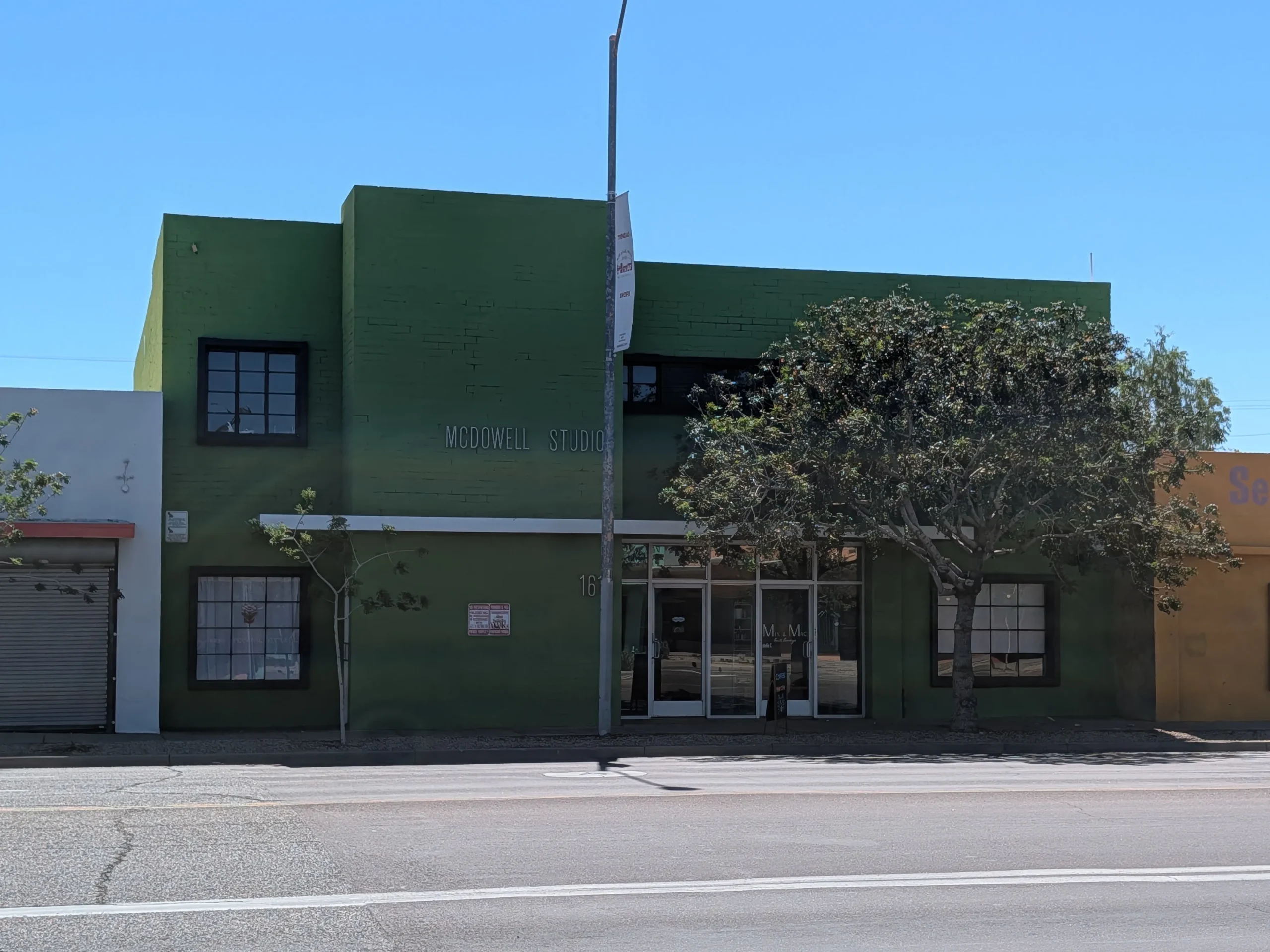
Nocturne is a coffee and matcha counter inside Two Fish Emporium, a vintage shop on McDowell Road just east of downtown. Two businesses share one address and the whole thing is family run. Kameron runs the coffee side. His brother runs the retail side. Other family members help out. The grand opening was August 29 and the place already has a buzz.
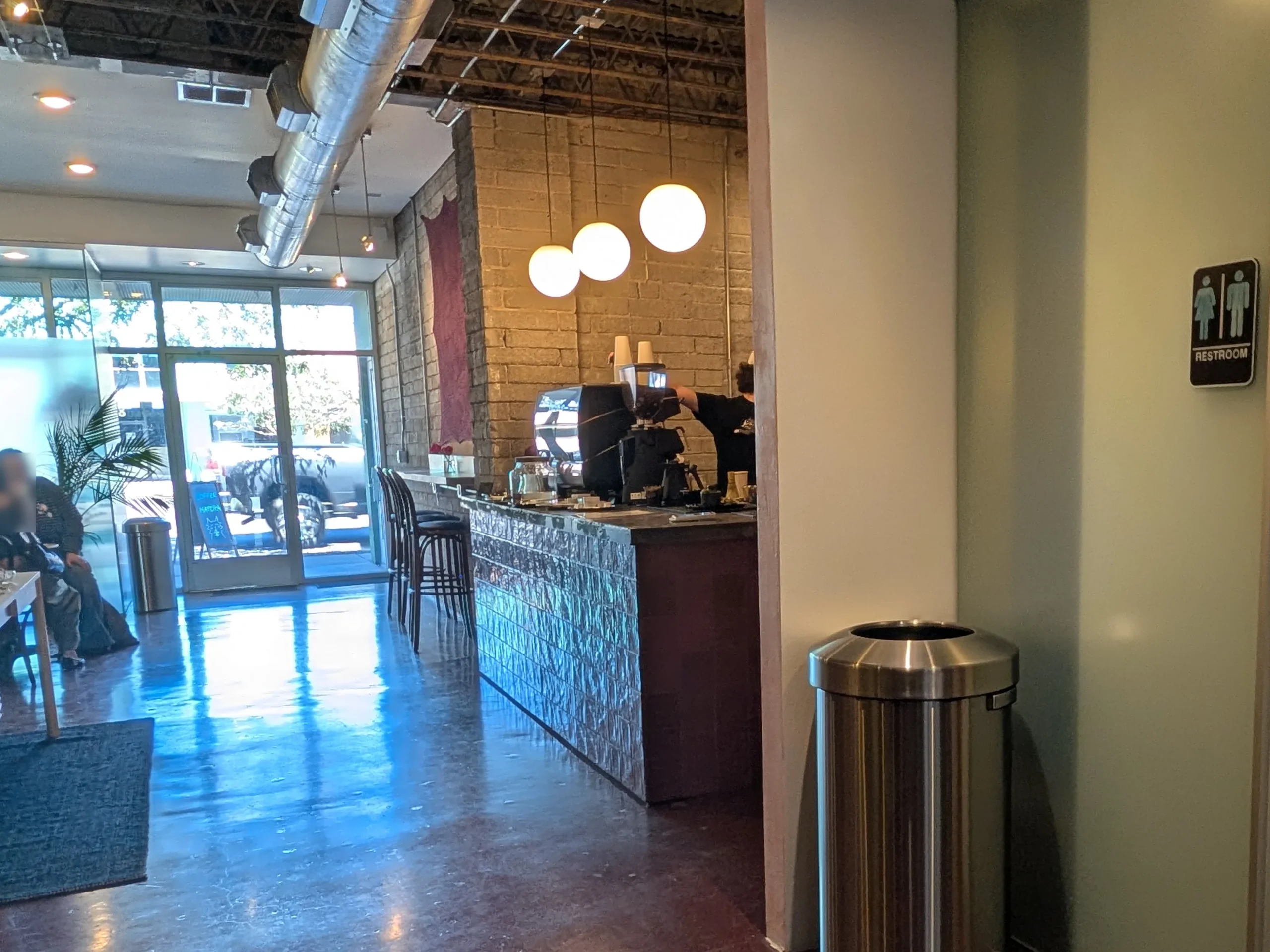
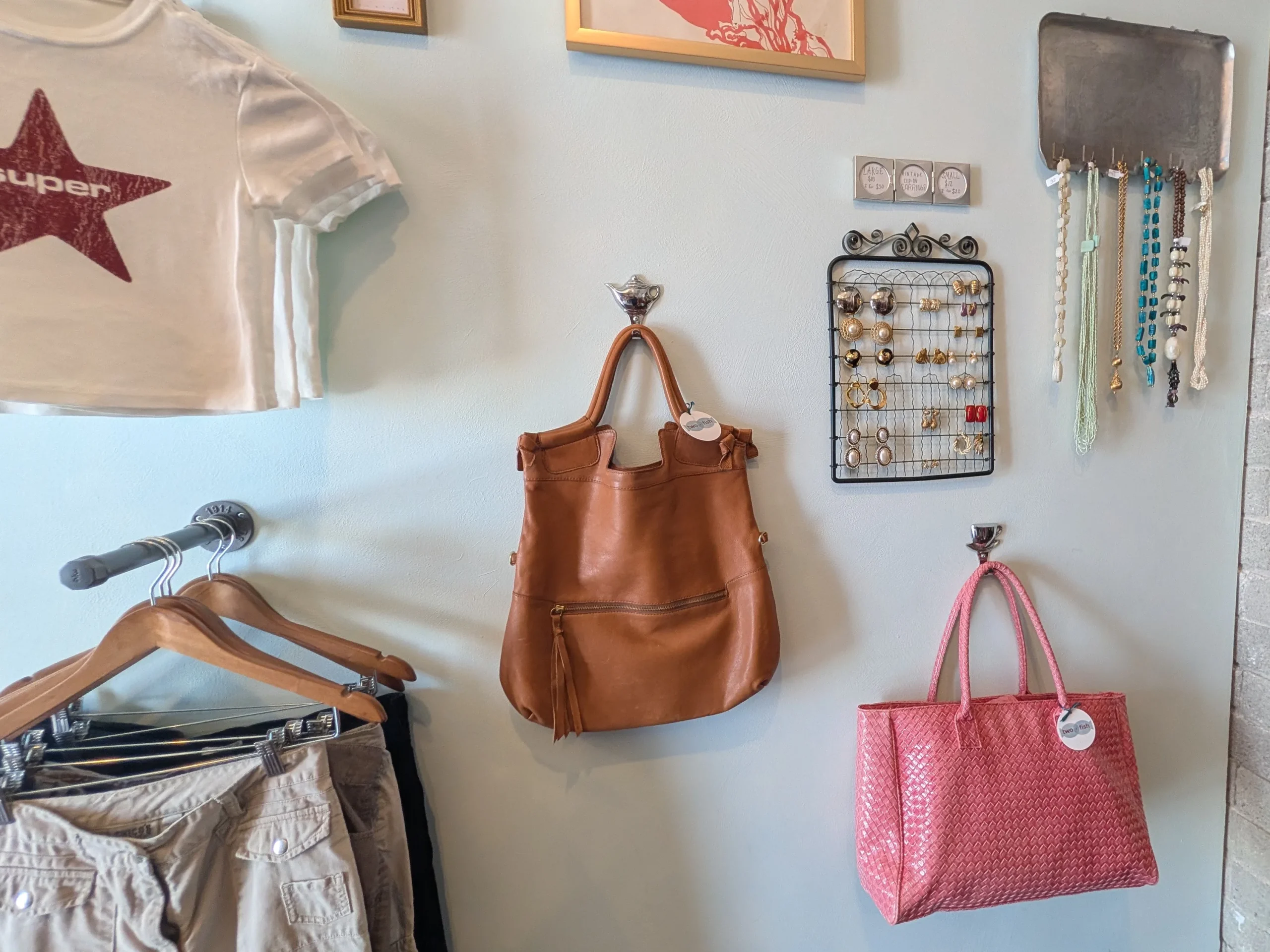
The room is cozy with polished concrete floors and an exposed ceiling strung with lights. The retail side feels organized (closer to a boutique than a bin digging thrift store). It is easy to lose ten minutes browsing while your drinks are made.
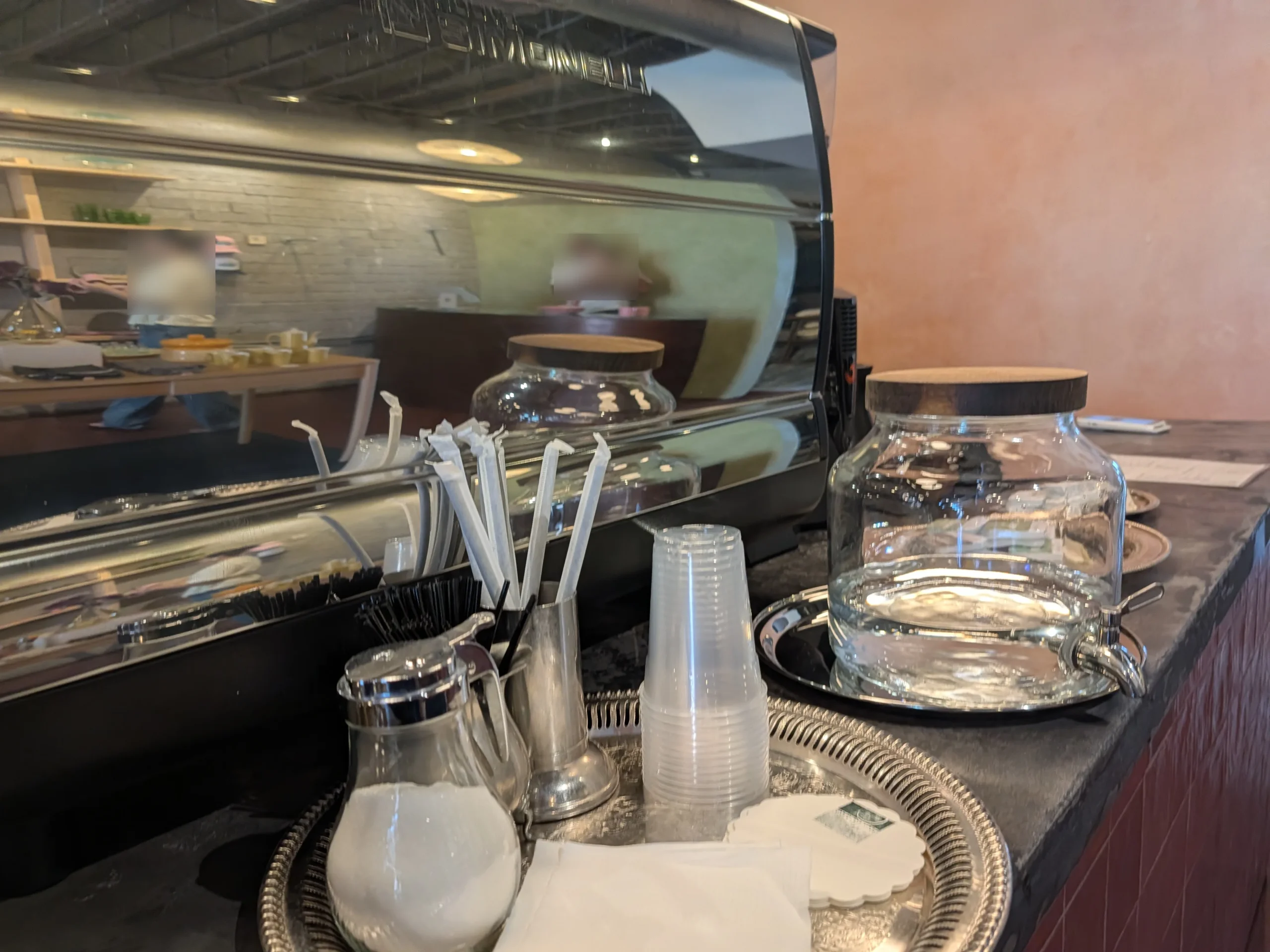
I chatted with Kameron for a while. Yes, they roast in house. Yes, he gladly shared his espresso recipe. 18 grams in and 40 out on a Nuova Simonelli. A barista who hands out numbers like that has confidance in his cup.
The coffee on espresso is a rotating single lot. Mine was El Tiple, a washed coffee from smallholder farms around Pitalito in Huila, Colombia. The name got me. I was intrigued and of course I had to look it up. El Tiple is a traditional Colombian twelve string guitar. It works as rhythm support and as a solo instrument. That makes it a perfect name for a coffee that shines on its own and shines even brighter with milk.
The El Tiple latte with whole milk is the reason I am already planning my next visit. First comes milk chocolate. Then nougat. Then toasted caramel. The slightly higher extraction yield softens the heavy acidity and lets a lovely cherry fruit note peek through. The finish is silky and beautifully balanced with brown sugar that lingers.
Now a confession. I usually order my drinks half sweet. This time I was distracted by the little retail stand and forgot to ask. I braced for a sugar bomb with the Cafe Nocturne Latte. Wrong. It was perfectly balanced. Chocolate first and then coffee. The foam melted through the drink as I sipped so there was nothing to stir. Lovely!
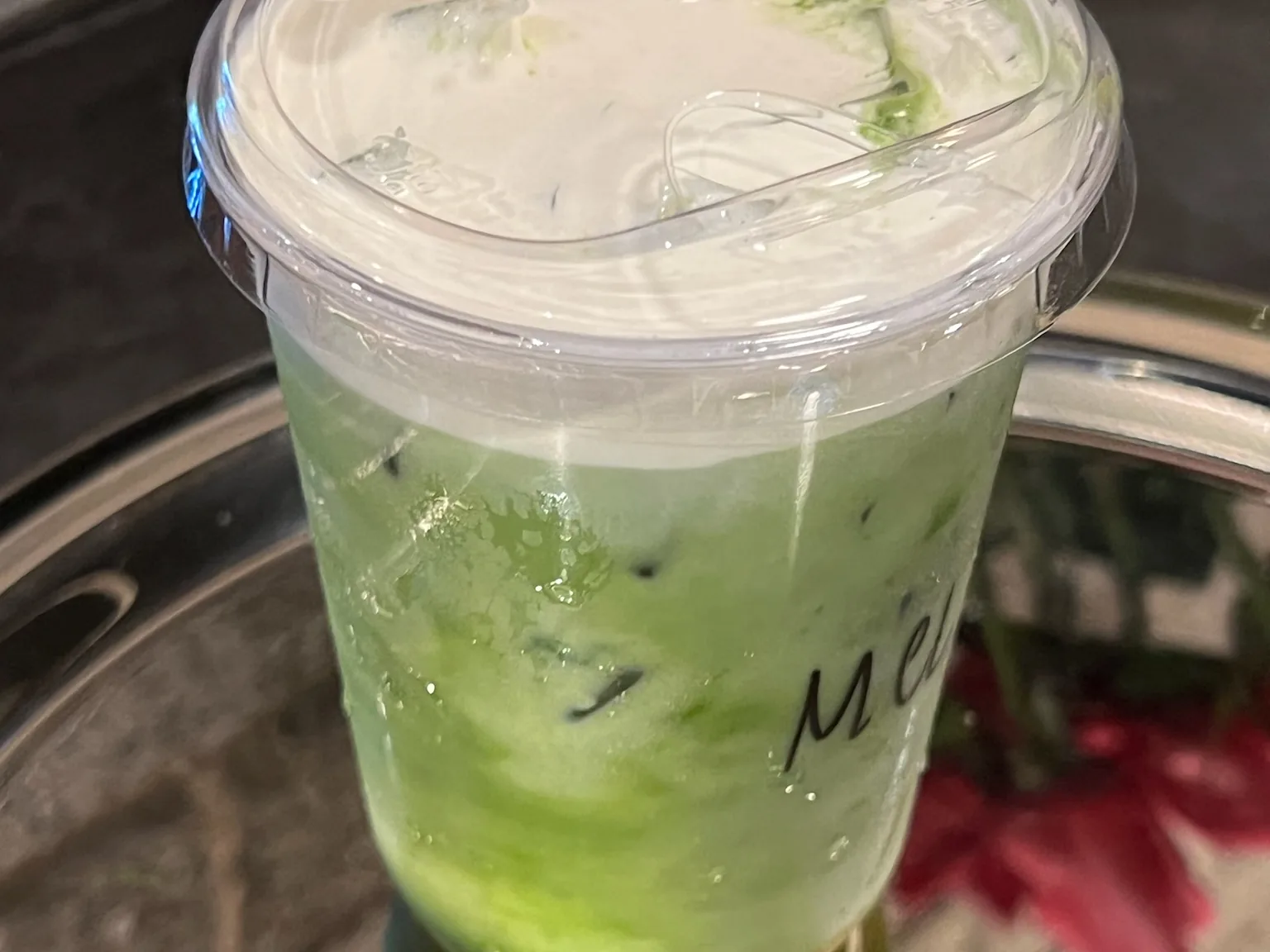
Then there is the Nocturne Matcha Latte with fresh matcha, cold foam and a house made cherry reduction. The cherry sauce is so good that I wanted a whole cup of it. It sinks to the bottom and disappears after a few sips (which is a great excuse to order another one). The matcha is smooth and mellow and makes a gentle stage for the cherry. Go with whole milk and skip the oat. It is the way.
The Colima Matcha Latte blends matcha with mango juice. The mango leaves a pleasant aftertaste that makes the flavor linger. Delightful. The matcha itself is first harvest ceremonial and organic from Kagoshima, Japan. It is whisked by hand. Every syrup is cooked from whole ingredients.
I asked Kameron about a pour over bar. He did not make any promises and he is busy with the opening. But I got the feeling it may show up someday. I will be first in line.
Seating is limited and the place was packed on a late Saturday morning. That tells you everything you need to know. There is a free public lot on the east side and it fills fast. More free parking across the street. Wi-Fi is available too.
Go. Order the Colombia El Tiple latte first. Then order anything with cherries. Then plan your second visit before you finish the first cup.
👉Click to View the Drink Menu
Menu items are subject to change. Some items could be seasonal.
MATCHA SPECIALS
Matcha Foster Latte • Nocturne Matcha Latte • Strawberry Matcha Latte • Colima Matcha Latte • Vanilla Maple Matcha Latte
ESPRESSO SPECIALS
Cafe Maple Spice Latte • Cafe Bananas Foster Latte • Cafe Nocturne Latte • Cafe Colima Latte • Cafe Ember Latte • Cafe Black Forest Latte
MATCHA DRINKS
Matcha Latte • Fresa Velada • Matcha Mule
ESPRESSO
Espresso • Americano • Cortado • Latte • Cold Brew
MOCKTAILS & REFRESHERS
Jamaica • Lemonade • Strawberry Basil Spritz
👉Click to View the Food Menu
Menu items are subject to change. Some items could be seasonal.
Number and Street:
1619 E McDowell Rd.
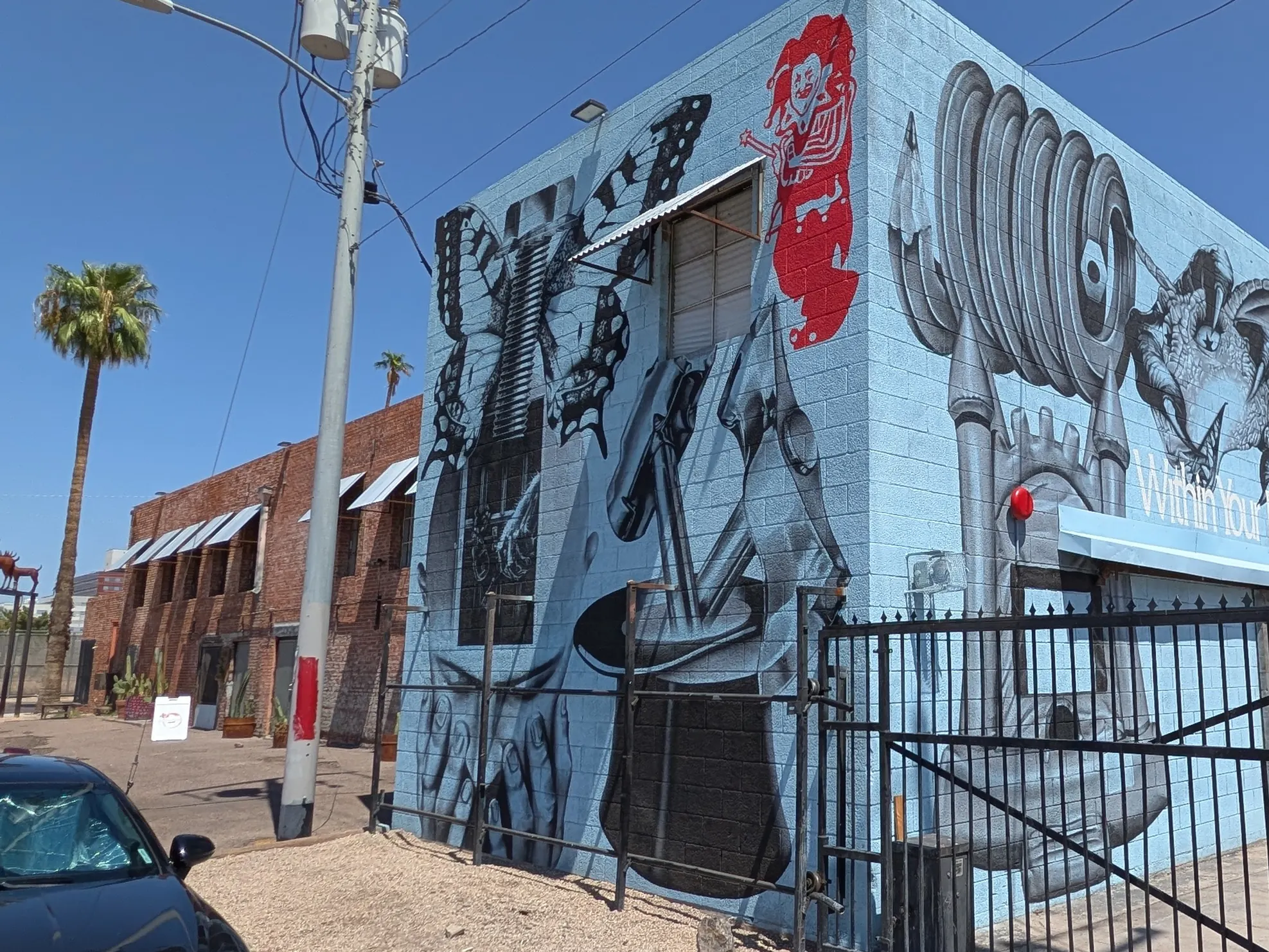
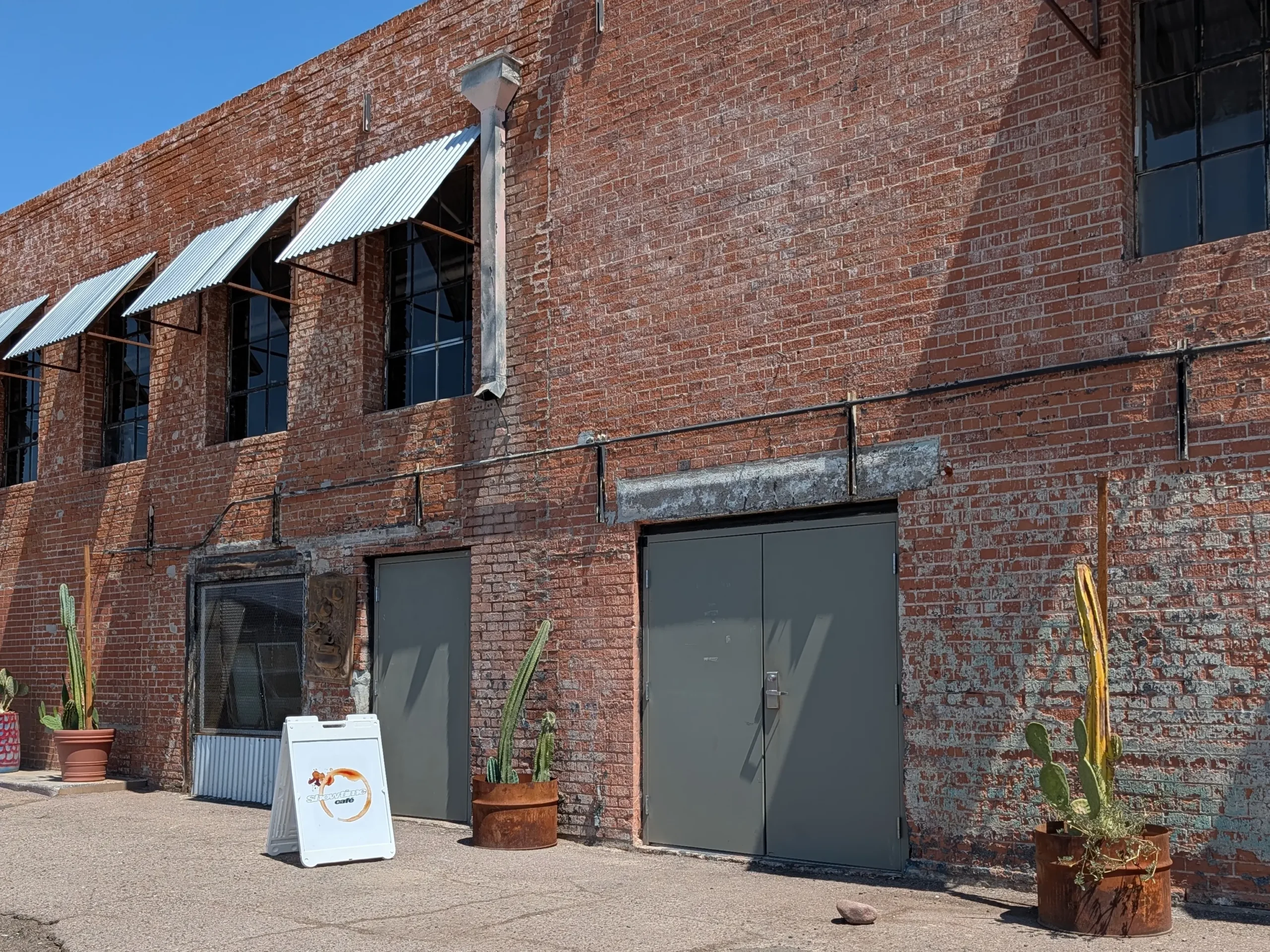
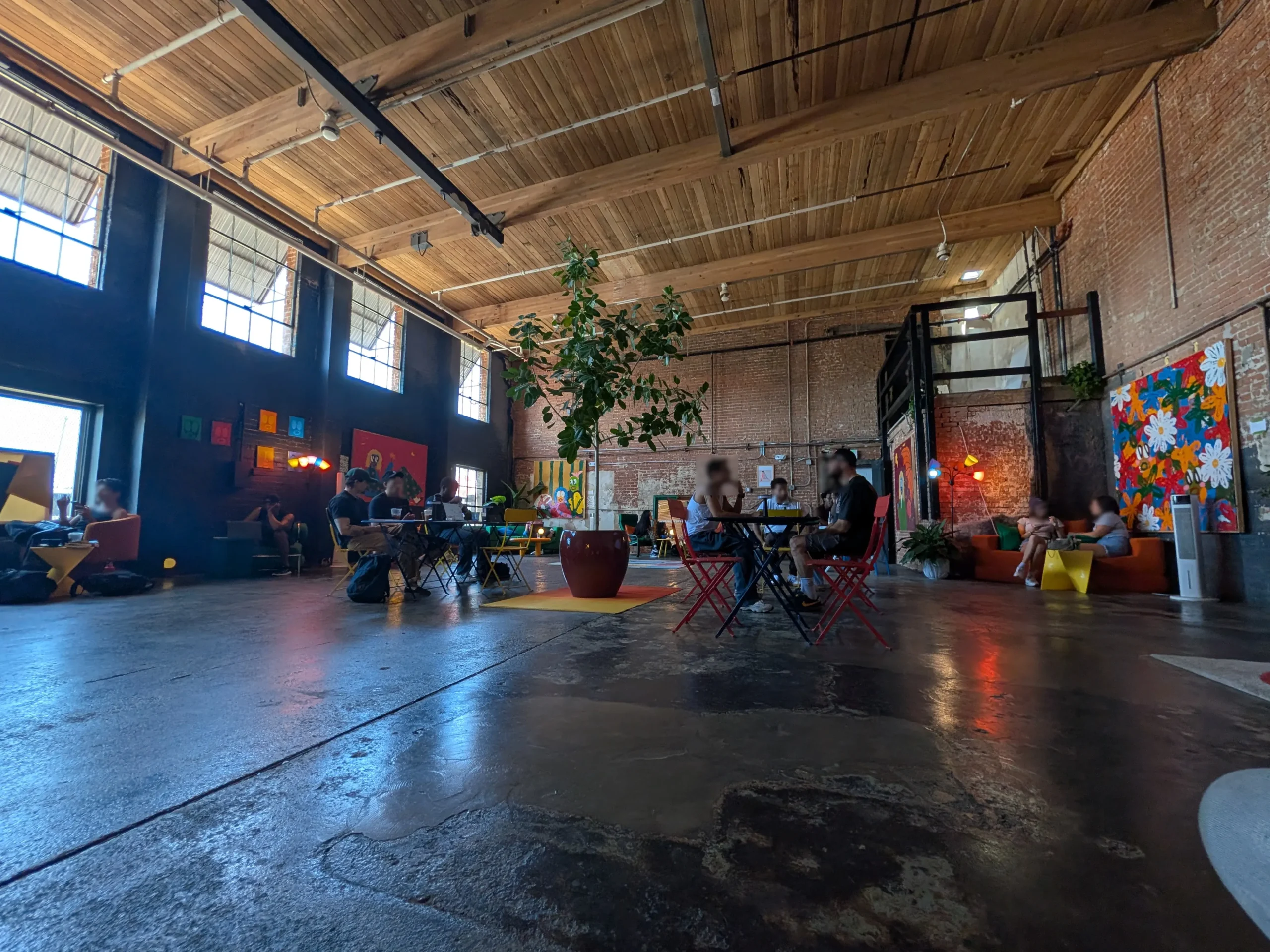
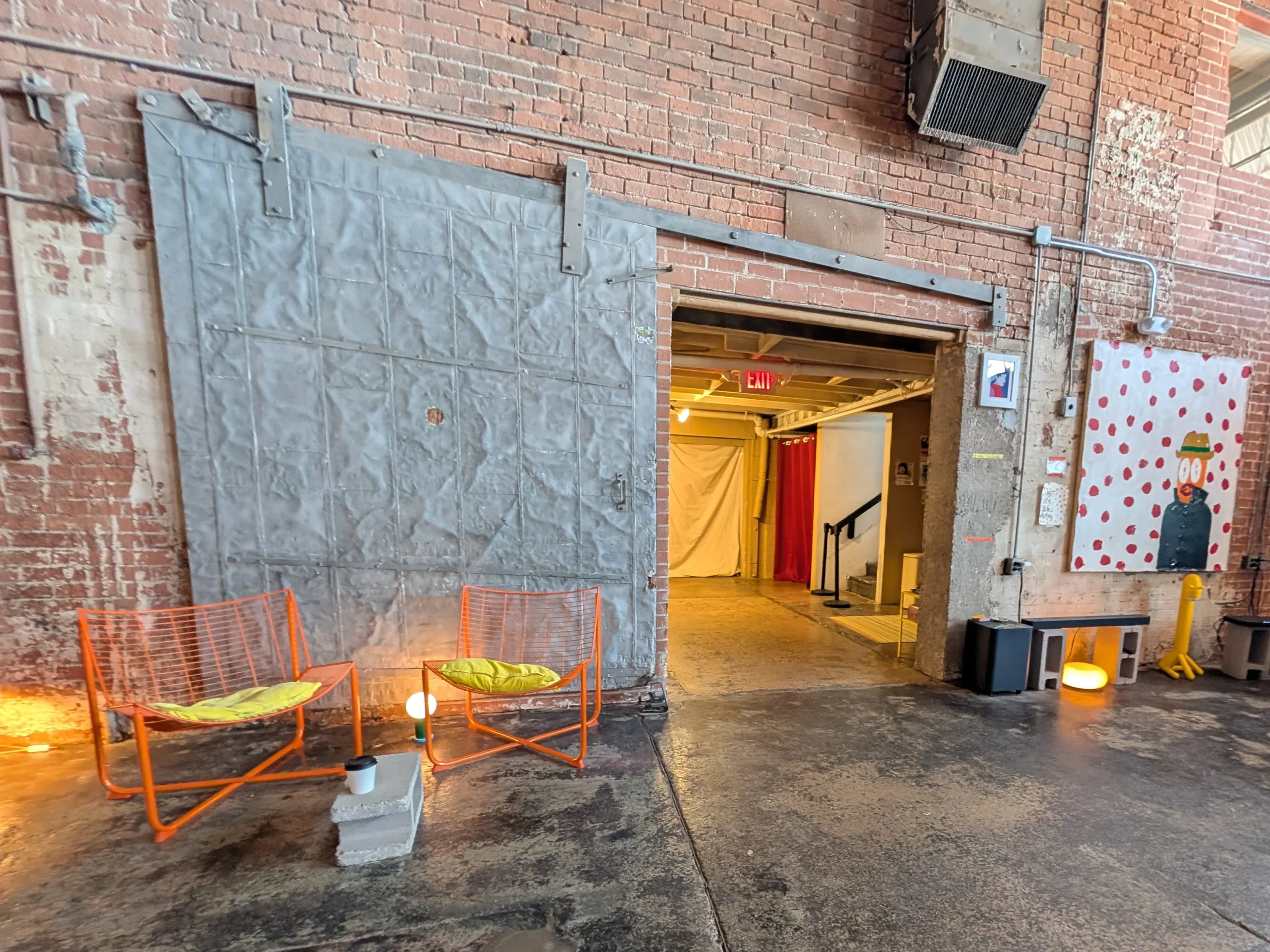
Showtime Cafe sits inside a red brick industrial warehouse at 2431 E Van Buren St. As you approach it, a fantasy-like creative mural painted on the right portion of the building creates a striking contrast against the rustic red brick and main entrance on the left.
Showtime Cafe operates out of There Space, a screen printing studio and performance venue, in conjunction with Showtime, a Phoenix film club. It is a hybrid arts and coffee model rather than a standalone coffee shop. And it works. Before this became the creative space it is today, the building had a very different life. I will get there in a moment.
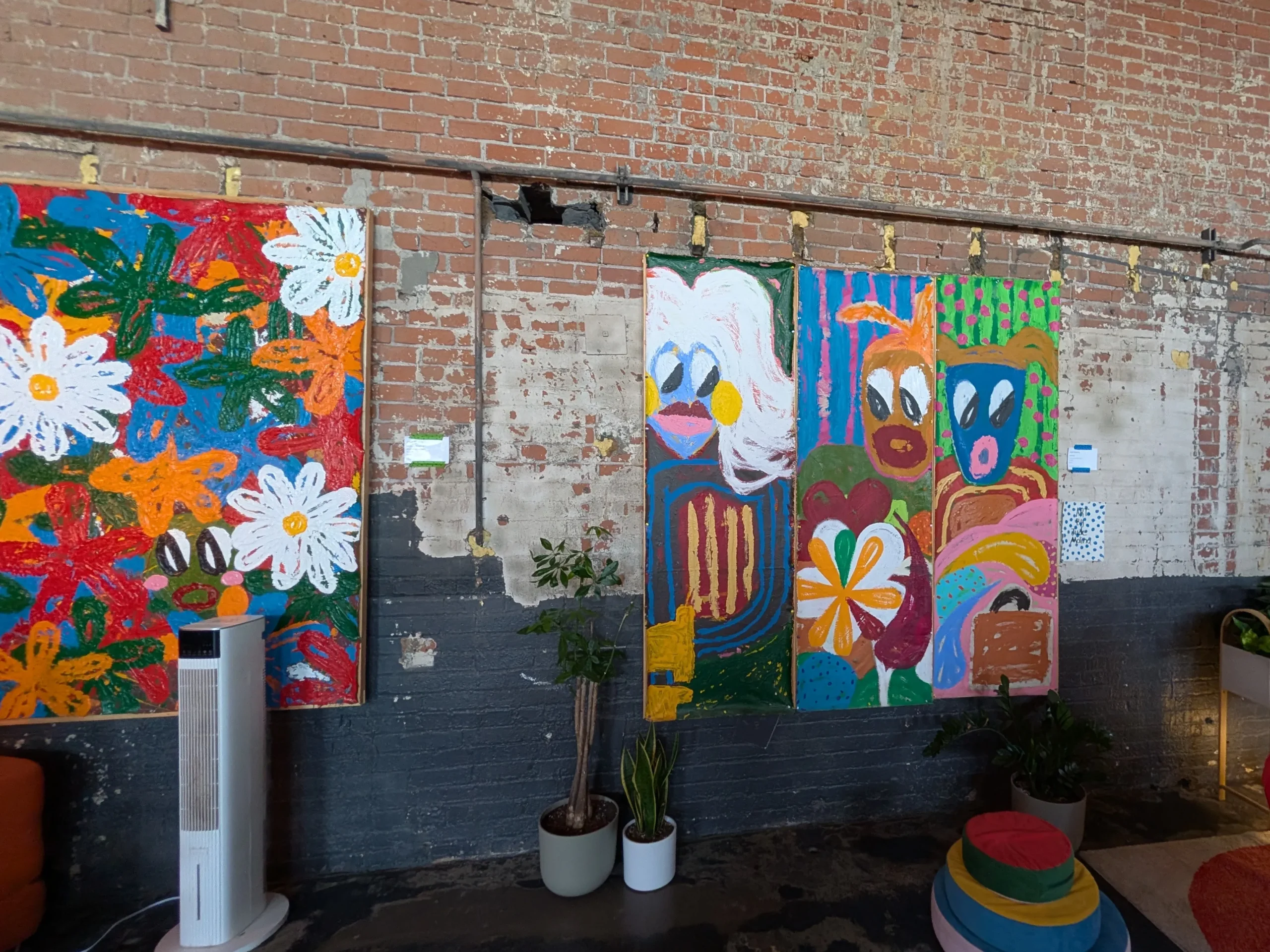
Step inside and you are walking into a revived slice of Phoenix heritage. Midcentury manufacturing blends into modern community culture. The history breathes through the old brick. You can feel it. Inside is a vibrant lounge with colorful art, funky decor and visual surprises everywhere. It is the kind of room where you lose track of time without realizing it.
The coffee beans come from Novela, a small batch local roaster. The espresso is a blend of naturally processed coffees from Colombia and Brazil. The cold brew is a Huila Colombia single origin. Here is the thing... I chase bright, fruity, lighter roasted cups. That is my espresso thing. The beans here lean a bit darker. I was bracing for a mismatch.
Then I tasted the latte.
A strong baker's chocolate foundation came out with faint berry characteristics underneath. The whole milk softens some of the fruit notes from the Colombian coffee but the chocolate base is the star. I actually enjoyed it. Now that is a real compliment coming from someone who usually chases brighter cups.
Hot lattes are one size only. That is all. And that is the point. Regular readers know what that signals to me. It usually means the shop has dialed in the exact ratio between the espresso pull and the milk volume so every cup is calibrated the same way. I am not a big fan of shops that offer three or four sizes of hot drinks. For me, multiple sizes can sometimes make it harder to maintain the same ideal balance from one cup to the next. Showtime gets it right. The baristas weigh the espresso shots on a scale (measuring both the grounds going in and the liquid coming out). That shows a true commitment to craft. The latte was balanced as expected.
No drip or filter coffee here so set your expectations. But the specialty menu is impressive, and that is where Showtime really gets creative. We ordered the Neon, a double shot espresso with raspberry and vanilla cheese foam. The creamy foam on top was rich and delicious. You can definitely taste the quality of the syrup and espresso. The foam was sweet. The espresso was clean. It worked. Cold and refreshing.
Here is a detail worth calling out. All the syrups are house made. Vanilla, honey, mocha, earl grey, agave, strawberry and maple brown butter. A good commitment to craft and a detail I always appreciate.
Matcha is a core category here and not a novelty. Besides the regular ceremonial grade matcha, the lineup includes Matcha Tonic, Matcha Lemonade and the signature S. Coppola. The S. Coppola is matcha, strawberry syrup and strawberry rhubarb in an iced-only format, which makes perfect sense. That is a good sign for anyone who takes matcha seriously.
On the food side, pastries come from Fiore, a local Phoenix bakery. The partnership keeps the pastry case stocked with something worth grabbing alongside the coffee.
The baristas are exceptionally friendly. That warmth fits naturally into a space built around community and creativity. In a hybrid arts space, coffee can sometimes feel secondary. Here, it is clearly treated as a serious part of the experience.
Now, the building. Long before barista calls and espresso grinders filled this room, the 1958 midcentury warehouse was manufacturing industrial paints and a local staple called Deer-O Salsa. After production stopped, the red brick building sat quiet and abandoned. It held onto its vintage charm in silence until a local collective called There Space pulled it out of its long sleep. They carefully restored the original exposed brick and towering industrial ceilings, transforming it into a multiuse arts haven.
There is a motto here: "the destiny will always be there." After sitting in that lounge with a properly balanced latte, I am starting to see what it means. Showtime Cafe is proof that a serious coffee program can thrive inside an arts collective. Go for the history, stay for the latte.
Number and Street:
2431 E Van Buren St


Every so often a California coffee brand crosses the desert and sets up shop in Phoenix. Most of the time it does not quite land. CoffeeDrunk lands. Coastal energy, considered details and the kind of room that makes you feel like you stumbled into something special.
The shop lives inside the 1946 Lawrence Building, a red brick warehouse in the heart of the Warehouse District that has been beautifully preserved and converted into a creative multi-tenant office hub. So you are not walking into a strip mall storefront. You are walking into history. Towering ceilings, concrete floors and industrial bones everywhere. The California coastal vibe and old-school Phoenix warehouse shake hands in here and somehow agree on everything. One more thing about the room.
At the time of my visit, a Ducati Desmosedici RR was parked inside the shop. Yes, parked inside. You can pull up a chair just a few feet from it. The Desmosedici RR is a certified legend. Ducati only built 1500 units globally and it is a street-legal replica of their official MotoGP racing bike. The vibrant red fairings against those historic industrial brick walls are something to behold. Old photos of the space show cars in the same spot, so this appears to be a rotating program of rare machines. Which means every visit might bring something new to stare at while your matcha gets cold.
The origin story is a good one. According to Long Beach Food Scene, CoffeeDrunk was founded by the husband and wife team of Matthew and Breezy Church. Breezy came from Washington state carrying serious coffee culture in her DNA and worked her way through Long Beach as a barista and manager before the two built something together. Their growth model is also worth understanding. Instead of stamping out carbon copy locations, the Churches treat every new shop like a boutique hotel. Each location gets its own interior design, local partnerships and community events tailored to the actual neighborhood it lives in. The drinks stay consistent but the soul of each place is its own. It is a smart play and the Phoenix location proves it works.
Beans come from 49th Parallel, a Vancouver roaster named after the latitude that forms the boundary between Canada and the United States (the longest unguarded border in the world, which is a fun fact to file away). Now here is where I have to be straight with you. CoffeeDrunk pulls the Old School Espresso blend, which sits in medium-dark territory and leans toward the darker end. This is the safe pick, not the great pick. They have Ethiopia, Colombia and lighter single origins sitting right there on the shelf with real character and brightness to offer, and they went with the crowd-pleasing dark roast instead. That is a missed opportunity. The roasting process ends up dominating and crowding out whatever natural flavor the bean actually had to offer. The espresso comes out heavy bodied, traditional and almost charcoaly. The claimed dark chocolate and nut notes were pretty muted. If you drink diner coffee you will be comfortable here. If you came in hoping for something more elevated from the espresso side, dial back the expectations. And go with the small latte. The large gets the same number of shots with more milk, so you are basically just buying dilution.
Now here is where things get really fun. The Touch Grass Matcha is outstanding. Creamy texture with hints of citrus, and strawberry and vanilla doing most of the flavor work. Every time I was about to put the cup down I found myself going back for one more sip. That is the highest review I can give a drink. The house made syrup program is the real engine behind the whole menu. Most of what they use to build the signature and seasonal drinks is made from scratch in house and you can taste the difference. These are not the chemistry syrups you find at most places. They are layered and considered and they make the signature menu worth coming back for. The drinks here have personality.
The surrounding Warehouse District adds to the experience too. It is not the Roosevelt Art District, but the buildings and warehouses around CoffeeDrunk are covered in murals. Art everywhere the eye looks.
CoffeeDrunk came a long way from Long Beach. And if you are heading to Downtown Phoenix looking for a gorgeous industrial space, a rotating menu of creative house made drinks and a matcha that will not let you put it down, this is your stop.
Explore Top Phoenix Coffee Shops
All Coffee Shops in Phoenix
Hadas Cafe Lounge
Indigo Room Coffee
Serafina Coffee Roasters
WhereUBean Coffee
Infusion Coffee & Tea Crafters
Urbo | Urban Bodega
Window Coffee Bar
Number and Street:
515 E Grant St
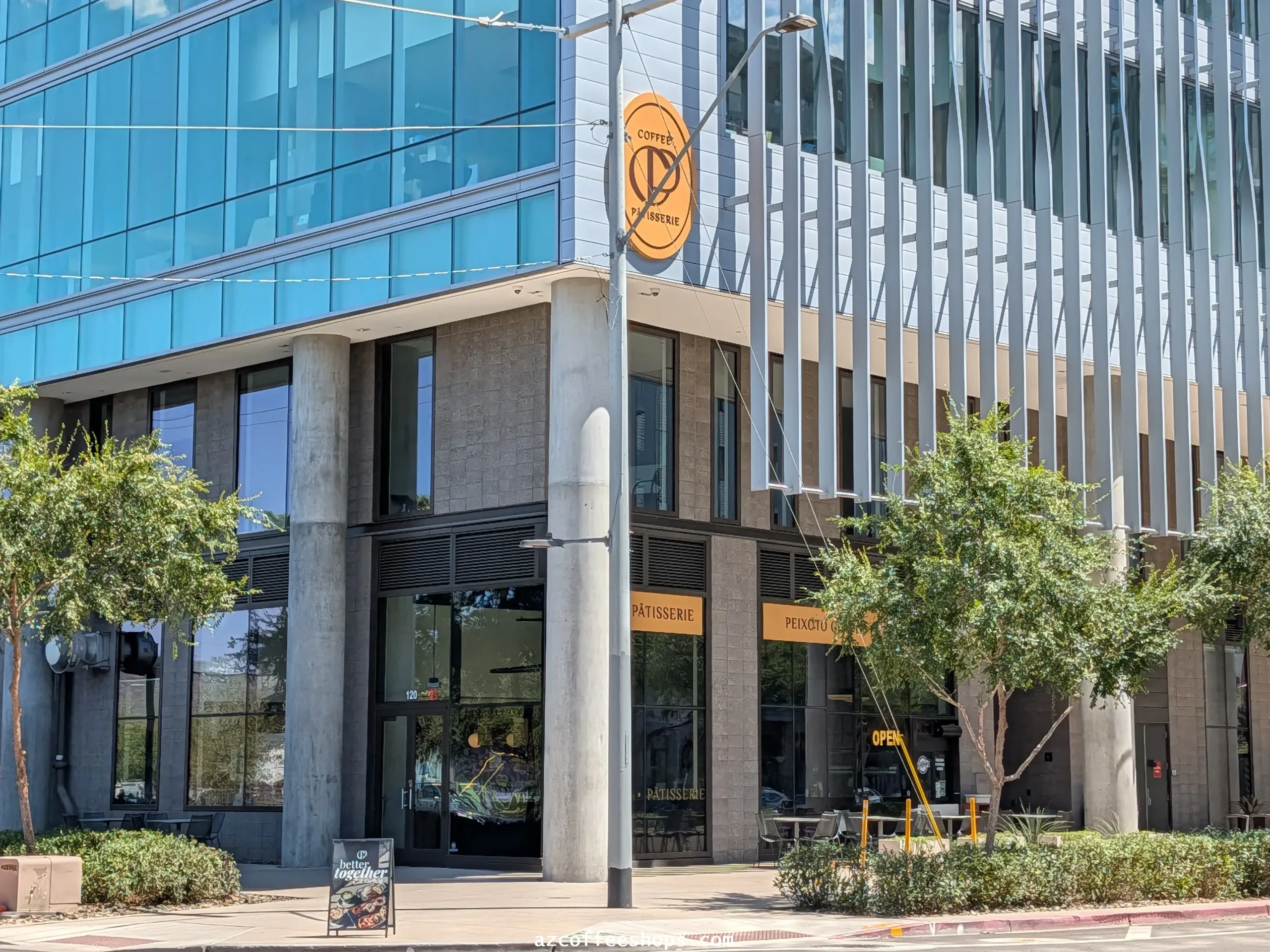
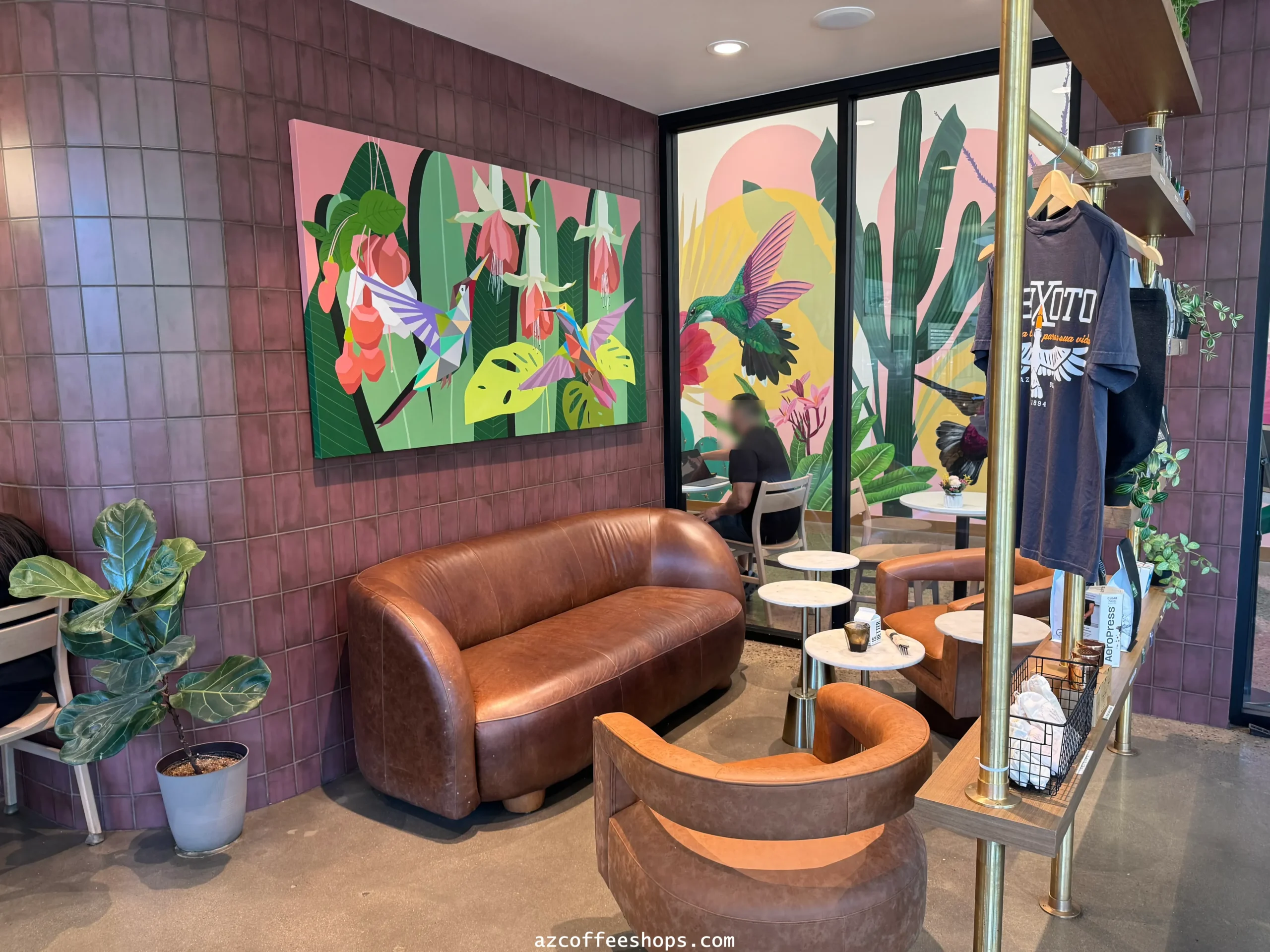
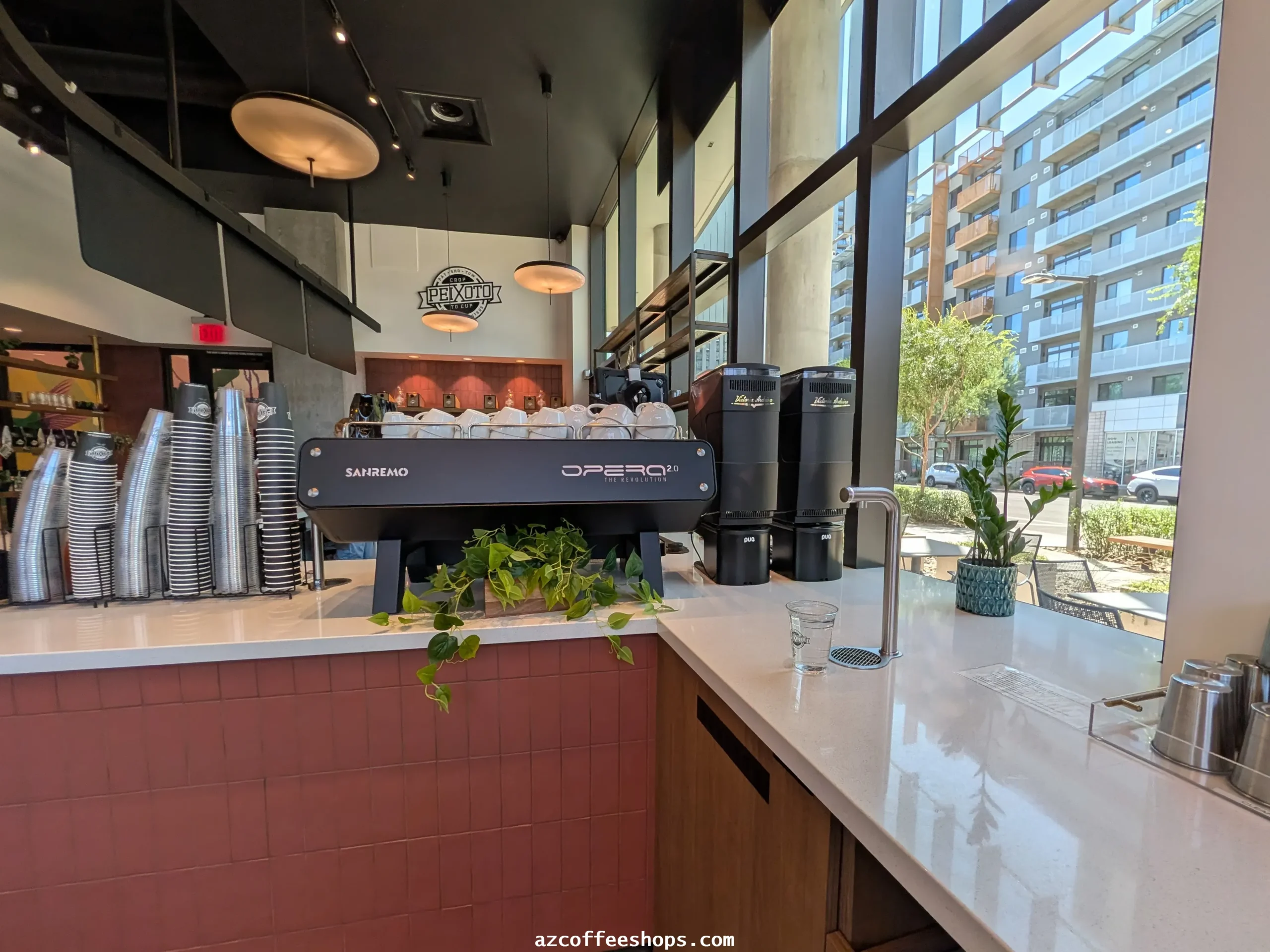
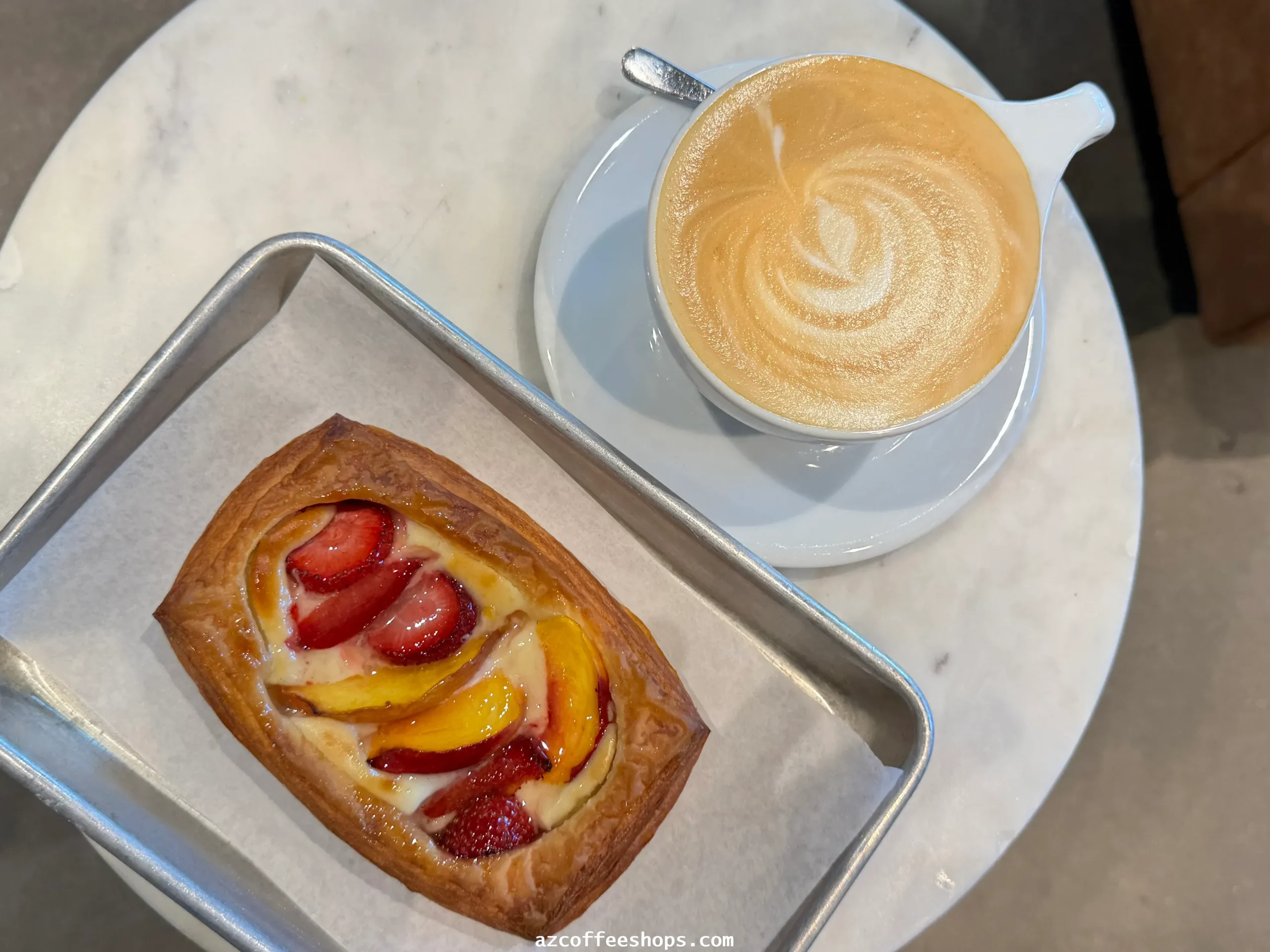
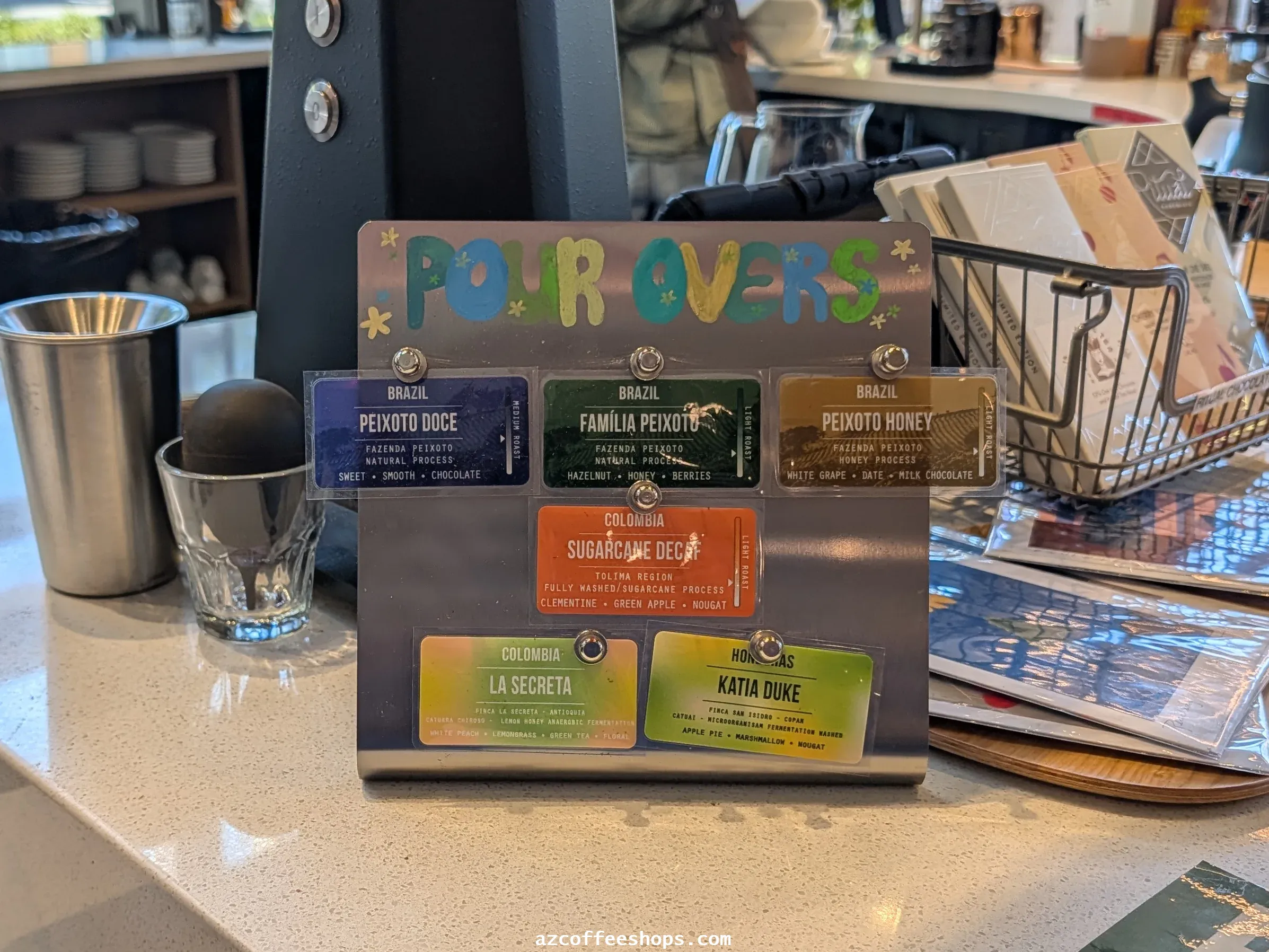
You know that feeling when two of your favorite local spots suddenly move in together and you cannot decide who to visit first? That is the exact situation at the ground floor corner of the Biomedical Campus building on 5th Street. Peixoto brought the espresso. Mark Chacon brought the ovens. Nobody asked me to pick a side and I would not have been able to.
Walking in from the E Garfield Street side you get hit with a wall of glass before anything else. Floor to ceiling windows soak the whole room in flat Phoenix light. The Sanremo Opera espresso machine sits on top of a terracotta tiled counter with a creme colored quartz top and it is not just there for looks. The Opera runs pressure profiling on every shot. This means the barista can shape how hard the water pushes through the grounds at different points in the extraction instead of just one flat pressure the whole way. It is the kind of machine you see in competition setups more than corner cafes. It is also the mahcine you need when you specialize in lighter roast coffees. The other counter on the other side is for pastry. The seating in between is shared so at peak hours the tables fill up fast with ASU staff, biomed students and coffee people all packed in together. Grab a spot early if you plan to sit and work.
On my last visit I ordered the iced toasted coconut latte and it might be the best seasonal drink I have had from Peixoto. First time I had it was at the Gilbert location. It is all I can think about now when I think Peixoto. It has that perfect level of sweetness and it sits nicely against the espresso instead of covering it up.
The espresso base changes with availability. Most of the time it is the Familia, a light roast natural process. Sometimes they run the Honey instead, which is (as the name suggests) honey processed. Both come from the Peixoto family farm in Brazil. The Familia leans more toward hazelnut and berries, while the Honey leans toward white grape and date.
From the Chacon side, get the cream cheese danish. I worked through several different pastries on this visit and nothing else came close. It runs $9 a piece, which is steep, but that seems to be the going rate for pastry done right these days. Consider it the entry fee for the good stuff.
Parking is decent for a downtown spot. There is metered street parking with a fair amount of shade on some sides and a lot by the front of the building if the street is full. If you park in their lot, they will validate your ticket and the first hour is free.
Downtown Phoenix finally has a coffee shop with a farm address. Go get a pour over. Stay for the desserts. You will understand.
Number and Street:
850 N 5th St


Fair Trade Cafe in Downtown Phoenix, AZ is a Latina owned coffee shop and community space in the heart of the Roosevelt Row Arts District. The full menu is listed below.
I first heard about Fair Trade Cafe when the owner Stephanie Vasquez appeared on Arizona Family (Channel 3). She was talking about everything being made fresh with no preservatives and I was already sold before the segment ended. Add the fact that it sits in one of my favorite parts of Phoenix and a visit was inevitable.
Stephanie opened this place in 2007. That kind of staying power in Downtown Phoenix means something. The shop operates around a "coffee with a conscience" philosophy. The coffee is shade grown, organic and fair trade sourced. The food is made in house. The mission is genuine and you can feel it in the room.
And what a room it is. High ceilings, rotating local art on the walls and a vibe that feels decorated with actual culture rather than a designer's idea of culture. Every month a different local artist gets the walls. The work is available for purchase too. It is a quiet but meaningful way to support the local art scene and it gives the space a personality that changes with the city around it.
There are two places to sit outdoors. The front area faces the street/train and has more foot traffic and energy. The back patio is tucked into an alcove behind the building and feels almost hidden. I split my time between both and the back patio was the better find. Shaded and calm. A small escape from the Phoenix sun.
Now, the coffee. The beans come directly from Cayetano Coffee, a family farm in Mexico that grows single origin beans and does not blend them. They sun dry the beans for three weeks, which is the kind of process that usually signals natural processing and all the fruity complexity that comes with it. So I had high hopes going in. I ordered the latte in the small size (worth noting that both sizes get the same number of shots) and was let down. The roast was so dark that it essentially erased everything the farm worked to build into those beans. Think of it like ordering a great steak and getting it well done. The raw material is there. The execution is not. My advice is to skip the espresso drinks entirely (unless you are a fan of dark/strong coffee).
Go for the matcha instead. I also had the Matcha Madness Flight which comes with three different matcha drinks. This was the right call. The flight includes a Maple Sea Salt matcha latte topped with sea salt cold foam, an Earl Grey matcha latte and an Ube matcha latte topped with house made ube whipped cream. All three were genuinely good but the Ube was the standout. Rich, distinct and not cloying. This is where Fair Trade Cafe shines and it is not particularly close.
I also tried the lemon bar. It is house made like all the desserts here, but it was too sweet for me to finish. That was a little unfortunate.
Service was slow but fine. Be prepared to wait five or more minutes for your drink especially in busy time. Free parking is available in the garage attached to the building from the back side. Fair Trade Cafe is a cool place to hang out in the Roosevelt Row Arts District.
▶Click to View the Drink Menu
Note: Menu items are subject to change. Some items could be seasonal and may not be available.
Specialty Coffee
Cup of Coffee • Cold Brew • Cafe Au Lait • Espresso • Americano • Cappuccino • Latte • Mocha
Not Coffee
Tea • Chai • Cocoa • Milk • Italian Soda • Organic Lemonade • Orange Juice • Matcha
Smoothies
Finikera Fresca • Desert Sunrise • Chica Fresa • Copper Citrus
House Specialties
Cafe Helado • The Phoenix • Jefita • Black Magic Woman • Gueritta • Guerita
Milks & Flavors
Whole • Nonfat • Soy • Almond • Breve • Coconut
▶Click to View the Food Menu
Note: Menu items are subject to change. Some items could be seasonal and may not be available.
Baked Goodies
Pastry Bread • Cookies • Topped Bagel • Croissants • Stuffed Croissants • Buttered or Plain Bagel • Steel Cut Oatmeal
Breakfast Sandwiches
Breakfast Bagel • Breakfast Croissant • Breakfast Burrito • Chorizo Breakfast
Soups, Salads & Small Plates
Soup of the Moment • House Salad
Hot Sandwiches
Fair Trade Cuban Panini • Truffled Grilled Cheese
Cold Sandwiches & Wraps
BLT • Smoked Salmon Bagel • Turkey Wrap • Turkey Sandwich
Explore Top Phoenix Coffee Shops
All Coffee Shops in Phoenix
Moxie Coffee Co.
Indigo Room Coffee
Futuro
WeBe Coffee Roasters
The Coffee Builders
Daydreamer Coffee
Collective Coffee
Number and Street:
1020 N 1st Ave
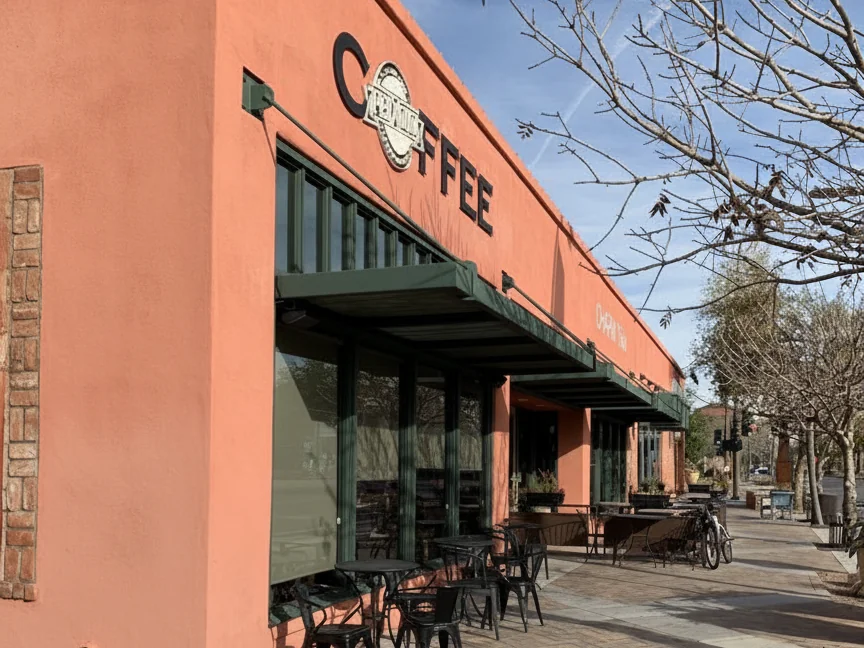
Think your local coffee shop really knows its beans? Peixoto does not just know them, they grew them! On their family farm in Brazil where the Peixoto name has been tied to coffee for over a century.
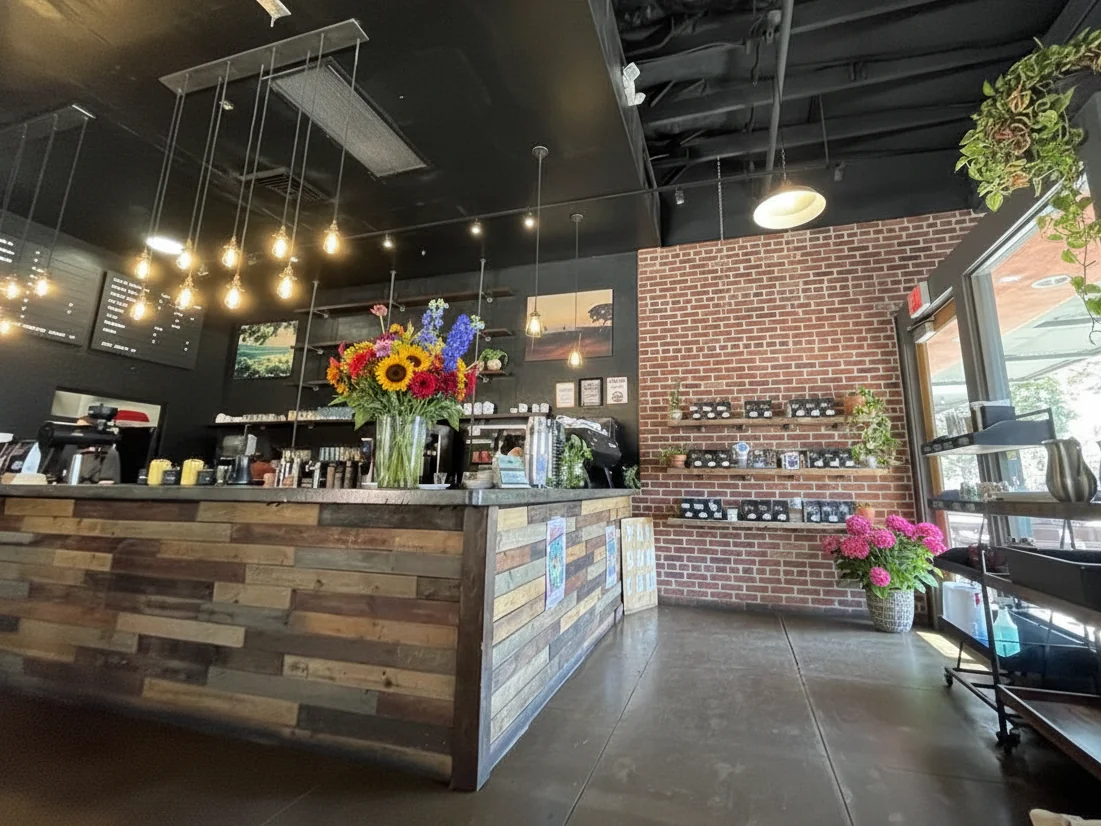
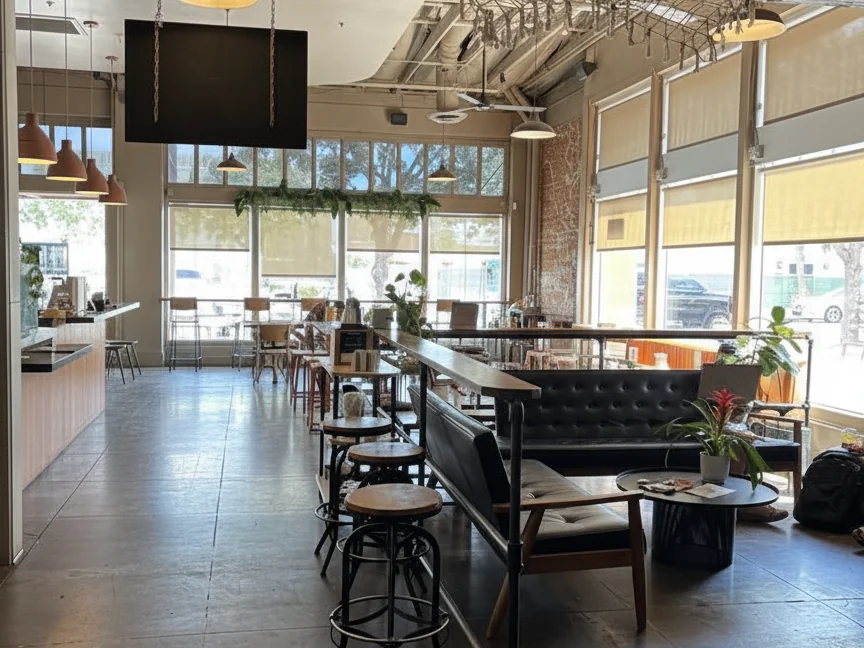
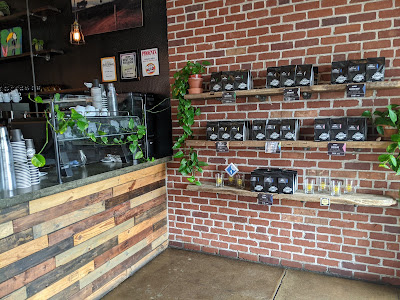
Walk into this place and the first thing that hits you is the light. High ceilings pull your eyes up to exposed beams and industrial touches that somehow feel warm instead of cold. Hanging pothos plants cascade down from above (and they look healthy, which means someone here actually cares). The space breathes. Natural sunlight pours through the windows and catches on the glassware they use for every drink. These are not paper cups. Your latte arrives in actual glass that shows off the layers and the foam art.
The smell is what keeps you there. Fresh roasted coffee with none of that burnt edge you get at places that do not understand their beans. Peixoto roasts light to let the natural flavors come through. Their espresso leans bright and fruity. It tastes different because it is different. This is honey processed coffee from their own farm at Fazenda Sao Jose da Boa Vista in Minas Gerais.
The seasonal menu changes with intention. Right now you might find a Hot Honey Latte with cayenne that somehow works. Or a Kettle Corn creation that balances salt and sweet in ways that should not make sense but do. The Coconut Cold Brew returns every summer and people plan their visits around it. The Strawberry Pistachio gets layered in pink and cream and topped with freeze dried berries that crunch.
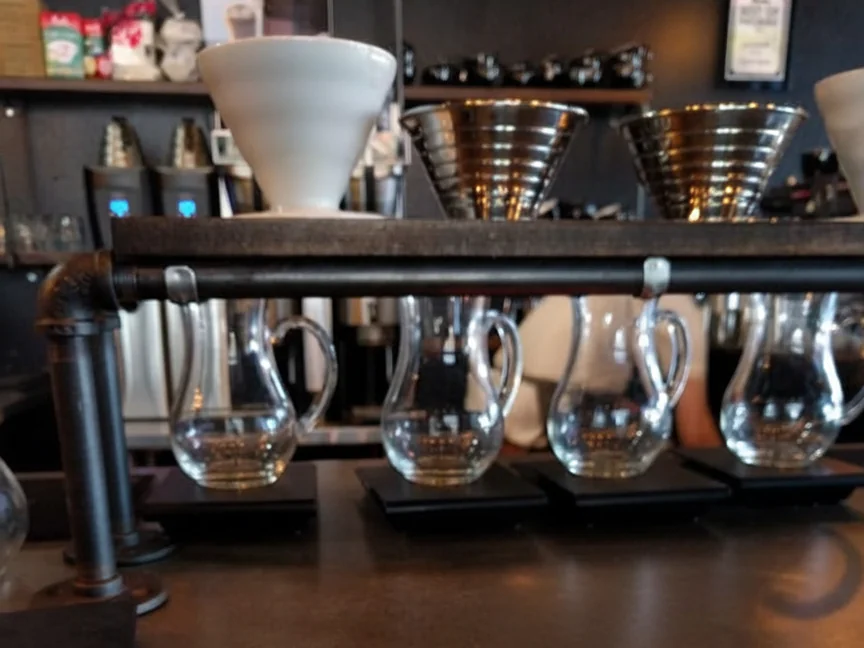
Behind the counter sit baristas who pull shots on equipment that matters. They do manual pour overs with gooseneck kettles. They understand extraction times and water temperature. When you watch them work you see people who actually know coffee instead of just following a recipe card.
The pastries come from local bakeries and rotate daily. Get there early if you want the almond croissants (buttery layers for days) or the cardamom buns on Tuesdays. The macarons are delicate enough to justify the price. Everything sells out because everything is actually good.
The crowd is a mix. College students claimed corners with laptops. Friends catch up at small tables. Someone in the back is on a video call. The vibe stays relaxed even when the line stretches. Music plays at a volume that lets you think (rare these days). You can sit outside along the street and watch downtown Chandler move past you.
This is the original location. The one that started it all in 2015 when Julia and Jeff Peixoto left corporate jobs to do something that mattered more. The space feels lived in now. Comfortable. A place that knows what it is and does not need to prove anything.
Parking can require patience during peak hours. The place fills up on weekends. But there is a parking garage nearby that makes it work. And honestly, once you taste what they are doing here, you stop caring about the walk.
This is what happens when a family decides their legacy matters more than scale. The farm connection is not a story they tell to sell coffee. It is the actual reason the coffee tastes this way. Worth the trip to downtown Chandler whether you stay for hours or just grab something perfect to go.
See also Peixoto Coffee Roaster' Gilbert location.
Number and Street:
11 W Boston St


Tamosan Coffee Lounge in Scottsdale is a neighborhood coffee shop with a carefully curated menu and a spirit that makes you feel at home the moment you walk in.
Some shops feel designed. Tamosan feels found. The front room pulls you in with a cozy and relaxed energy that does not feel manufactured. Walk a little further and hang a left past the bar and you will find a back room that opens up into a large quiet space with plenty of tables. Good for studying or just relaxing.
The coffee program here is built around beans sourced and roasted by Mythical Coffee (which I also reviewed on this site). You get two directions for espresso drinks. The first is "The One" which is a Colombian bean developed specifically for Tamosan with notes of dark chocolate and Luxardo cherry. The second is "Phoebus" which is an anaerobic semi washed Costa Rican light roast with characteristics of hazelnut, baked apple and plum. Two very different personalities.
On my last visit, I tried two drinks. The regular latte with whole milk was built on The One and the dark chocolate notes came through clearly. It was pleasant and well made. They also offer only a single size for hot lattes. My regular readers know exactly what that signals to me. It represents a shop that actually cares about ratios and balance.
The Cherry Bomb was the one that got me though. I ordered it with matcha and it was silky and perfectly balanced. The matcha was present without being aggressive (a win in my book). I did not detect much cherry flavor so I am not entirely sure what landed in my cup. Honestly, I did not care. I was already plotting my next visit before I got to the bottom of it. Next time I am ordering it with espresso instead of matcha. The verdict on that will have to wait.
If you are a slow bar fan, Tamosan no longer offers V60 or Chemex. I understand completely. They are busy. Slow bar is, well, slow. No complaints.
The staff were warm and genuinely welcoming. The day I visited there was a live DJ. It felt less like a coffee transaction and more like an afternoon worth remembering.
Go find it. Then go back.
▶Click to View the Drink Menu
Note: Menu items are subject to change. Some items could be seasonal and may not be available.
Trad Life
Espresso • Americano • One & One • Macchiato • Cortado • Cappuccino • Latte • Drip • Cold Brew • Nitro • Nitro Cold Brew • Vanilla Mint Nitro
The Jam & Signature Drinks
The Jam • Ruby • Lush • Cookie Butter • Cherry Bomb • Bloobies
Seasonal Drinks
Candy Cane Mocha • Gingerbread Latte • Big Thymer • Rosemary Vanilla • Winter Forest
Non-Coffee
Matcha • Matcha Latte • Lemonade • Regular Lemonade • Honey Lavender Lemonade • London Fog • Topo Chico • Dram • Mexican Coke • Boxed Water • Chai Latte (Sweet or Spicy) • Tea
Milks & Flavors
Whole • Half & Half • Almond • Oat • Housemade Almond • Vanilla • Chocolate • Caramel • Honey • Lavender • Cinnamon • Mint • Sugar Free Vanilla
▶Click to View the Food Menu
Note: Menu items are subject to change. Some items could be seasonal and may not be available.
Toasts
Avocado Toast • A.B.B. Toast • Euro Toast
Main
Breakfast Burrito
Explore Scottsdale Coffee Favorites
Scottsdale Coffee Guide
Firefly Organic Coffee
Lux Max Annex
Curate Cafe
Tamosan Coffee Lounge
Village Coffee Roastery
Light Heart Coffee
Fourtillfour Cafe
Number and Street:
10269 N Scottsdale Rd
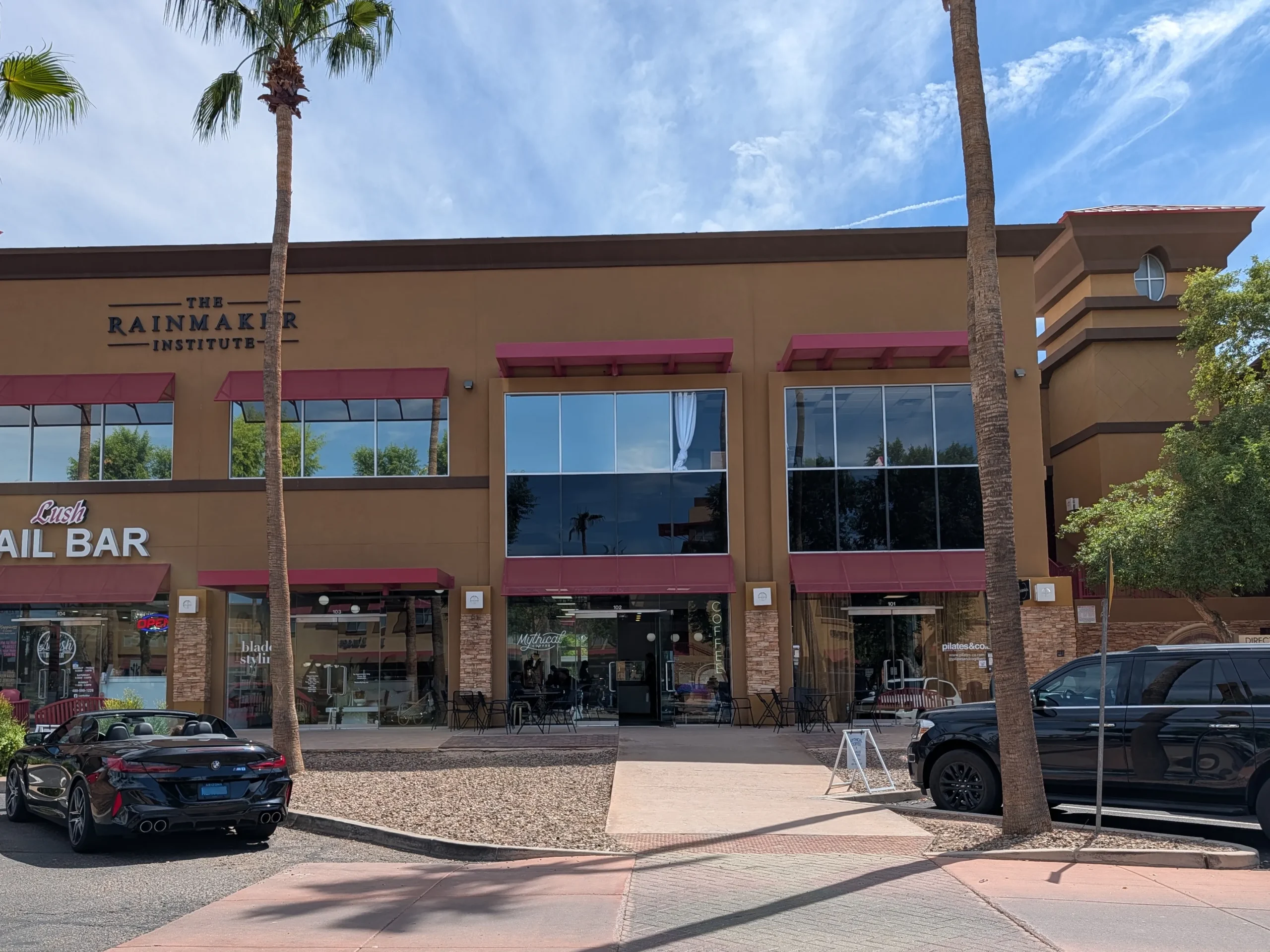
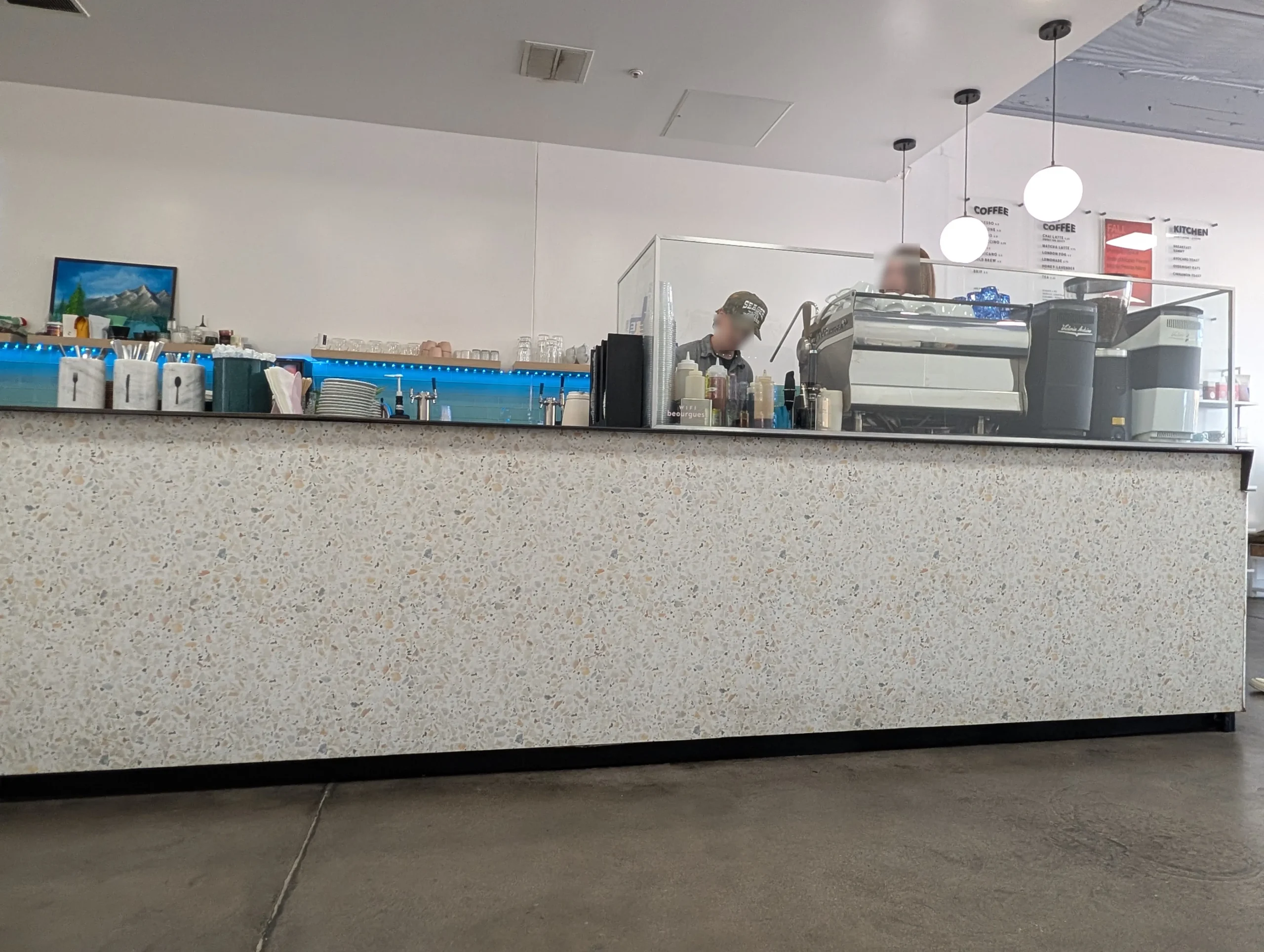
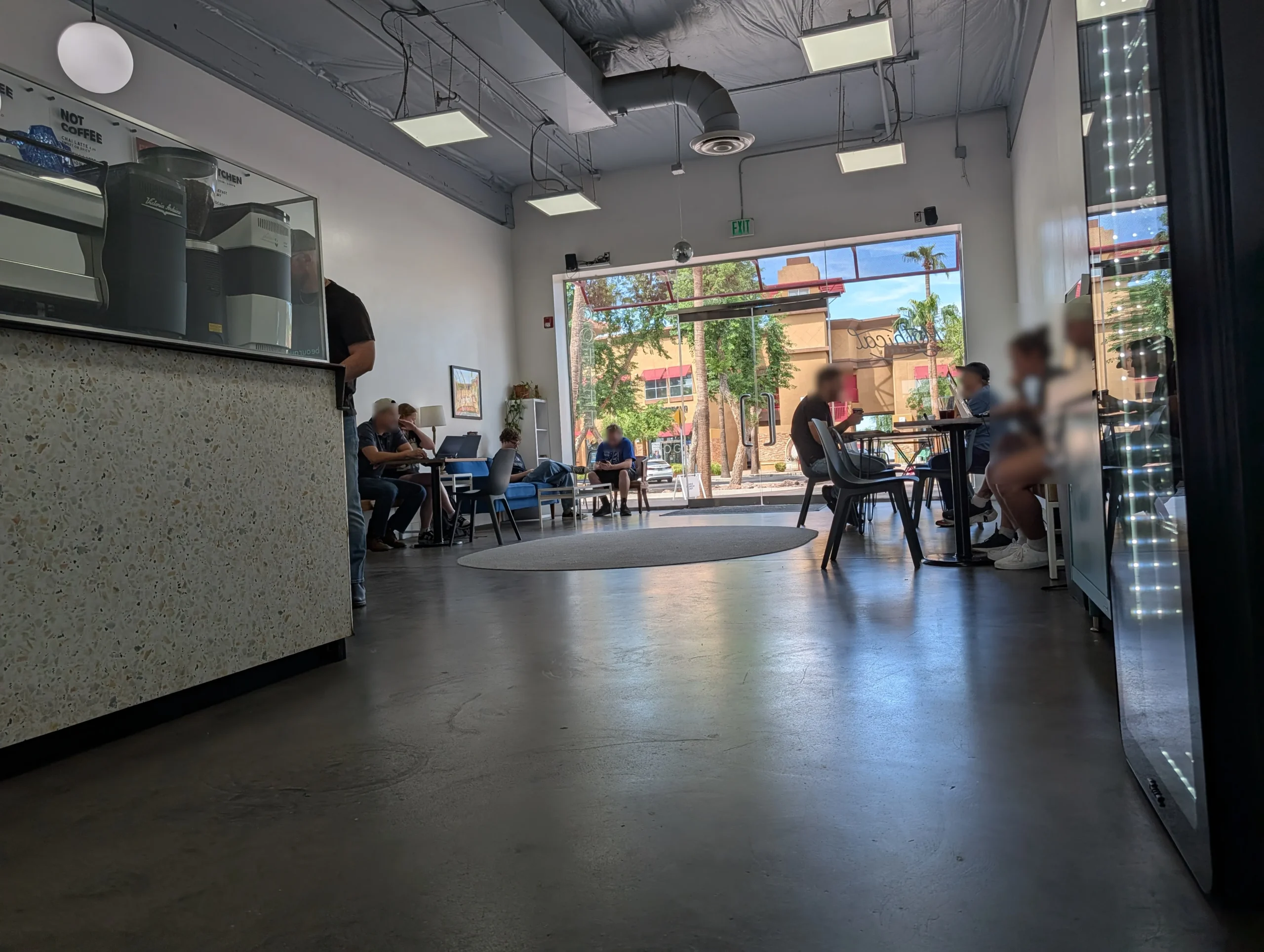


Remember when I called Gilbert an underserved coffee town somewhere earlier on this list? Mythical is exactly why that is changing.
I first walked in when the shop was only a few weeks old and I have been back many times since. It is already a destination and it earned that fast.
The whole operation is built around in house roasting and an obsession with sourcing. Mythical is mostly not a blend shop. Blends barely get a mention here. This is an origins first operation and they live and breathe it. I wish more shops were like that. You will find washed coffees, naturally processed coffees and no shortage of anaerobics too! Every bag of coffee comes with full origin/processing details so ordering here feels like picking a destination rather than a drink. My only nitpick is that I wish they printed espresso and pour-over recipes right on the bags.
Here is the fun part. Mythical is one of the few shops in the East Valley offering single origin espresso and most days you get two options to choose from. It is not printed on the menu though. You have to ask which beans are going into your espresso. Do it. The staff will happily walk you through each one of the options for that day until you land on the right cup. That kind of service turns a simple order into an experience!
The pour over slow bar is sadly gone now but single origin drip and filter coffee are still available. The origin focused experience is very much alive.
The names on the menu are half the fun. Everything is pulled from world mythology. Demeter, Hera, Odysseus, Trojan Horse, Adonis, Phoebus, Perseus. It is a clever way to make specialty coffee feel approachable instead of intimidating.
The drink menu leans creative in the best way. You can go simple with a flawless Cortado or go bold with a Lavender and Blueberry Latte or a smoky Peach Bourbon Latte. The syrups are made in house and mostly gluten free and vegan so there is plenty of room to experiment without asking a bunch of questions first.
The room itself is classic Arizona minimalist. Bright cozy and welcoming. It also tends to run full because the East Valley just does not have enough shops like this yet. Come prepared to wait a bit for a seat especially on a busy morning.
Behind the bar sits a Synesso MVP Hydra running four stage pressure profiling on every shot. That is serious equipment doing serious work and you can taste the difference in the cup.
Mythical earned its name. This is a shop that turns coffee into a bit of a legend every single visit.
👉Click to View the Drink Menu
Menu items are subject to change. Some items could be seasonal.
Fall Drinks
Pumpkin Spice • Salted Maple Pecan • Maple Pecan Nitro • Fig Cardamom • Earl Grey Mocha
Coffee
Espresso • One & One • Cortado • Cappuccino • Latte • Americano • Drip • Cold Brew • Nitro Cold Brew
Tea
Matcha Latte • Chai Latte • London Fog • Loose Leaf Tea
The Classics
Cinnamon Honey Latte • Brown Sugar Vanilla Latte • Salted Caramel Latte • Dark Chocolate Mocha • Vanilla Mint Nitro • Yuzu Espresso Tonic • Honey Lavender Lemonade
Loose Leaf Tea
Honey Alpine Black • Morning Mist Green • Magnolia Aroma Oolong • New Craft Ruby White
Herbal Tea
Organic Rooibos • Mountain Marigold • Rosella (blend) • Red Chai (blend)
For The Tiny Sprites
Tiny Maple • Hot Chocolate • Chocolate Milk • Vanilla Steamer • Honey Lavender Lemonade • Lemonade
Milks
Oat • Almond
Syrups
Brown Sugar • Vanilla • Sugar Free Vanilla • Salted Caramel • Chocolate • Cinnamon Honey • Honey • Lavender • Mint
👉Click to View the Food Menu
Menu items are subject to change. Some items could be seasonal.
Kitchen
Breakfast Sandwich • Avocado Toast • Blackberry Jam Toast • Cinnamon Sugar Toast • Matcha Pumpkin Overnight Oats
Explore Nearby Gilbert Coffee Shops
Charlee Rose Coffee
Casita Coffee
Light Heart Coffee
The Bookish Shop
Commons Coffeehouse
Decadent Macaron
Coffee Rush
East Valley Coffee Guide
Number and Street:
1090 S Gilbert Rd #102


Momentto Coffee Roasters in Chandler, AZ is a family owned roaster and cafe with a full menu of specialty coffee drinks and European style pastries. It is also one of the most quietly radical coffee shops in the Valley.
Radical how? There is a sign on the wall that says "No Laptops. No WiFi." And they like it that way. I can actually appreciate that.
In a world where half the coffee shops in town look like remote work conventions, Momentto made a deliberate choice to go the other direction. No screens. No conference calls. No one typing furiously while their latte goes cold. Just coffee, conversation and a calm room where time moves a little slower. Bring a book. Leave the laptop in the car.
The shop is tucked inside a business park in Chandler which might sound like an odd home for a place this thoughtful. But if you have spent any time exploring the Valley's coffee scene you already know that some of the best spots hide in exactly these kinds of locations. Look it up before you go and you will not be thrown off.
The family behind Momentto goes back a long way. Mina Vukovic and her father Peter own the place and the coffee tradition in their family traces back to Peter's roasting experience in Montenegro. They have been roasting for decades. The beans are ethically sourced from family owned lots and every purchase is fair trade. Their roasting process runs through 9 filtration stages which the family developed to produce a cup that is low acid and essentially bitterness free. This matters more than it might sound. If you have ever walked away from a cup of coffee with that uncomfortable acidic feeling in your stomach, you know exactly what I am talking about. Momentto's roasting approach is specifically built to prevent that. Your gut will thank you.
I had a regular latte and the smoothness was real. No bitterness to push through. No sharpness on the finish. Just a clean and pleasant cup that did not need anything added to it.
The butter croissant was excellent. I am particular about croissants and this one earned its place on the table. The pastry program here leans European and notably light on sugar which is a genuine plus. No sugar bombs. No bouncing off the walls. If you are bringing kids, that is a welcomed thing.
And then there is Jax. He is the resident corgi and he has claimed the front door as his personal post. He is friendly and completely at ease with people walking in and out. He is also a very good dog.
The cafe is actually just one piece of a larger operation. Momentto also runs a full roasting and packaging facility that handles roasting for other businesses. You would never guess it from the inside. The front room feels quiet and unhurried and completely removed from anything industrial.
Jax may greet you at the door. Do not forget to pet him.
▶Click to View the Drink Menu
Note: Menu items are subject to change. Some items could be seasonal and may not be available.
Coffee
Turtle Pie • Cinnamon Bun • Mexican Mocha • Sweet & Salty • Dark & Stormy • Bee Mine • Bourbon Pecan Cold Brew • Espresso Ristretto • Espresso Lunco • Macchiato • Cappuccino • Latte • Black coffee • Cold Brew • Salted Caramel Cold Brew • Forrero Rosher Shot • Lavender Vanilla Latte
Matcha
Apple Of My Eye • Island Time • Golden Hour • Matcha Green Tea
Other Drinks
London Fog • Chai Tea Latte • Argentine Black • Tropical Mango Green • Ginger Peach Black • Strawberry Kiwi • Strawberry Essence • Blue Lavender Milk Tea • Vanilla Chai • Summer Spritzer • Lemonade (Pink or Lavender)
Spring Selection
Dubai Chocolate Latte • Honey Pistachio Latte • Almond Joy Latte • Honey Lavender Latte • Cold Brew w/ Salted Caramel Cold Foam • Raspberry Cream Matcha
Fall Selection
Pumpkin Cheesecake • Caramel Apple • Bourbon Pecan Pie • Cold Brew w/ Apple Pie Cold Foam • Apple Cider Hot Toddy • Pumpkin Spice Latte • Pumpkin Spice cold brew • Pumpkin Spice Chai • Apple Pie Chai
Winter Selection
Maple Butterscotch • Mistletoe Mocha • Campfire S’mores • Son of a Nutcracker • Candy Cane Cold Brew • Apple Pie Chai / Matcha
Milks & Flavors
Oat Milk • Almond Milk • Apple Pie • Bourbon Pecan • Butterscotch • Caramel • Cheesecake • Cinnamon • Coconut • Cookie Butter • Dark Chocolate • Milk Chocolate • White Chocolate • English Toffee • French Vanilla • Hazelnut • Maple • Marshmallow • Peppermint • Pistachio • Strawberries & Cream • Vanilla • Vanilla Chai • Banana • Blueberry • Mango • Orange • Passionfruit • Peach • Prickly Pear • Raspberry
▶Click to View the Food Menu
Note: Menu items are subject to change. Some items could be seasonal and may not be available.
Breakfast
Basic Breakfast • Breakfast Sandwich • Egg & Avocado Toast • Tomato & Feta Avocado Toast
Lunch
Turkey, Bacon & Swiss Sandwich • BLTA • Pesto Caprese Sandwich • Cheese Burek • Beef Burek
Pastries & Treats
London Bars • Cream Puffs • Macaroons • Croissants • Sacher Torte • Decedant Torte • Marina Torte
Crepe Fridays
Eurocream Crepe • Nutella Crepe • Strawberry Jam Crepe • Apricot Jam Crepe
Explore Nearby Chandler Coffee Shops
Aristocrat Coffee Roasters
Levante Coffee
Momentto Coffee Roasters
Press Coffee Chandler
Peixoto Coffee Roasters
Mission Coffee And Tea
Bottle & Bean
Sagebrush Coffee Shop & Roastery
East Valley Coffee Guide
Number and Street:
4114 W Saturn Way
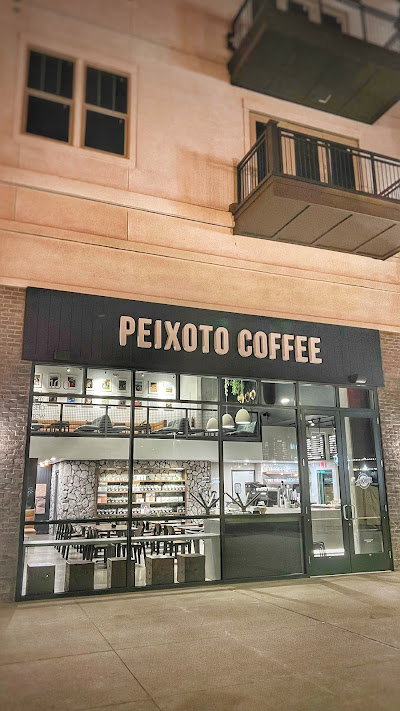
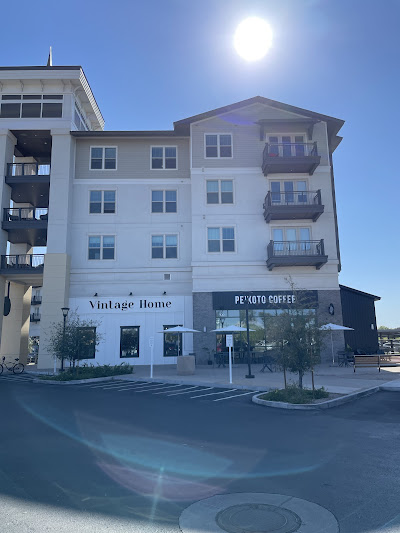
What does coffee taste like when the family who grew it also roasts it and serves it to you? At Peixoto, you get to find out. They own their farm in Brazil. The family has been growing coffee there for over a century. This is not some marketing line about partnerships or fair trade stamps. This is actual crop to cup integration that maybe a handful of places in the entire country can claim. It matters because you taste the difference.
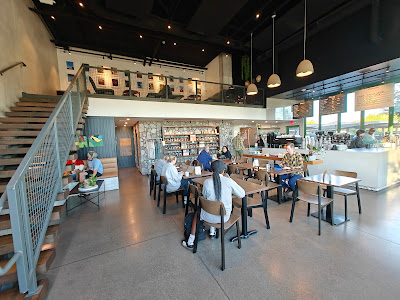
The space itself feels like walking into a minimalist tech office but in a good way. Modern and airy with two floors. The upstairs has this loft situation with comfy chairs and outlets everywhere. People camp out here to work (like seriously camp out). You might have to hunt for a table during peak hours but the atmosphere makes it worth the search.
The seasonal drinks get creative without being obnoxious about it. The Coconut Cold Brew comes back every summer and people lose their minds over it! The Hot Honey Latte has a cayenne kick that works better than it sounds like it should. The matcha is smooth and not chalky (which is rarer than you would think). You can get most drinks as either espresso or matcha. This is brilliant because some days you want caffeine that punches you in the face and other days you want something gentler.
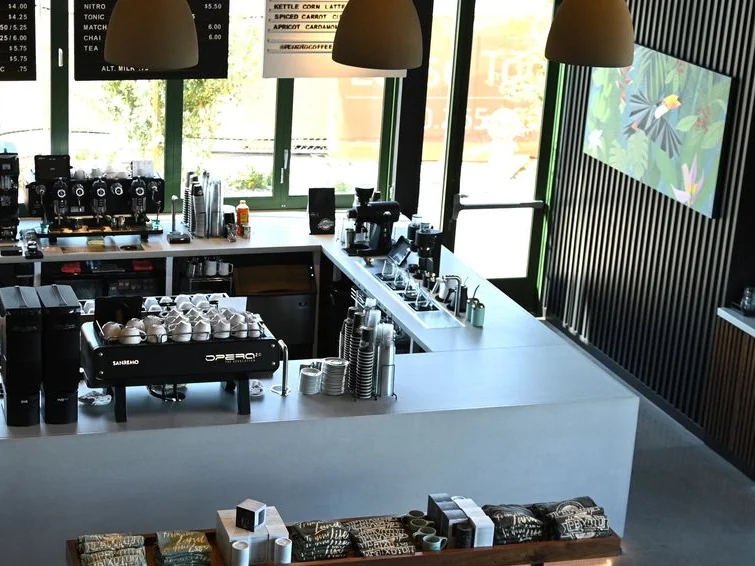
They use macadamia nut milk and oat milk. No almond milk though so do not ask. The baristas know what they are doing with pour-overs and actually use gooseneck kettles like they are supposed to. When someone takes the time to do manual pour-overs properly, you notice. Behind the bar sit two Sanremo Opera 3 group head espresso machines. That is six total group heads that could be working at any given time. This is serious firepower that lets them handle volume without sacrificing quality.
The pastries rotate and come from local bakeries. Get there early if you want food because they sell out. The macarons are delicate and worth trying if they have them. On Tuesdays they do Swedish baked goods including cardamom buns with almond paste that are genuinely excellent. The variety keeps things interesting.
At peak times, lines could look intimidating but they move fast. You will get your drink quickly even when the place is packed. The whole operation runs efficiently.
Fair warning about pricing. A 16 ounce specialty latte will run you around eight bucks. Some people think this is reasonable for good coffee from a family farm while others think its steep for their daily routine. You decide where you land on that.
This is what happens when a family decides to bring their century of coffee farming expertise to Arizona. The farm connection is real. The equipment is professional grade. The execution is there in every cup. Worth the trip to Peixoto in Agritopia whether you are settling in to work for hours or just grabbing something excellent to go.
See also Peixoto Coffee Roasters' Chandler Location
Number and Street:
3150 E Ray Rd