Pour Over vs Drip Coffee & Which Brewing Method is Best for You
Look, coffee brewing methods are like pizza styles. Everyone has opinions, some people get weirdly intense about it and at the end of the day you just want something delicious. Let me break down the pour over versus drip coffee situation so you can figure out which one matches your vibe.
What is a Pour Over Coffee?
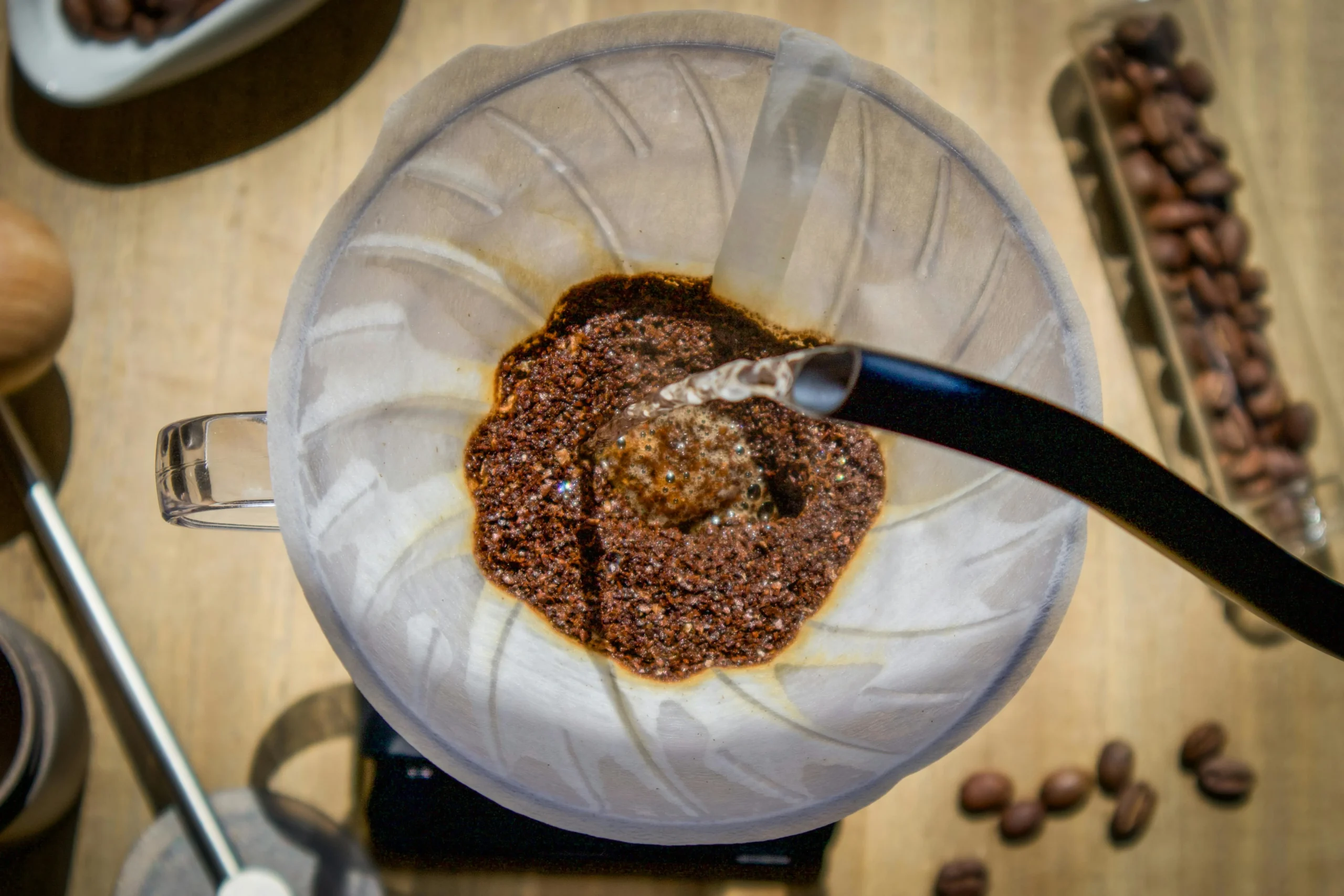
Pour over coffee is where you pour hot water over coffee grounds in a controlled way. That’s it! You are essentially the machine. Instead of pressing a button and walking away, you are standing there with a kettle pouring in circles and timing everything. This is feeling connected to your morning caffeine (plus you earn the bragging rights!).
This method is what coffee professionals use when they want to taste the true characteristics of single origin beans. The reason is simple. Pour over gives you so much control over variables like water temperature and flow rate that it highlights the unique flavor notes of each coffee without adding interference.
Understanding the Pour Over Coffee Dripper
The dripper is the cone-shaped thing that holds your filter and grounds. The big three are:
- The Hario V60 (has spiral ridges and a large hole at the bottom)
- The Chemex (looks like a science beaker and makes a clean cup)
- The Kalita Wave (has a flat bottom with three holes for even extraction).
Here is why the gooseneck kettle matters. Regular kettles pour like a fire hose. Gooseneck kettles give you control. You can pour slowly and target specific spots with a gooseneck kettle. This way you don’t end up flooding your grounds like you are watering a lawn. The precision makes a real difference in how the coffee extracts.
Why Enthusiasts Prefer Manual Brewing
Manual brewing lets you control literally everything. Water temperature, pour rate, how much you stir the grounds (agitation), how long you let them sit after the first pour (bloom time). You can dial in exactly what you want from the beans. Plus there is something satisfying about making coffee this way. It turns your morning routine into a little ritual instead of just hitting a button while half asleep (which to be fair is also a perfectly valid life choice).
Drip Coffee vs. Pour Over Key Differences
Automation vs. Manual Control
Drip coffee machines do everything for you. Fill the reservoir, add grounds, press start. Pour over requires your active participation for the entire process. One is convenient. The other is involved. Neither is wrong. For many, the reward for the extra effort of the pour over is well worth it as it offers a clarity that’s less watery than drip without the aggressive intensity of an espresso.
Extraction and Flavor Profiles
Pour-over generally produces a cleaner and brighter cup because you control the water flow and can ensure even extraction. When coffee people say cleaner they mean you can taste individual flavors more clearly without muddiness. Brighter means more acidity in a good way (think fruity or floral notes rather than flat or dull). Drip machines can sometimes create uneven extraction (some grounds get too much water, some not enough), which can muddy the flavors. But a good drip machine with proper technique gets pretty close.
Drip Coffee vs. Espresso Quick Comparison
While we are here, drip and espresso are totally different animals. Drip coffee uses gravity and time (water slowly passes through grounds). Espresso uses pressure (nine bars of it) to force water through very fine grounds in about 25-35 seconds. Espresso is concentrated and intense. Drip is lighter and larger volume. Different tools for different moods.
The Essential Pour Over Coffee Guide
Mastering the Pour Over Coffee Ratio
The golden ratio is 1:16 (one gram of coffee to 16 grams of water). Here is a quick chart:
Pour Over Coffee Ratio Chart
- 1 cup (12 oz / 350ml): 22g coffee, 350g liquid out.
- 2 cups (24 oz / 700ml): 44g coffee, 700g liquid out.
- 3 cups (36 oz / 1050ml): 66g coffee, 1050g liquid out.
You can adjust based on taste. Want it stronger? Use more coffee. Want it lighter? Use less. The ratio is a starting point, not a law.
Just to give you an idea, when I make espresso, I put in 18.5g of fine grounds and get our about 40g of liquid espresso out.
How to Do a Pour Over Coffee Step-by-Step
- Boil water and let it cool slightly (around 200°F or 93°C). If you got a fancy kettle that lets you control the temp, just set it to 200 °F and no waiting.
- Place filter in dripper of your choice and rinse it with hot water (gets rid of paper taste). By the way, my favorite dripper is the V60.
- Add grounds and give the dripper a gentle shake to level them.
- Bloom the coffee by pouring just enough water to saturate the grounds (about twice the weight of the coffee). Wait 30-45 seconds. This releases CO2 and lets water extract better.
- Pour in slow circles starting from the center and working outward. The circular motion ensures all the grounds get evenly saturated. If you just dump water in one spot, some coffee sits there drowning while other parts stay dry. Keep the water level consistent.
- Total brew time should be around 3-4 minutes for most pour overs. Faster than that and you are probably under extracting (weak and sour). Longer and you risk over extracting (bitter). This timing gives the water enough contact with the grounds to pull out all the good flavors without extracting the harsh stuff.
Choosing a Pour Over Drip Coffee Maker
If you want a pour over setup, start with a Hario V60 or Kalita Wave. They are affordable and forgiving. The Chemex looks gorgeous but requires specific filters. Avoid anything too gimmicky. Simple drippers work best. Most coffee shops in Arizona that offer a slow bar use the V60 as the tool of choice.
Drip vs. Pour Over Pros and Cons
Pour Over Pros:
- Complete control over the process.
- Cleaner & brighter flavor.
- Looks impressive when you have guests!
Pour Over Cons:
- Takes time and attention.
- Requires practice to get consistent results.
- You need extra gear (scale, gooseneck kettle, dripper)
Drip Coffee Pros:
- Super convenient.
- Consistent results.
- Can brew large quantities.
- Great for mornings when your brain is not online yet!
Drip Coffee Cons:
- Less control over variables.
- Some machines brew too hot or too cold.
- Can produce muddier flavors with cheaper machines.
How to Drip Coffee Properly at Home
Even if you are using an auto drip machine, you can level up your coffee game. Use fresh beans and grind them right before brewing (pre-ground coffee loses flavor fast). Make sure your machine heats water to the right temperature (195-205°F). Clean your machine regularly because old coffee oils taste terrible. And use filtered water if your tap water tastes funky.
Focus on the Grinding
Whether you are doing pour over or drip, grinding matters more than most people think. The grind size affects extraction speed. Too fine and you over-extract (bitter). Too coarse and you under-extract (sour and weak).
For pour over you want medium-fine (like table salt). For drip, go medium (like sand). A good burr grinder makes a massive difference. Flat burr grinders are generally better than blade grinders because they produce uniform particle sizes. Speed (RPM) also matters. Some fancy grinders offer speed control. Slower is usually better because it reduces heat buildup that can affect flavor.
You do not need a $500 grinder to make good coffee at home (although I highly recommend investing in a high quality one). But upgrading from a blade grinder to even a basic burr grinder will dramatically improve your cups. The grinder is honestly more important than the brewing method itself.
So which method is best? Depends on what you value. If you want convenience and consistency, drip coffee wins. If you want control and enjoy the process, pour-over is your thing. Or do what I do and use both depending on how much time you have in the morning.
Feature your coffee shop here!
Don’t get lost in the crowd. Boost your shop’s visibility and put your brand right where local enthusiasts are looking.
Above the fold features are available too. Click the button below to learn more
Mission
Finding great coffee should be an inspiring experience. My name is Ozzy and I personally vet and curate the best independent coffee shops and roasters across Arizona to make finding the perfect coffee shop easier.
Arizona Coffee Directory
info@azcoffeeshops.com